01
2000 Series Fire Rescue Chainsaw
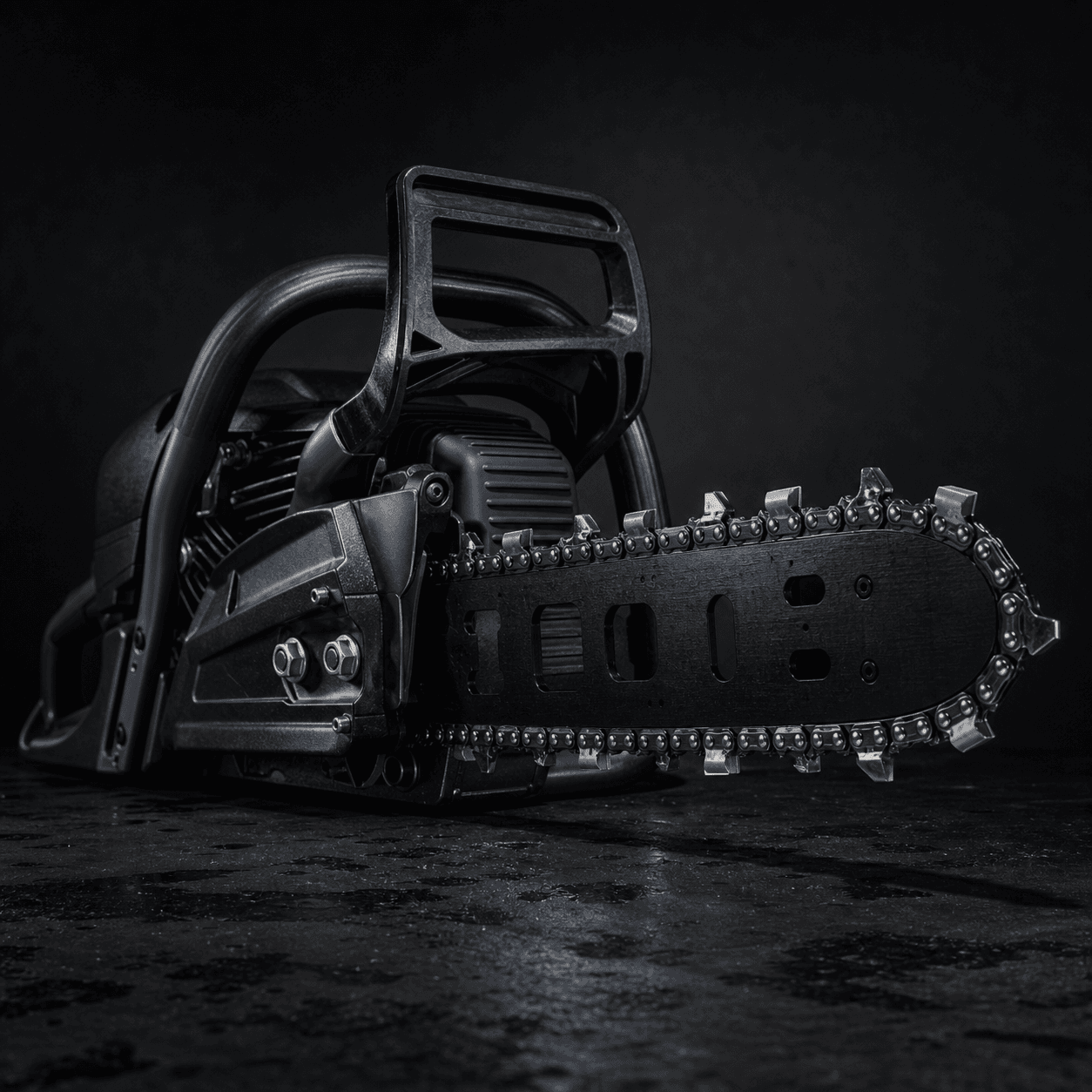
Legacy Cutters Edge chain-saw family. Record the complete model designation and bar or guard configuration.
Chainsaw
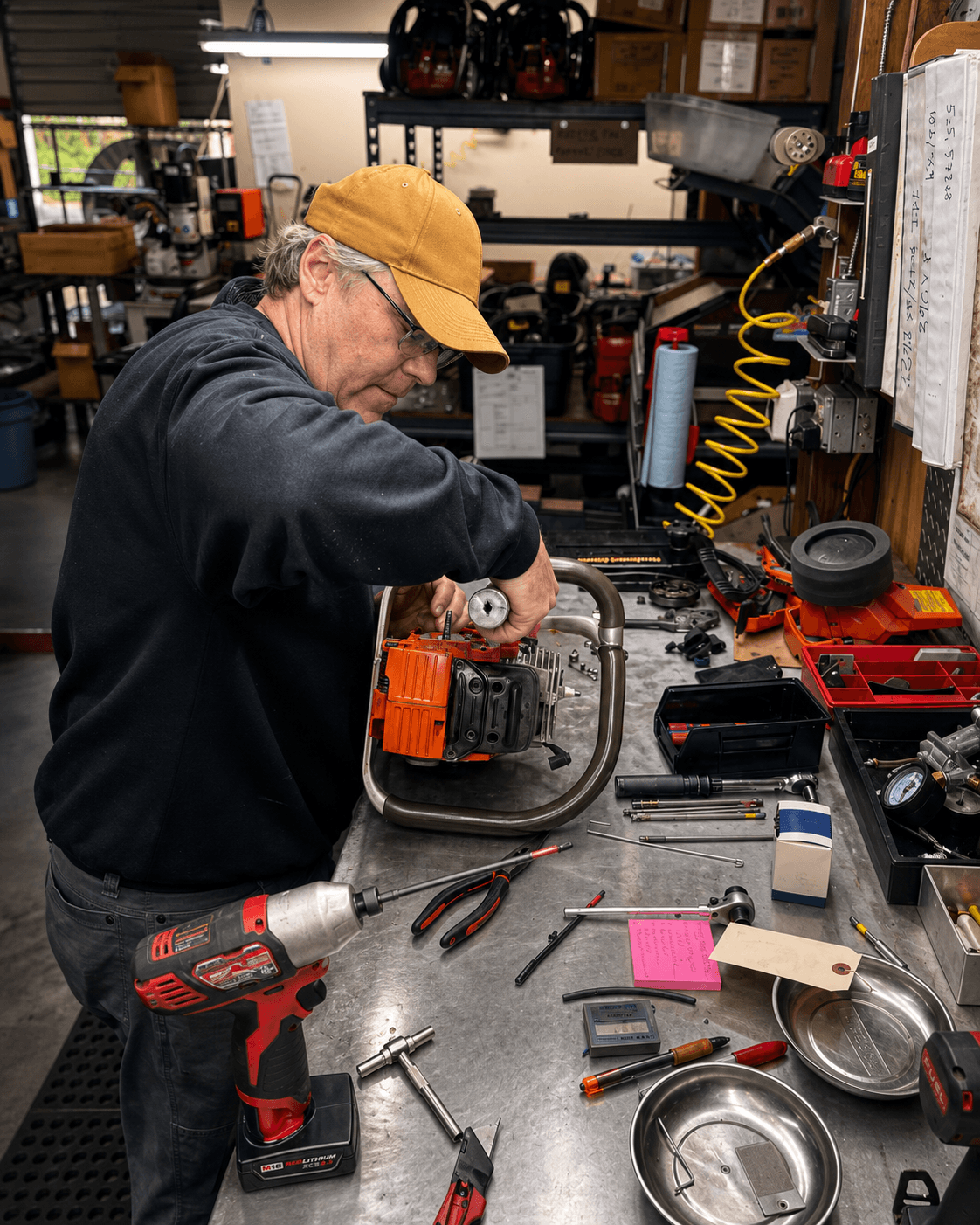
Built & serviced in Lemoyne, PA — by firefighters, since 2009
Legacy Rescue Saw Guide
The right repair starts with the exact saw—not just the Cutters Edge name. EFES supports specific 2000- and 2100-series fire rescue chainsaws and 760R and 970R H1/H2 rotary saws, but model details and configuration still determine the right part and service path.
Before a saw or part leaves your station, identify what you have, document what changed, and contact EFES to confirm current availability and intake instructions.
Need service rather than background?
Review EFES's supported-model service information or begin a request with the model details you already have.
01Why identification matters
Manufacturer-issued Cutters Edge manuals show multiple configurations inside the same product family.
The 2100-series manual covers CE2165RS, CE2171RS, and CE2186RS variants with different bar lengths and depth-guard configurations. Rotary-saw documentation also distinguishes 760 and 970 platforms and documents generation-specific component changes.
That is why a request for “a 2100 part” or “a 970 filter” may not be enough. Matching the complete model and visible configuration before ordering reduces the risk of receiving a part that does not belong on that saw.
EFES-supported families
EFES currently lists parts, repair, and maintenance support for these Cutters Edge rescue-saw families. Contact the shop to confirm the exact model, part availability, and service scope for your unit.
01
Legacy Cutters Edge chain-saw family. Record the complete model designation and bar or guard configuration.
Chainsaw
02
Includes multiple CE2165RS, CE2171RS, and CE2186RS configurations in manufacturer documentation.
Chainsaw
03
Identify the 760 platform and H1 generation before requesting a component or service evaluation.
Rotary saw
04
The H2 designation matters; do not assume a part listed for an earlier 760 configuration is interchangeable.
Rotary saw
05
Identify the 970 platform and H1 generation, then confirm the existing component before ordering.
Rotary saw
06
Document the full H2 model information and the affected assembly for a model-specific response.
Rotary saw
Do not see your exact designation? Send EFES a photo of the identification markings and the complete saw before assuming it is unsupported.
02Before you contact the shop
A clear request helps the service team distinguish a model-specific parts question from a saw that needs bench diagnosis.
Gather what you can without disassembling safety-critical systems or operating a saw that should be out of service.
01
Full model designation and series, copied exactly from the saw or its documentation.
02
Serial number or type-plate information if it is present and legible.
03
Photos of the complete saw, identification markings, affected assembly, and existing part number if visible.
04
A plain description of the symptom: when it began, whether it is constant, and what the crew observed.
05
Recent maintenance or repair history, including any parts already changed.
03The service path
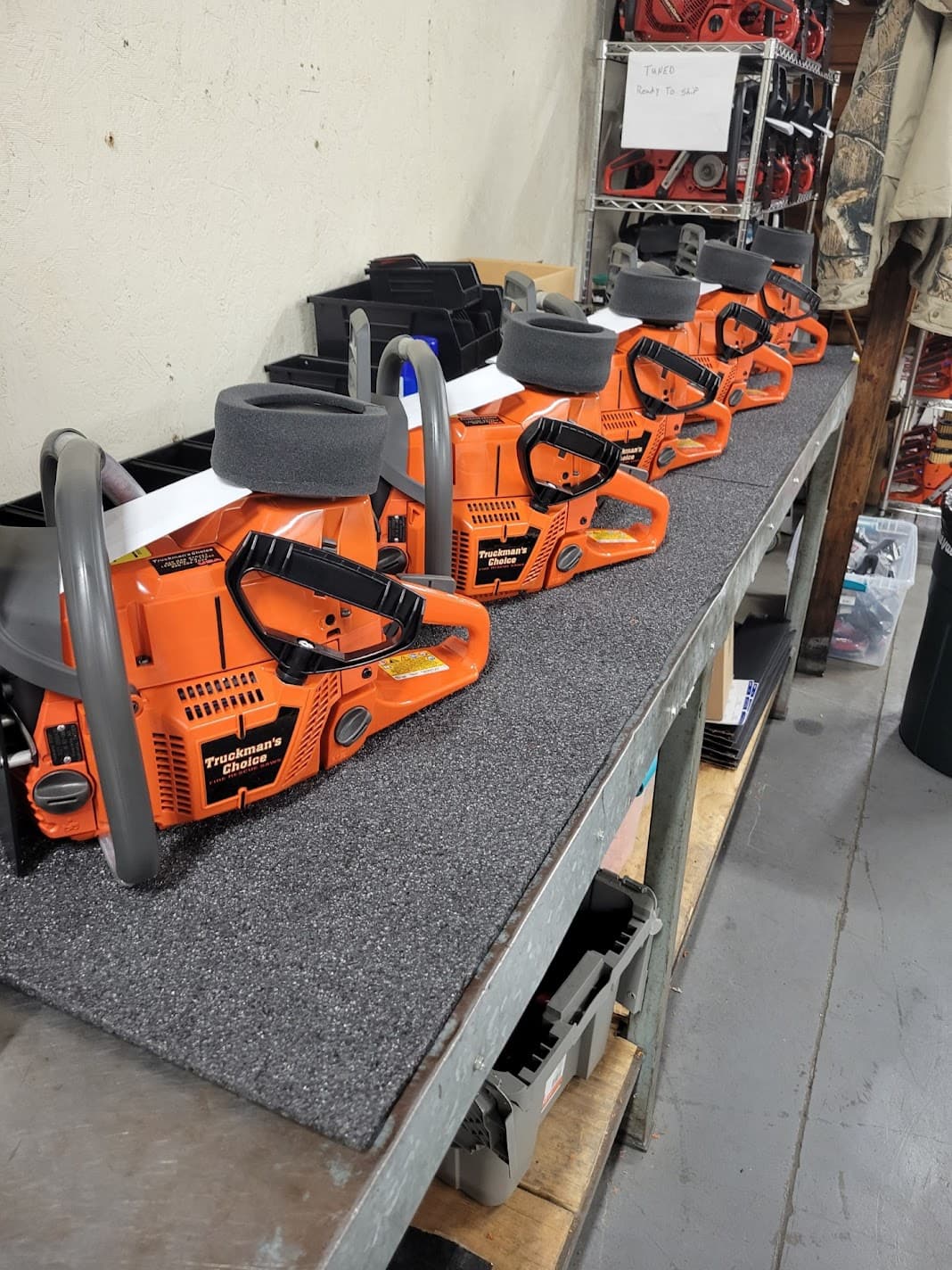
EFES performs repair and maintenance at its Lemoyne, Pennsylvania shop. Current pricing, parts availability, intake method, and timing should be confirmed directly with the service team before anything is sent.
01
Gather the full model, serial or type-plate details if visible, photos, and the symptom. For a loose part, include any number stamped or printed on it.
02
Call (800) 504-2044 or submit a service request. Explain whether you need a replacement part, routine service, or diagnosis of a fault.
03
EFES can confirm whether the next step is a parts match, additional information, or shop intake. Ask for current availability, pricing, timing, and shipping or drop-off instructions.
04
For a repair, the practical decision may be service, replacement of an assembly, or retirement of the saw. Make that decision from the unit's condition and the shop's findings—not from the series name alone.
0304Repair or replace
A part can be available and the overall repair can still be a poor investment.
Look at the complete saw: age, repair history, engine and safety-system condition, frequency of use, and whether the department can support another outage.
01
What failed, and is the issue isolated to one serviceable assembly?
02
Has the saw had repeated faults or significant prior repairs?
03
Are the guard, controls, cutting system, and other safety-related components in serviceable condition?
04
Would repair restore a dependable frontline tool, or only defer replacement?
Parts and service questions
What departments ask before sending a saw.
EFES currently lists the 2000 and 2100 Series Fire Rescue Chainsaws and the 760R H1, 760R H2, 970R H1, and 970R H2 Series Rotary Saws. Contact the shop with the full model designation to confirm support for the exact unit.
Do not assume that every legacy component is continuously available. EFES says it uses OEM replacement parts guaranteed to fit the supported models, but departments should confirm current availability, price, and timing for the exact saw and part.
Send the full model designation, serial or type-plate details if visible, photos of the complete saw and affected component, any visible part number, and a brief description of the problem. More complete identification helps prevent a series-level guess from becoming the wrong order.
Usually, start with identification photos and the symptom. Do not disassemble safety-critical assemblies or run a suspect saw just to improve the request. EFES can tell you what additional information or shop intake is appropriate.
Contact EFES first. Confirm whether the request can be handled as a parts match or requires shop evaluation, then get current packing, shipping, drop-off, pricing, and scheduling instructions.
Consider the full condition and repair history, not only whether one part is available. Repeated faults, safety-system concerns, extensive wear, and the operational cost of another outage can make replacement the more responsible decision. Ask EFES to discuss the options after the saw is identified and evaluated.
Have the saw details ready
Start with the full model, photos, and symptom.
EFES will confirm the appropriate parts or service path before you ship anything.