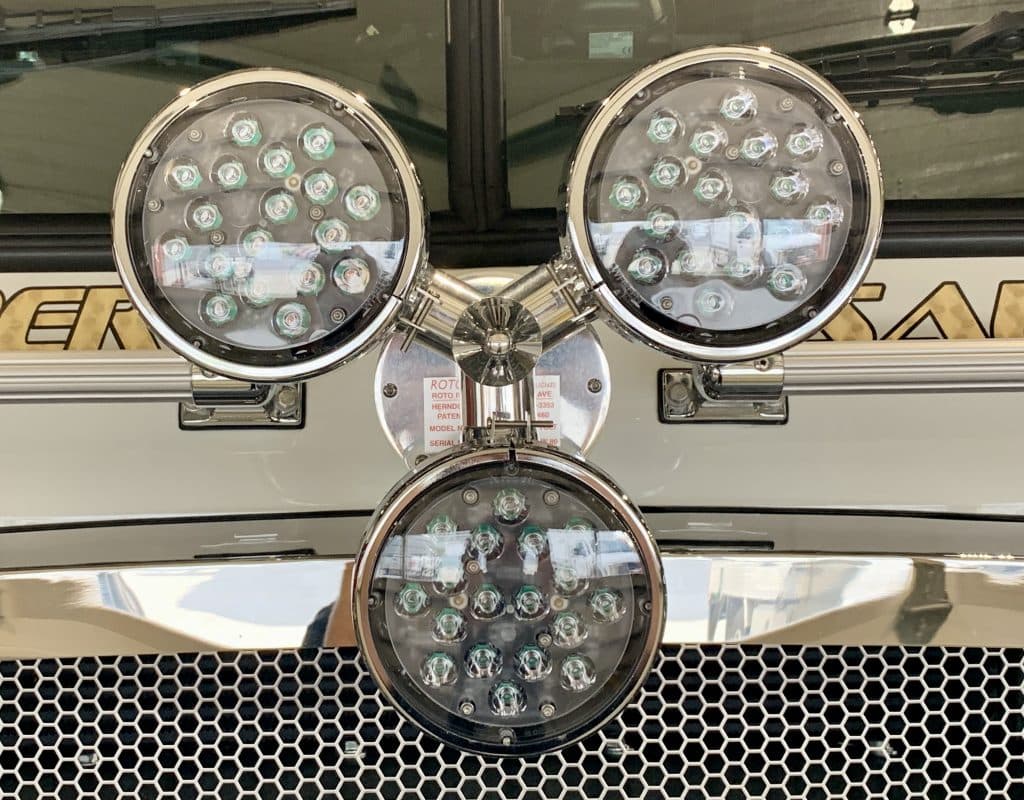
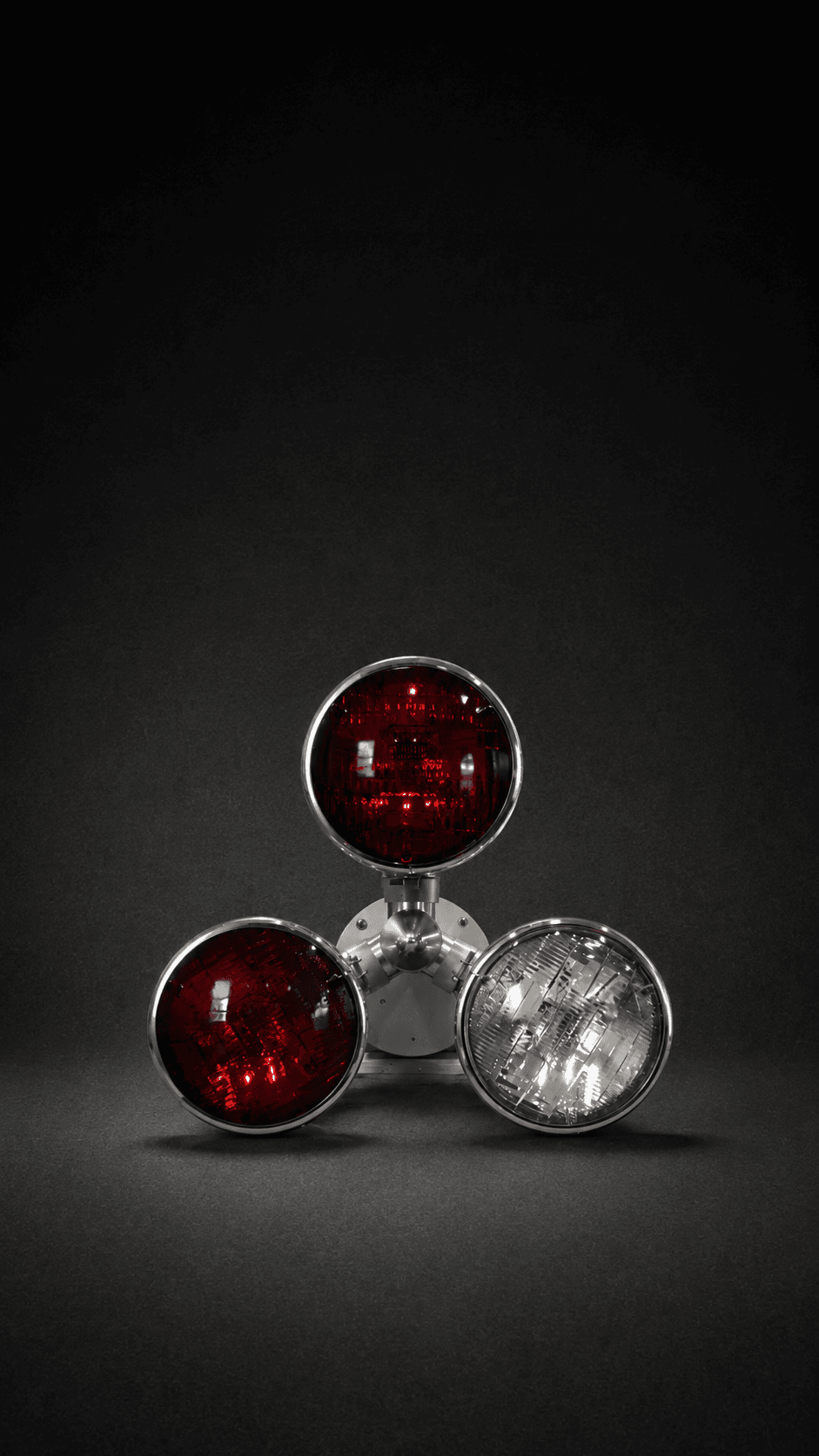
Roto-Ray warning light fitted with PAR-46 LED lights

Why Roto-Ray · The case for the spinning light

Why Fire Departments Still ChooseRoto-Ray Spinning Warning Lights

360 lighting became the way to go, LED replaced strobes and halogens and technology continues to evolve and yet plenty of departments still spec a Roto-Rays today.

That decision looks stubborn until you understand what a spinning light does that a flat panel can't.

This page lays out the case: where the Roto-Ray earns its place, where LED and strobe do the job better, and why the spinning light keeps showing up on new fire apparatus.

The motion advantage

The Motion Advantage: Why a Spinning Light Catches the Eye

Start with how people see.

Your central vision is sharp but narrow. Your peripheral vision is where danger gets noticed first, and the periphery is tuned for one job above all others: catching motion. It's an old survival wiring. Something moves at the edge of your view and your eye snaps to it before your conscious brain has a vote.

They register movement bearing down on them, and that reads as urgency in a way a static array struggles to match.

That reflex is the whole reason a Roto-Ray works. A steady bulb sits there. A strobe flickers in place. But the lamps rotate and sweep a beam through space, and continuous motion pulls the eye harder and faster than flicker alone. Catch it at noon or on a dark stretch of highway at night and the effect holds either way.

Research on driver perception backs this up: a flashing light beats a steady light of the same intensity for grabbing attention, and true motion in the periphery triggers an even faster, more automatic reaction than a light blinking on and off in a fixed spot. When a Roto-Ray is spinning on the front of a firetruck, an oncoming driver doesn't only register a bright point.

There's a second effect that matters most at close range. As the rig closes on a car, the sweeping beam of a spinning light gives the driver a reference point to judge distance and closing speed.

A wall of LED at full output can wash into one bright blob; a spinning lamp keeps giving the eye something to track. That close-in distance cue is a documented strength of rotary warning lights, and it's exactly the moment when you most need the car ahead to move.

Three-lamp Roto-Ray warning light mounted on fire apparatus

Spec with open eyes

Spinning vs. LED vs. Strobe:A Comparison

A Roto-Ray isn't magic, and it isn't trying to be the whole warning package. Here's the straight comparison so your apparatus committee can spec with open eyes.

LED & strobe

Where LED and Strobe Win

Give LED and strobe their due.

An LED strobe puts out a higher peak intensity in a single sharp flash, which makes it the stronger tool for long-distance daytime warning and for punching through fog, smoke, and heavy rain. LED draws less current than a halogen or sealed-beam lamp, runs cooler, and lasts longer before anything burns out.

A full LED light bar, or a stack of light bars and corner strobes, is what delivers the 360-degree coverage a fire truck needs, and it's what the standards are written around. If your only goal is raw output at a distance in bright sun, a high-wattage LED array wins that contest.

Warning light performance isn't a single number, though. It's daytime punch, close-range readability, weather penetration, and plain recognizability, and no one light type tops every column.

The Roto-Ray

Where the Spinning Roto-Ray Wins

The Roto-Ray owns the front of the truck.

Mounted low and center at a car's eye line, it delivers the one thing a flat bar can't fake: real, sweeping motion that the human eye locks onto and a close-range distance reference as the rig bears down. It's not competing with your light bars for total coverage. It's the forward-facing signature that says fire apparatus at a glance, before a driver reads a single logo. Departments have run both for decades because they solve different problems: the LED package for compliant all-around warning, the spinning light up front for the motion cue and the identity.

That identity is worth more than it sounds. A driver who has seen a spinning Roto-Ray on the front of fire trucks since they were in a car seat recognizes it instantly. A generic strobe array reads as "some emergency vehicle." A Roto-Ray reads as fire, right now, get over.

Recognizability is warning performance too.
Sidebar · The old rivalry

Roto-Ray vs. Mars Light

Old-timers will put the Mars light in the same conversation, and fairly.

The Mars light was the oscillating warning light of the same era, rocking a single sealed beam up and down instead of spinning several lamps in a circle. Both defined the front of a fire truck for a generation.

We go deeper on that rivalry and the history of the Roto-Ray warning light on the history page.

The Roto-Ray's edge is the rotary sweep: multiple lamps turning around a hub throw motion across a wider arc than one beam nodding vertically.

Spec with open eyes

Compare the current Roto-Ray heads.

Built to be rebuilt

Reliability, Simplicity, and a Design That Refuses to Quit

Fire apparatus lives a hard life.

Vibration, road salt, heat off the engine, decades in service. A warning light has to survive all of it.

Three-lamp Roto-Ray warning light mounted on fire apparatus
EFES

20–30

Years a rig is meant to run — and a repairable light is a reliable light

The Roto-Ray's design is stubbornly simple: a motor turns an arm, the arm carries the lamps, and the lamps face the road on every pass. There's no complex driver board waiting to fail in a way a shop can't diagnose at 2 a.m. When a part wears, you replace that part. A motor, a lamp, a drive component. That's a repairable light, not a throwaway module, and for a rig meant to run twenty or thirty years, repairability is reliability.

This is why the old units keep spinning. Plenty of original heads from the early days are still on the road because the design tolerates age and the parts are serviceable. An old-school Roto-Ray light that's been running since before most of the crew was born tells you more about durability than any spec sheet. When you buy a Roto-Ray, you're buying into a platform that has already proven it lasts.

Simple doesn't mean stuck

The LED Upgrade Path

Simple doesn't mean stuck in the past.

For departments that want lower current draw and longer lamp life, an LED upgrade drops LED lamps into the classic housing. You keep the spinning profile and the recognizable look while bringing the electrical load in line with a current charging system.

It's the practical middle ground: the identity and motion of the original light, the efficiency of LED. Whether you order a new head with the upgrade or convert an existing one, the spinning action stays. Lamp colors cover what departments run, from all-red and red-and-clear combinations to amber for support vehicles that call for it.

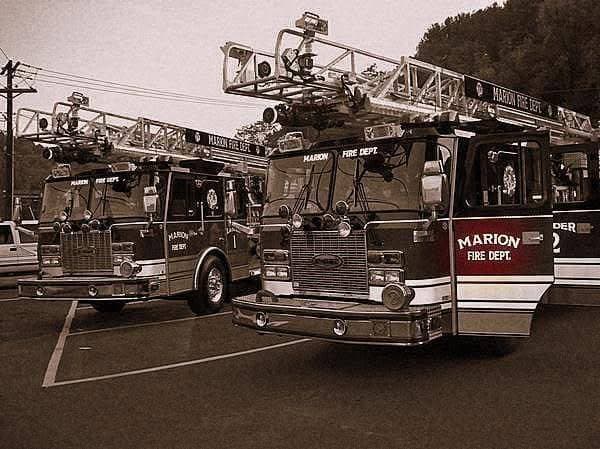
Vintage fire apparatus equipped with dual Roto-Ray warning lights
LED

The measurable side

Performance Numbers:RPM, FPM, and the Standards

Zone A

The forward-facing NFPA coverage a front-mounted Roto-Ray contributes to

RPM · FPM

Rotation speed · flashes per minute

The measurable side of a spinning light comes down to two figures. Rotation speed is set in rpm, and because each pass of a lamp reads as a flash to oncoming traffic, the effective output is described in flashes per minute, or fpm. A multi-lamp head running at a given rpm produces its fpm as a product of speed and lamp count. Exact figures live on the spec sheet for each model.

NFPA 1900

Apparatus warning zones & flash rates

Those numbers matter because standards are written around them. On the vehicle side, NFPA 1901 (folded into NFPA 1900 in the 2024 edition) defines the warning-light zones a fire apparatus has to cover and sets minimum flash-rate rules; a front-mounted Roto-Ray contributes to the forward-facing Zone A coverage rather than carrying the whole requirement.

SAE J595 · J845

Optical standards for warning lamps

On the optical side, emergency warning lamps are measured against SAE standards J595 for directional devices and J845 for beacons and all-around lamps. When you spec a Roto-Ray into a build, treat it as the front-facing signature that runs alongside a full, standards-tested LED package, and confirm the current unit's certification with us before you finalize the order.

Before you finalize the order

Confirm the spec sheet with the people who build it.

Three-lamp Roto-Ray warning light mounted on fire apparatus

Manufacturer-direct — Lemoyne, PA

The Manufacturer-Direct, Made-in-USA Case

Here's a factor that has nothing to do with optics and everything to do with owning the light for its whole life.

For years the only way to get a Roto-Ray was word of mouth, a lucky listing, or a used head of unknown condition. Now EFES builds them in Lemoyne, PA, and sells directly. You buy from the manufacturer, not a reseller marking up old stock and shrugging when you need a part.

USA

Every unit built by EFES in Lemoyne, PA and sold manufacturer-direct

That changes the ownership math. Pricing comes straight from the people who build the light, so you're not paying a middleman. Parts come from the same place, so keeping a rig's light spinning is a phone call, not a scavenger hunt.

And support comes from a company staffed by firefighters who know what a fire truck light has to endure, because they came up in the same firehouses you did. A cheap import beacon off a marketplace, a magnetic-mount unit you slap on and hope for the best, can't offer any of that; when it fails, it's landfill. A Roto-Ray is backed by an American manufacturer who answers the phone.

The bottom line

The Bottom Linefor Your Next Build

Choose a Roto-Ray for what it uniquely does.

01

Real motion that the eye can't ignore.

02

A close-range distance cue as the rig closes.

03

Instant identity as fire apparatus.

04

A simple, repairable design that outlasts the truck it's bolted to.

05

And a manufacturer-direct source for the light, the parts, and the answers.

Run it up front, pair it with your LED bars for full coverage, and you get the strengths of both: current-day output all around, and the one warning signal every driver already knows on sight.

Your next build

Talk to the People Who Buildthe Light

Whether you're spec'ing a new pumper, refreshing a ladder, or fitting out a small chief's vehicle or heavy rescue, we'll help you place a Roto-Ray where it does the most good.

Compare the heads on the models and specs page, or reach out through our contact page for pricing, a spec sheet, or help choosing the right configuration. Call 1-800-504-2044 and talk to the people who build the light.

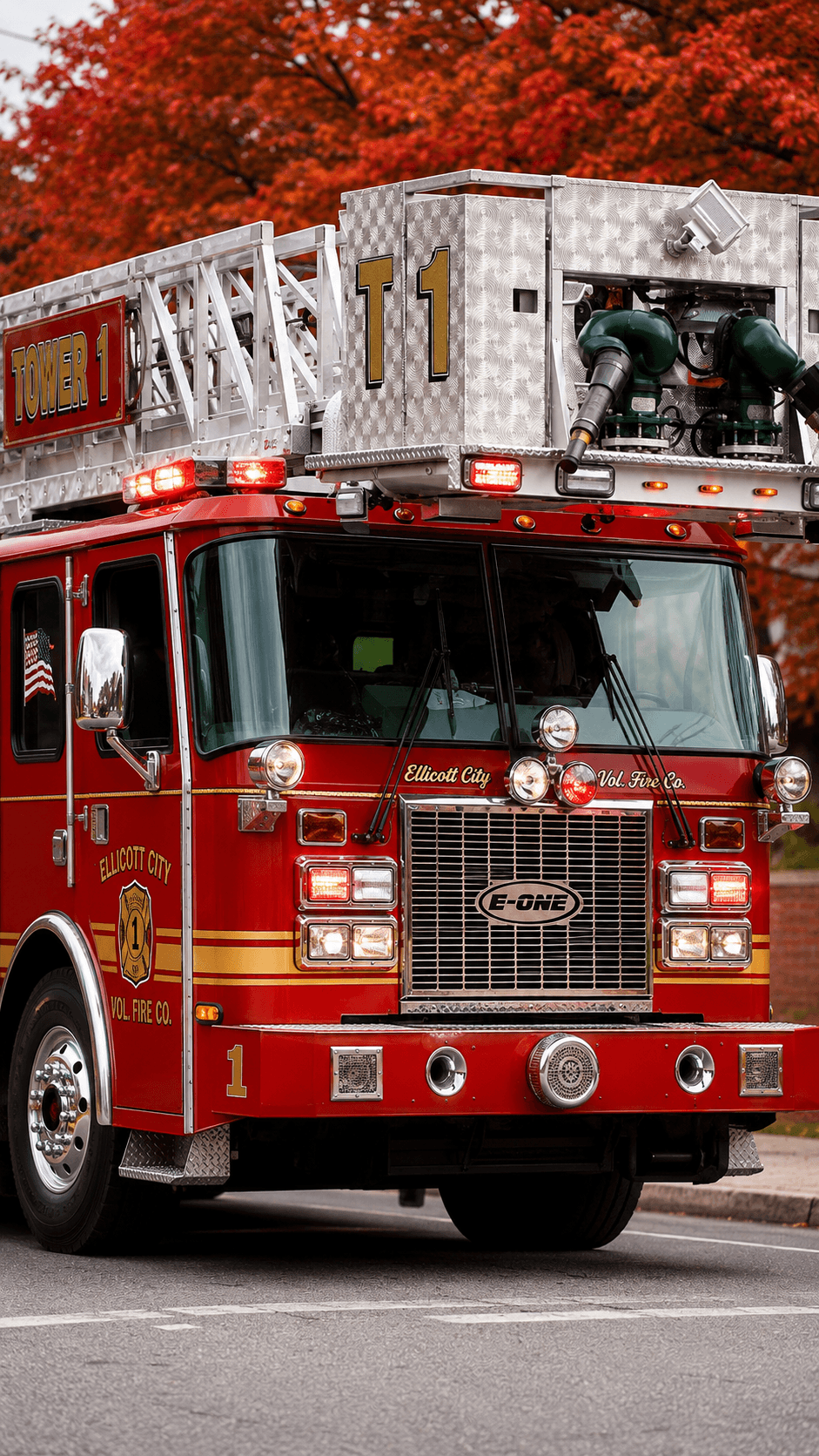
Roto-Rays warning light mounted on the front of a ladder truck