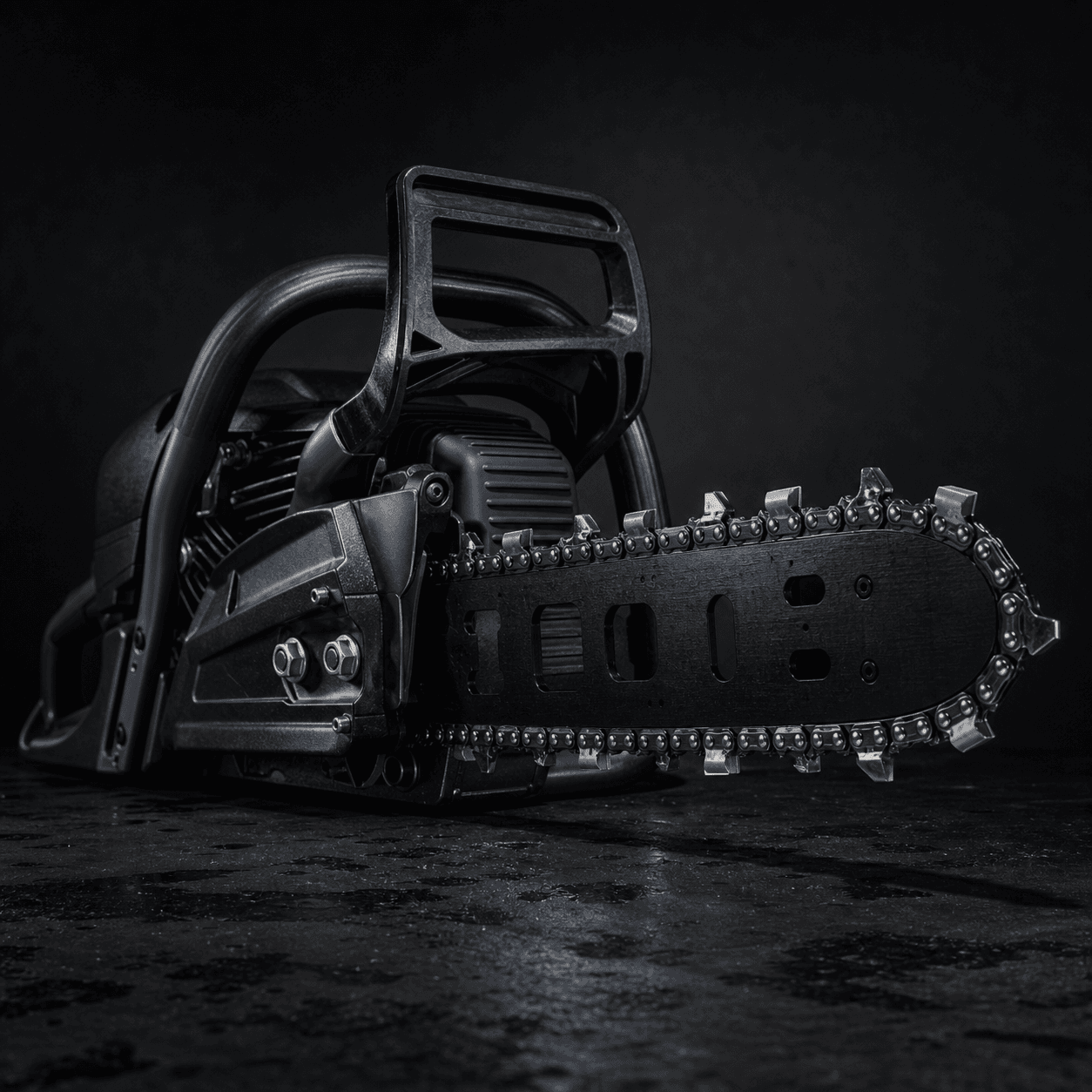
Carbide-tipped ventilation chainsaw cutting package on a dark work surface

Fire Rescue Saws · Spec the vent saw your crew will trust

Fire Rescue Saws and Ventilation ChainsawsHow to Spec the Vent Saw Your Crew Will Trust

A fire rescue saw is a purpose-built power saw made for the fireground, engineered to open roofs for ventilation and force entry fast, with high-capacity air filtration and a carbide chain so it keeps cutting through smoke, heat, nails, and tar that would stall a hardware-store saw.

If you already run a vent saw on your roof team and you're asking whether the Truckman's Choice line we build at Eastern Fire Equipment Services (EFES) is a real replacement, the answer is yes.

We build the 372XP-TC and 572XP-TC Fire Rescue Chainsaws on the same Husqvarna platforms crews have trusted for years, add the ventilation modifications that matter on a roof, and back every saw with a 2-year warranty.

Firefighter-founded · Lemoyne, PA

Start the conversation.

Call 1-800-504-2044

01What is a fire rescue saw

What Is a Fire Rescue Saw? (Chainsaw vs Rotary/Cut-Off)

A fire rescue saw is a gas-powered saw built to cut on the fireground under conditions a standard saw can't survive.

01

One hostile environment

This isn't a band saw or a bench tool moonlighting on a roof; it's a saw designed from the frame out for one hostile environment.

The meaning is in the build: aggressive cutting speed, high-volume air filtration to breathe through smoke, controls a firefighter can work with a gloved hand, and a chain or blade rated to hit nails and light metal without quitting.
02

Two families of saw

Two families of saw show up on the apparatus, and knowing the difference is where speccing starts.

Ventilation chainsaws run a bar and a carbide chain, the same layout as a timber saw but purpose-built for the fire service. This is the tool for cutting a ventilation hole in a roof deck and for a lot of forcible entry work. The Truckman's Choice 372XP-TC and 572XP-TC are ventilation chainsaws.

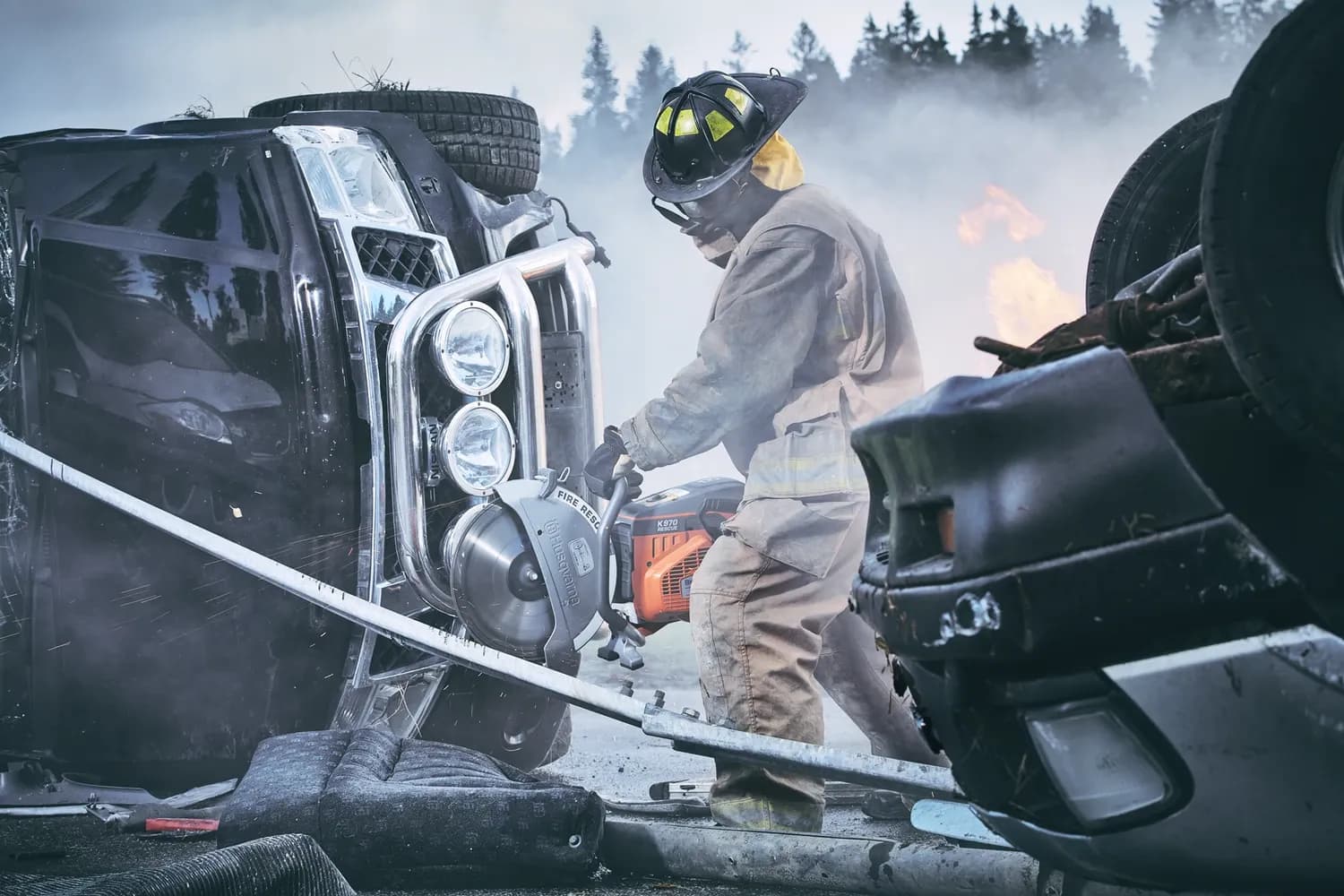
Rotary rescue saws and cut-off saws spin a circular blade instead of a chain. These are the K-series style saws you reach for on metal, masonry, concrete, and heavy forcible entry. Cutters Edge builds a rotary line (the 760R and 970R), and Husqvarna's K760 and K970 are the cut-off saws crews know best.

03

Carry both

Most departments carry both: a ventilation chainsaw for roof work and forcible entry, and a rotary or cut-off saw for the metal and concrete a chain won't touch.

The rest of this page walks through each, so you can spec the right saw for your apparatus instead of guessing.

02Ventilation chainsaws

Ventilation Chainsaws for Roof Cuts and Forcible Entry

Ventilation means cutting an opening, usually in a roof, to release the heat, smoke, and fire gases building up inside a structure.

Vertical ventilation puts the hole in the roof; horizontal ventilation works windows and openings on the sides, often paired with a smoke extractor or positive-pressure fan to move the air. Pull the plug on a superheated attic and you buy the interior crew time and visibility. That single job drives every design choice in a ventilation chainsaw.

Firefighter operating a Truckman's Choice rescue saw during training
02

The American fire service has known the value of a purpose-built roof saw for decades.

Dedicated ventilation saws have a history going back to the 1970s, and the reasons they exist haven't changed: a roof cut has to happen fast, under bad conditions, on the first try.

Read the smoke before you cut.

Thick black smoke pushing under pressure and white smoke lifting off a roofline tell you different stories about what's happening below, and a vent crew that can put a hole in the right spot fast changes the outcome.

A ventilation chainsaw has to bite into a roof deck the second the chain hits, clear the cut, and keep running while the operator works on a pitched, smoke-charged surface in full gear.

The same saw does hard work at the door and window.

Forcible entry cuts through sheathing, hardware, security bars, and light metal are daily jobs for a rescue chainsaw. A recip saw earns a spot in the compartment for tight, controlled cuts, but for opening sheathing and light metal fast, the chainsaw wins on speed.

Because the operator is often gloved, on a ladder, or working blind in smoke, the saw's handling matters as much as its horsepower.

This is a fireground tool, not a yard tool for trees, and it's built to a different standard from the ground up.

03Truckman's Choice

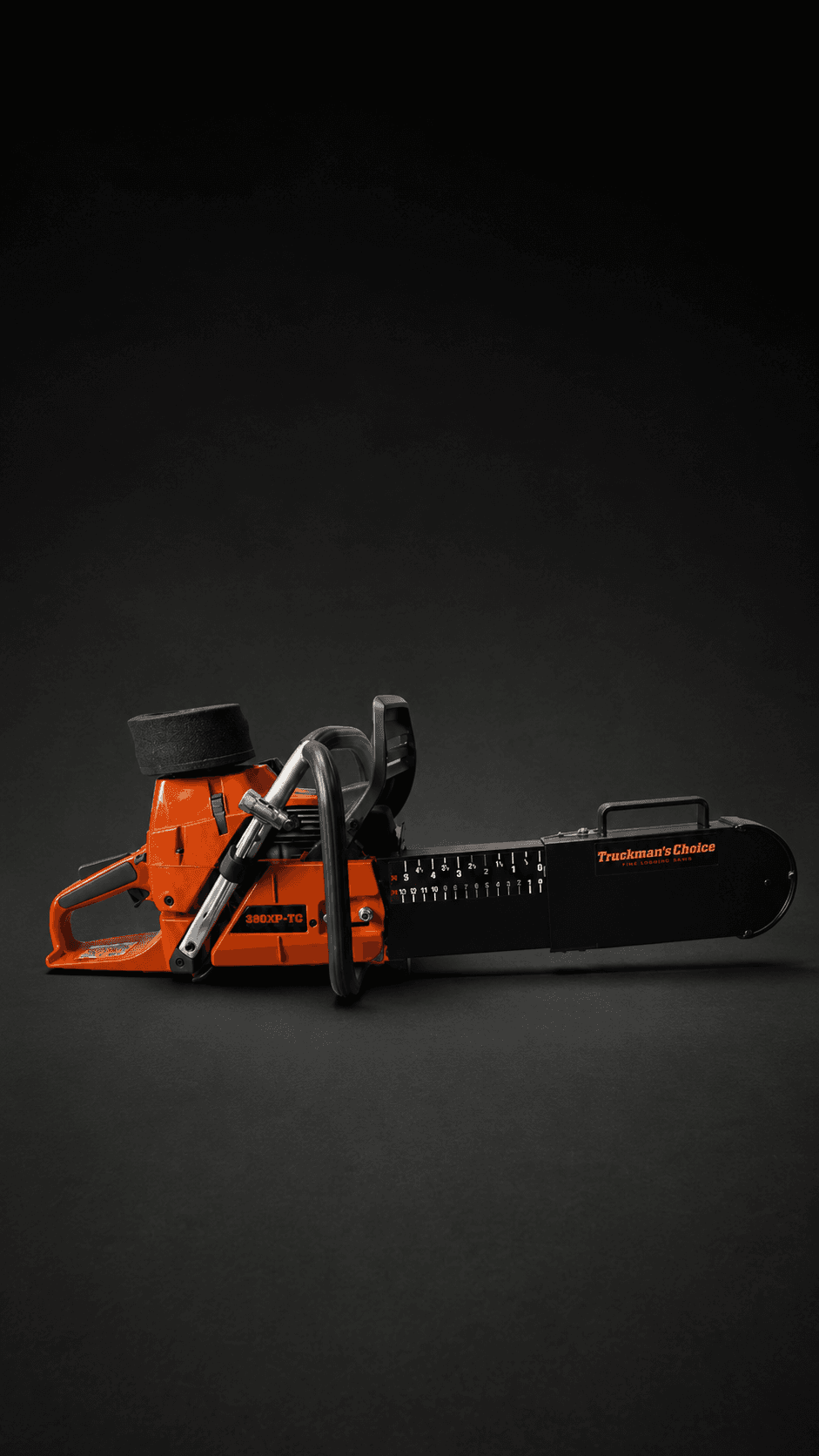
Truckman's Choice 372XP-TC and 572XP-TC Fire Rescue Chainsaws

We build the Truckman's Choice line for one reason: to put a better vent saw in your hands than what you're running now.

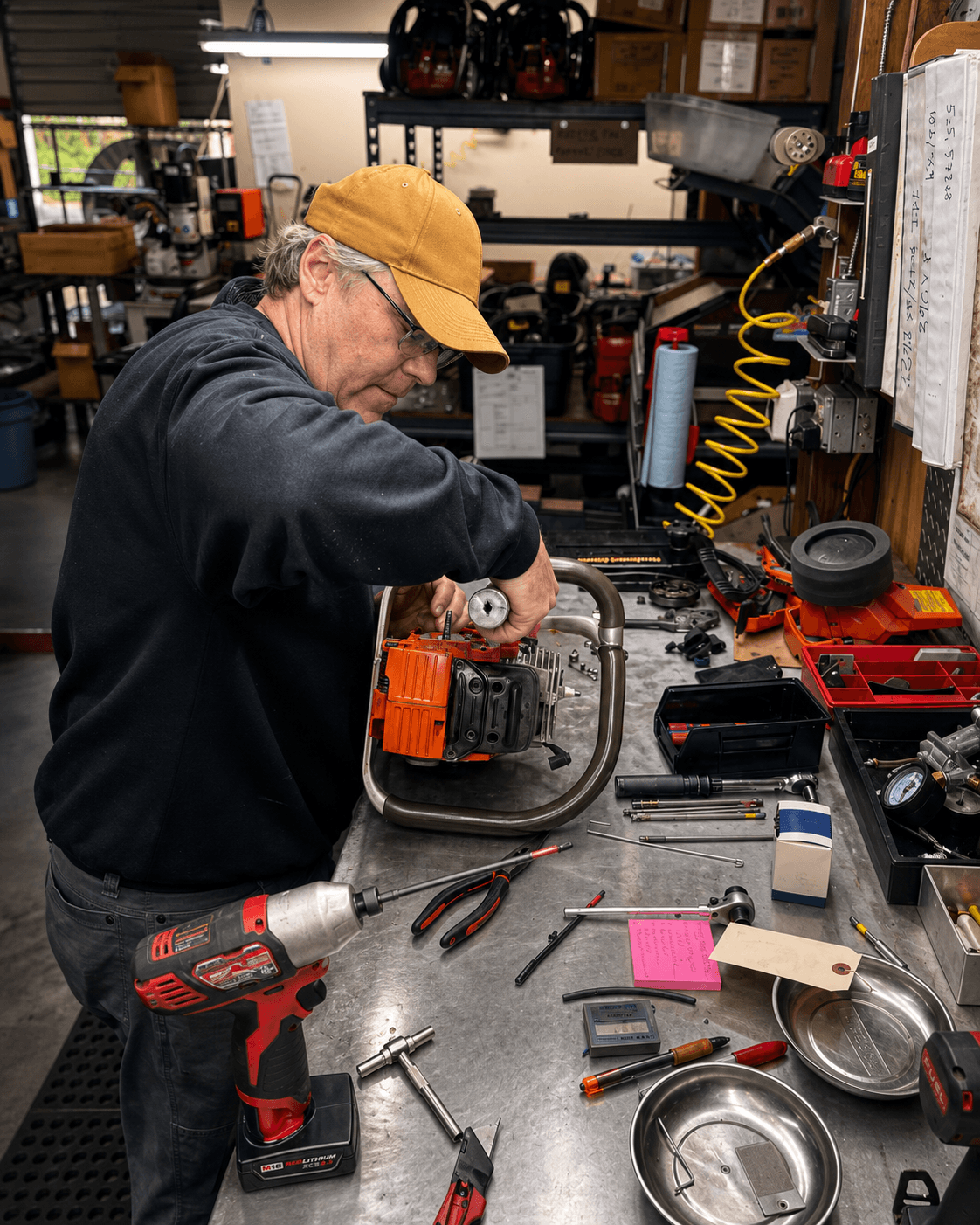
As a shop with over 20 years of experience servicing rescue saws, we know what breaks, what firefighters reach for on a roof, and what a saw has to survive. Truckman's Choice has more modifications built in than any other ventilation saw we've worked on.

Truckman's Choice fire-rescue chainsaw photographed against a dark studio background
03

The 372XP-TC Series is built on the Husqvarna 372XP platform, a 70.7cc, roughly 5.4 hp (about 5.5 PS) two-cycle saw with a long track record in the field.

The 572XP-TC Series steps up to the 572XP, the successor platform Husqvarna designed to replace the 372XP.

Both wear the same ventilation package.

The exact cc and horsepower of the TC-modified engines run close to those base numbers, but the modified figures are and we won't publish specs we haven't measured.

The ventilation package

Built as a vent saw from the frame out.

Every Truckman's Choice Fire Rescue Chainsaw ships with the features that make it a vent saw and not a repainted logging saw:

01

West Coast Filter and Velocity Stack

for high-volume air filtration that keeps the engine breathing in smoke and heat

02

"D" starter handle

you can grab and pull with a gloved hand

03

One-step starting

so the saw fires without a fussy cold-start sequence

04

Momentary contact switch

that returns to run, so the saw doesn't stay shut off by accident

05

Full-wrap handle

for control in any cutting position, on a pitch or overhead

06

Solid steel alloy guide bar

built to take the abuse a roof deck hands out

07

Scrench tool

on board for bar and chain adjustments

08

Bullet raker ventilation chain

, a carbide chain built to chew roof deck without dulling on the first nail

09

Depth guard (optional)

to control how deep the saw plunges

EFES technician inspecting a fire rescue saw at a service bench

04Designed and built at EFES

A Separate, Competing Line

Truckman's Choice is a separate line we design and build ourselves.

We are an authorized Husqvarna and Jonsered service center with over 20 years of experience servicing rescue saws, and our team knows the Cutters Edge saws inside and out because we service them, but Truckman's Choice is a separate, competing line that stands on its own.

For brand and model-specific details, see the Truckman's Choice product page, and to buy through your area, use the Find a Dealer directory.

05Rotary and cut-off saws

Rotary Rescue Saws and Cut-Off Saws

When the job is metal, masonry, or concrete, a chain won't do it and you reach for a rotary saw.

A rotary rescue saw or cut-off saw spins a circular blade at high speed, and the blade you mount decides what you cut. An abrasive blade handles steel; a diamond blade handles concrete, pavers, and a concrete pad; a multi-material blade covers mixed debris; and specialty blades cover glass and other tough material on a rescue scene.

Technician using specialized tooling at a carbide-chain service bench
05

Cutters Edge builds a rotary line, the 760R and 970R rotary saws in H1 and H2 (H2) Series, and we stock OEM parts and service all of them: the 760R and 970R across both the H1 and H2 generations, chain and rotary alike.

On the Husqvarna and legacy Partner side, the K-series cut-off saws are the tools most crews already know.

The K760 and K970 are the current gas cut-off saws, and older K-series saws still in service include the K960, the K12 and K1200, and the larger K1270 and K2500 concrete saws. The naming runs from the small-frame K6 class on up, which is why the model numbers can get confusing fast.

Battery and electric cut-off saws exist now too, and a water attachment for wet cutting keeps dust down on concrete.

For most fire departments the gas cut-off saw is still the workhorse, and the rotary saw and the ventilation chainsaw split the fireground jobs between them.

06Carbide-tipped chains

Carbide-Tipped Ventilation Chains: Single, Dual, and Bullet Raker

The chain is where a ventilation cut is won or lost.

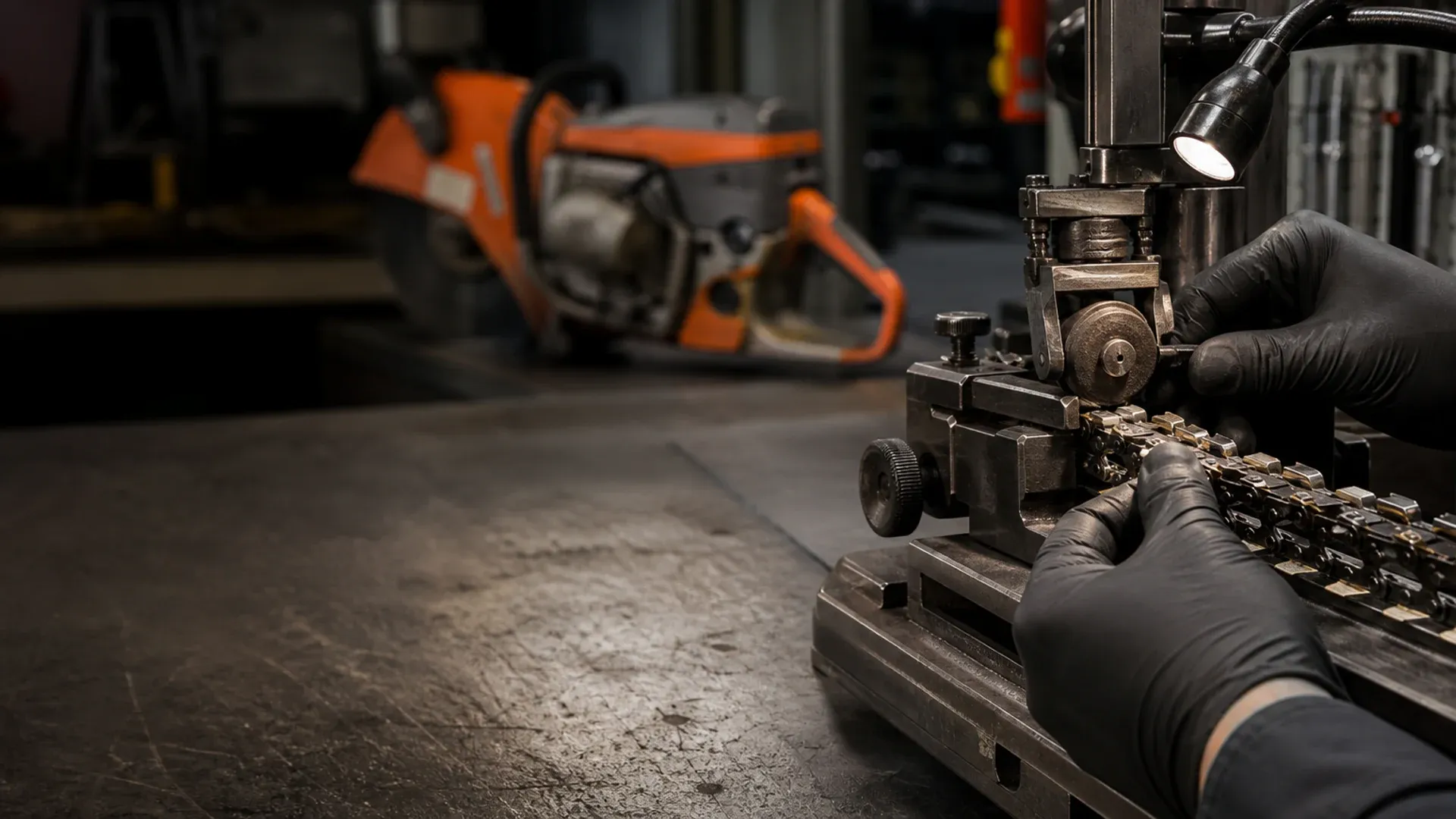
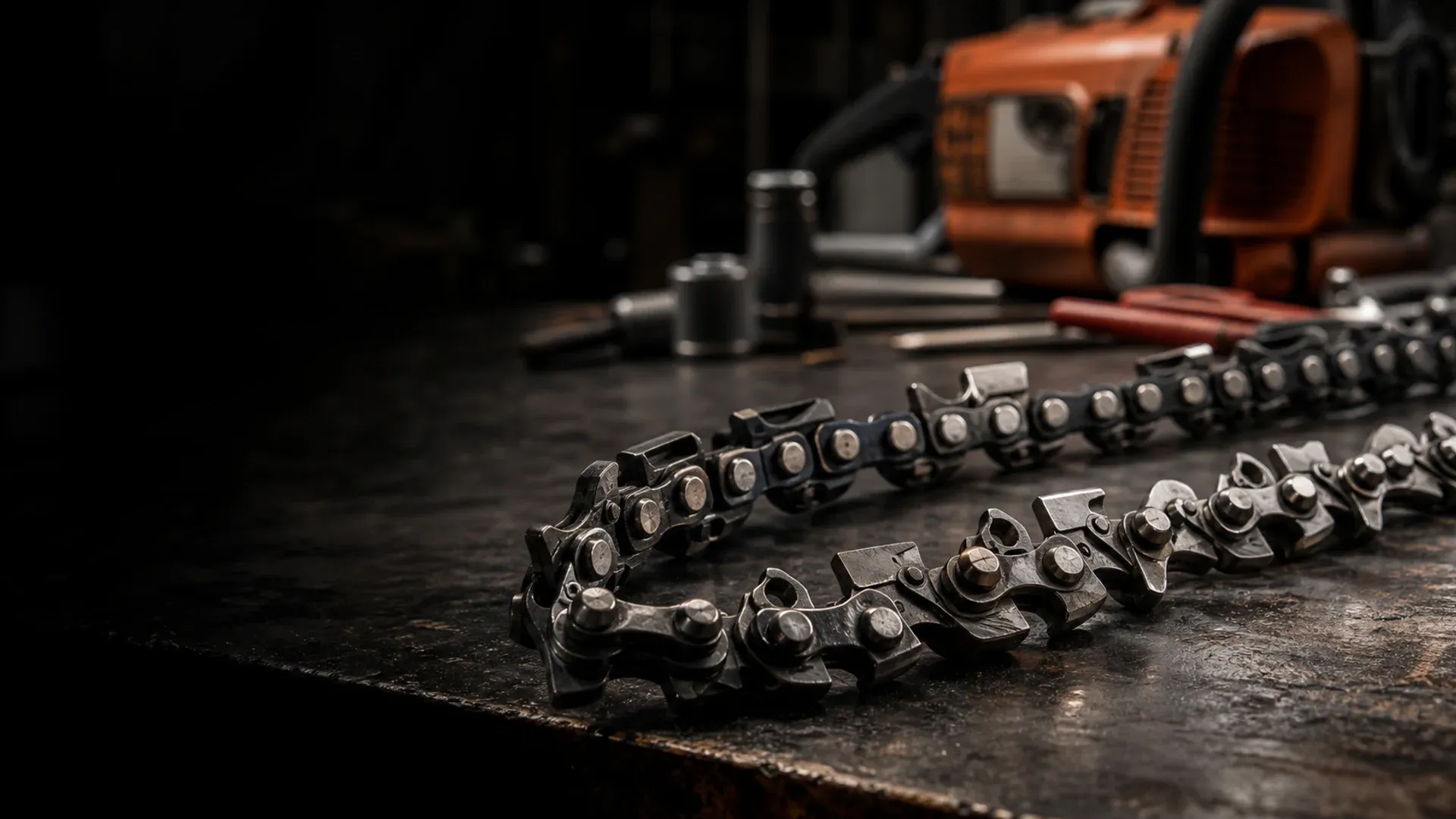
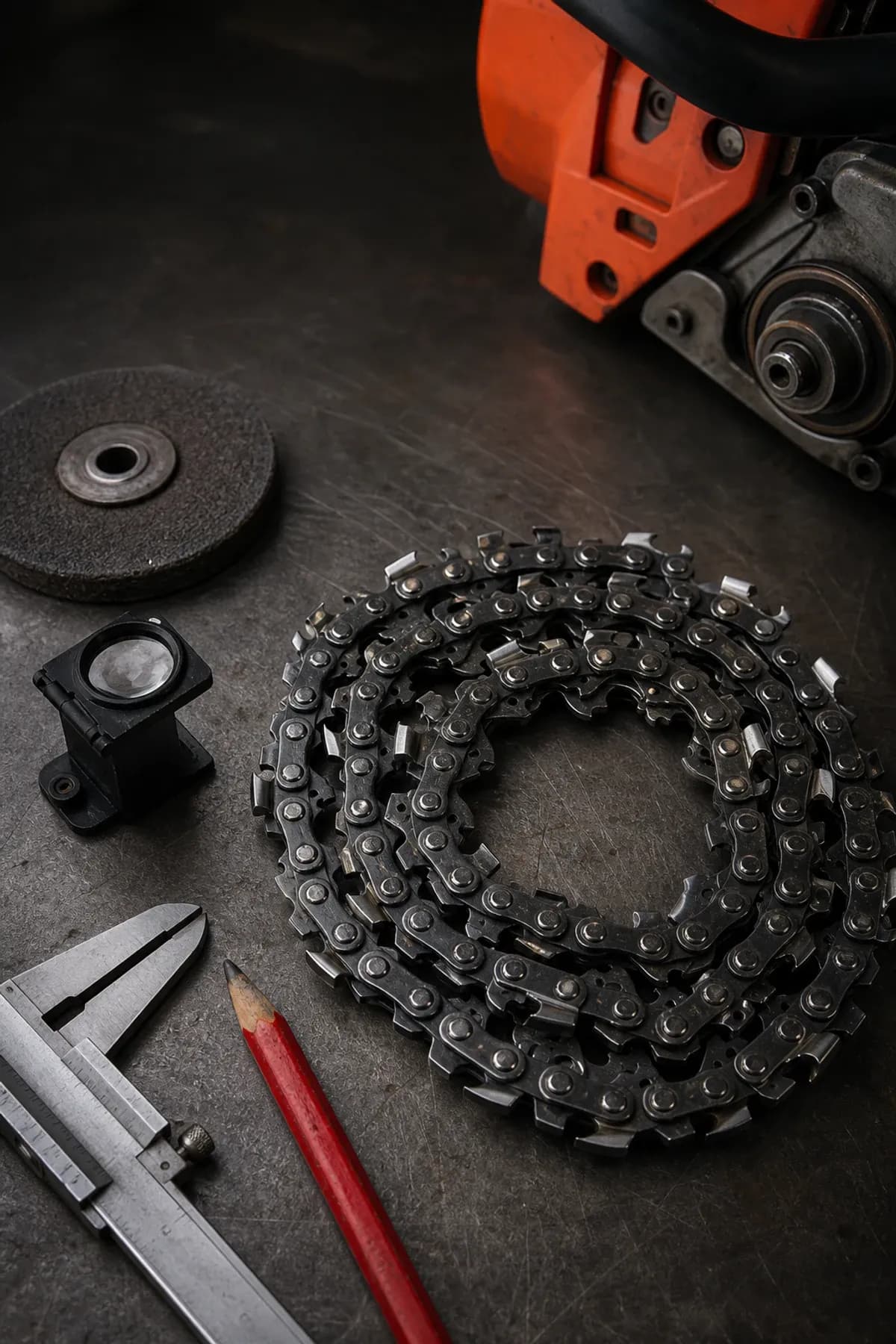
A standard steel chain dulls the instant it hits a roofing nail, a strip of tar, or light sheet metal, and a dull chain on a roof is a firefighter fighting the saw instead of the fire. A carbide chain solves that. Each tooth carries a carbide tip brazed to the cutter, hard enough to survive nails, tar paper, and light metal that destroy standard chain.

01

Single carbide chain puts one carbide tip per cutter, the standard aggressive vent chain for most roof work.

02

Dual carbide chain adds a second row of carbide for a longer service life on abrasive decks, at more weight and a higher price.

03

Bullet raker ventilation chain, the carbide chain we ship on Truckman's Choice, is built to rake through a roof deck fast and keep its edge.

Carbide-tipped rescue saw chains on a dark service bench
06

Chains and parts

Chains, sharpening, and parts in one shop.

Call 1-800-504-2044

07Engine size and bar length

Engine Size and Bar Length Guide

Two numbers drive a ventilation chainsaw's performance: engine displacement in cc and bar length in inches.

Bigger displacement means more power to keep chain speed up under load; longer bars reach deeper but need more saw to drive them.

Finished carbide-tipped rescue-saw chain being inspected on a service bench
07

70cc

the class most crews want for roof ventilation

For roof ventilation, most crews want a 70cc-class saw, right around the 70.7cc of the 372XP platform or the 72cc many operators quote for the class.

That's enough power to hold chain speed through a full-depth roof cut.

Smaller saws bog; oversized saws add weight the operator carries up the ladder for no gain.

08Bar length

Bar Length: Reach Versus Control

Bar length is a reach-versus-control trade:

01

12 to 14 inch bars are light and quick for forcible entry and shallow cuts, and easy to control one-handed on a ladder.

02

16 inch (16in) bars are the common all-around ventilation length, enough reach for a standard roof cut without excess weight.

03

18 to 20 inch bars reach through deeper roof assemblies and heavy timber decks, at the cost of added weight up top.

08

Cross-shop the four names

Fire Rescue Saw ComparisonTruckman's Choice vs Cutters Edge vs Tempest Ventmaster vs Husqvarna

Buyers cross-shop four names when they spec a ventilation saw, so here's a straight breakdown. This table is the quick technical comparison; confirm current specs with each maker before a purchase order, and confirm ours with us.

Swipe to compare

FeatureTruckman's Choice 372XP-TC / 572XP-TCCutters EdgeTempest VentmasterHusqvarna (base saw)
Built byEFES, Lemoyne PAEdge IndustriesTempestHusqvarna
TypeVentilation chainsawChainsaw and rotary linesVentilation chainsaw and rotaryGeneral-purpose chainsaw
Base platformHusqvarna 372XP / 572XPProprietaryAvailable on requestN/A (is the base)
Engine class70.7ccAvailable on requestAvailable on request70.7cc (372XP)
Air filtrationWest Coast Filter and Velocity StackAvailable on requestAvailable on requestStandard consumer filter
Vent chainBullet raker carbideCarbideCarbideStandard steel (not a vent chain)
Gloved-hand controls"D" handle, full-wrap, momentary switchAvailable on requestAvailable on requestNo
Depth guardOptionalAvailable on requestAvailable on requestNo
Warranty2-yearAvailable on requestAvailable on requestConsumer warranty, not fire-service
Service and parts at EFESYes, we build itYes, OEM parts and serviceYesYes, authorized

09What the table doesn't show

A Stock Saw Off the Shelf Is Not a Vent Saw

A base Husqvarna is a fine saw, but a stock chainsaw off the shelf is not a vent saw.

It has no fire-service air filtration, no carbide vent chain, no gloved-hand controls, and no depth guard.

09

4

names buyers cross-shop for a ventilation saw

Gloved-hand features

Depth Guards, Full-Wrap Handles, and Gloved-Hand Features

The details that separate a vent saw from a yard saw are the ones that keep a firefighter safe and cutting. Each one solves a fireground problem:

01

Full-wrap handle:

lets the operator hold and control the saw from the top or the side, which matters cutting on a pitch, overhead, or in an awkward forcible-entry position.

02

"D" starter handle and one-step starting:

a gloved hand can grab the "D" and pull, and one-step starting means the saw fires without a bare-handed choke routine on a roof.

03

Momentary contact switch:

the throttle and kill setup returns to run so the saw doesn't stay shut off by a bumped switch mid-cut, keeping throttle control predictable.

04

Depth guard:

limits how deep the bar drops so the crew opens the roof deck without cutting through into the space below.

05

Solid steel alloy guide bar:

takes the shock and abrasion a roof deck delivers on every cut.

Firefighter operating a Truckman's Choice rescue saw during training

These features exist because a firefighter operated the saw and told us what went wrong. That feedback loop is the whole point of a shop run by people who came off the line.

10Gas vs battery

Gas vs Battery Fire Rescue Saws

Gas is still the standard for fire rescue saws, and for good reason.

A two-cycle gas saw delivers sustained power and run time on a single tank of fuel, and a firefighter can carry a spare can of gasoline to a long incident. Chain speed under load, the number that decides how fast you open a roof, still favors gas today.

10

Gas

still the standard for fire rescue saws

Battery and electric rescue saws are improving fast.

They start instantly, run quiet, produce no exhaust, and skip the fuel-mixing step, which is a real advantage on overhaul and in enclosed spaces.

The trade-offs are run time and sustained power under heavy load, plus battery management across a shift, and the batteries themselves are expensive to keep spare across a fleet.

A battery vent-saw motor line is in the works on our side, so talk to us about where the technology stands before you spec battery for primary roof ventilation.

For now, gas remains the tool most departments trust for the roof.

11Service, sharpening, and parts

Saw Service, Sharpening, and OEM Parts

A rescue saw is only as reliable as its last service.

A saw that sits in a compartment for months and then has to start on the first pull at 3 a.m. needs maintenance on a schedule, not a "we'll get to it" plan. Our service department handles repair and maintenance for fire departments across the country from our shop in Lemoyne, PA.

EFES service shop and equipment workspace in Lemoyne, Pennsylvania
11

We service and stock OEM parts for the rescue saws crews run every day: Cutters Edge (the 2000 Series and 2100 Series chainsaws and the 760R and 970R rotary saws), Husqvarna, Jonsered, Tempest/Ventmaster, and Redmax.

That covers routine maintenance, full repair, a parts diagram lookup and a repair kit for common jobs, and carbide chain reconditioning and sharpening.

We keep an air filter cleaning and inspection habit central to every service, because filtration is what keeps a fire saw alive.

Build a saw check into your department SOP and your training rotation.

No NFPA standard certifies or governs fire-service chainsaws, so no saw is "NFPA-certified."

NFPA 1500 is an occupational safety and health program standard (being consolidated into NFPA 1550) that points departments toward inspecting and maintaining equipment under their own written program.

Put your rescue saws on that program, run them at training so operators stay sharp, keep the operator's manual with the saw so any crew member can service it, and log the maintenance.

For parts and service, start at the rescue saw parts page or contact us.

Service and parts

Put your saws on a service schedule.

How to spec

How to Spec a Ventilation Saw for Your Apparatus

Speccing a vent saw comes down to a handful of questions your apparatus committee and FD leadership can answer together:

01

What roofs do you cut?

Deck type and pitch set your bar length and depth-guard setting. Most departments land on a 70cc-class saw with a 16in bar.

02

Ventilation, forcible entry, or both?

A ventilation chainsaw covers roof cuts and most forcible entry. Add a rotary or cut-off saw if you also cut heavy metal, masonry, or concrete.

03

Who operates it?

Career firefighters and volunteers, USAR teams, wildland and structure companies all put different demands on a saw. Gloved-hand controls and one-step starting matter more the less often a saw gets run.

04

Gas or battery?

Gas for primary roof ventilation today; consider battery for overhaul and enclosed work.

05

How will you buy it?

Fire departments run orders on a purchase order with net-30 terms, so an approval cycle never stands between you and the saw. Some crews rent a saw first; a short rental tells you fast whether a saw belongs on your rig before you commit to a sale.

Not sure where to start? Bring us the saw you run now. Our compare-to-your-current-saw approach puts a Truckman's Choice next to what's in your compartment so you can judge value, weight, and cut for yourself. We'd rather you compare than take our word for it.

Ready to spec

Put us next to the saw you run now.

Find a Dealer | Call 1-800-504-2044

Fire rescue saws

FrequentlyAsked Questions

About Fire Rescue Saws

A rescue saw is purpose-built for the fireground and a regular chainsaw is built for trees and yard work. The rescue saw adds high-capacity air filtration to breathe through smoke, a carbide chain that survives nails and light metal, gloved-hand controls, and a depth guard. A stock consumer chainsaw has none of that, which is why it isn't a substitute for a vent saw on a roof.

Most crews want a 70cc-class saw for roof ventilation, right around the 70.7cc of the Husqvarna 372XP platform (often quoted as 72cc for the class). That gives enough power to hold chain speed through a full-depth roof cut. Smaller saws bog down in a deck, and larger saws add weight the operator carries up the ladder for little gain.

Use a ventilation chainsaw for roof cuts and most forcible entry, and a rotary or cut-off saw for metal, masonry, concrete, and pavers. A chain won't cut hard material and a rotary blade won't open a roof deck the way a chain does. Most departments carry both and split the fireground jobs between them.

The bullet raker, also called Bullet Chain, is the carbide ventilation chain we ship on Truckman's Choice Fire Rescue Chainsaws. Each cutter carries a carbide tip built to rake through a roof deck fast and keep its edge against nails, tar, and light sheet metal that would dull standard steel chain. It's resharpenable, so a worn chain gets reconditioned rather than tossed.

Eastern Fire Equipment Services (EFES) builds Truckman's Choice Fire Rescue Saws in Lemoyne, PA. The 372XP-TC and 572XP-TC are built on Husqvarna 372XP and 572XP platforms, then modified for the fire service with fire-rescue filtration, a carbide vent chain, gloved-hand controls, and a depth guard. It's a Husqvarna-based saw purpose-built by EFES, not a stock Husqvarna.

Both saws carry the same ventilation package: West Coast Filter and Velocity Stack, "D" handle, full-wrap handle, momentary switch, solid steel alloy guide bar, and the bullet raker chain. The difference is the engine platform. The 372XP-TC uses the proven Husqvarna 372XP; the 572XP-TC uses the newer 572XP successor platform. Exact TC engine specs are confirmed at order.

A 12 to 14 inch bar is light and quick for forcible entry and shallow cuts. A 16 inch bar is the common all-around ventilation length. An 18 to 20 inch bar reaches through deeper roof assemblies at the cost of added weight. Match the bar to the roofs you cut most, and let the depth guard handle cut depth.

Battery rescue saws start instantly, run quiet, and produce no exhaust, which helps on overhaul and in enclosed spaces. For primary roof ventilation, gas still delivers more sustained power and run time under heavy load. A battery vent-saw motor line is in development, so call us to talk through where the technology stands before you commit battery to roof work.

Service a rescue saw on a set schedule and check it as part of your department SOP and training rotation, not only after a failure. At minimum, keep the air filter clean, verify one-pull starting, inspect the chain and bar, and run the saw regularly so it's ready cold. EFES performs full repair and maintenance and stocks OEM parts for the major rescue-saw brands.

A carbide ventilation chain handles asphalt shingles, roofing nails, tar, and light sheet metal without dulling, which is exactly what a roof cut throws at it. For heavier steel, masonry, or concrete, use a rotary or cut-off saw with the right abrasive or diamond blade instead of a chainsaw.

Every Truckman's Choice Fire Rescue Chainsaw carries a 2-year warranty, and EFES services the saw directly. Because we build it in Lemoyne, PA and service rescue saws every day, warranty work and parts come straight from the people who made the saw.

No. No NFPA standard certifies or governs fire-service chainsaws, so any claim that a saw is "NFPA-certified" is inaccurate. NFPA 1500 is an occupational safety and health program standard (being consolidated into NFPA 1550) that directs departments to inspect and maintain equipment under their own written program. Put your saws on that program and maintain them accordingly.

Buy through the Truckman's Choice dealer directory or directly from EFES. Fire departments run orders on a purchase order with net-30 terms. Call 1-800-504-2044 or request a quote through our contact page, and ask about a demo so you can compare the saw to the one in your compartment.

12From the shop that builds them

Talk to the People Who Build These Saws Before You Buy Your Next Vent Saw

EFES was founded in 2009 by two firefighters who started by servicing rescue saws and grew into building the equipment departments want on the rig.

That's still the team: firefighters and tradesmen who service Cutters Edge, Tempest/Ventmaster, Husqvarna, Jonsered, and Redmax saws every week and build Truckman's Choice from what we learn.

We serve fire departments across the East Coast, North America, and internationally.

A direct path

Four Ways to Get Moving

However you want to move forward, there's a direct path:

01

Ready to price it out?

Request a quote and we'll spec a saw to your roofs and your apparatus.

02

Want to see it cut?

Schedule a demo and compare a Truckman's Choice to the saw you run now.

Bring the saw you trust

Let theCut Decide.

Call 1-800-504-2044 or reach us through our contact page.

Bring the saw you trust, put it next to ours, and let the cut decide. That's the whole pitch, from one firehouse to another.

Carbide-tipped ventilation chainsaw cutting package on a dark work surface