01
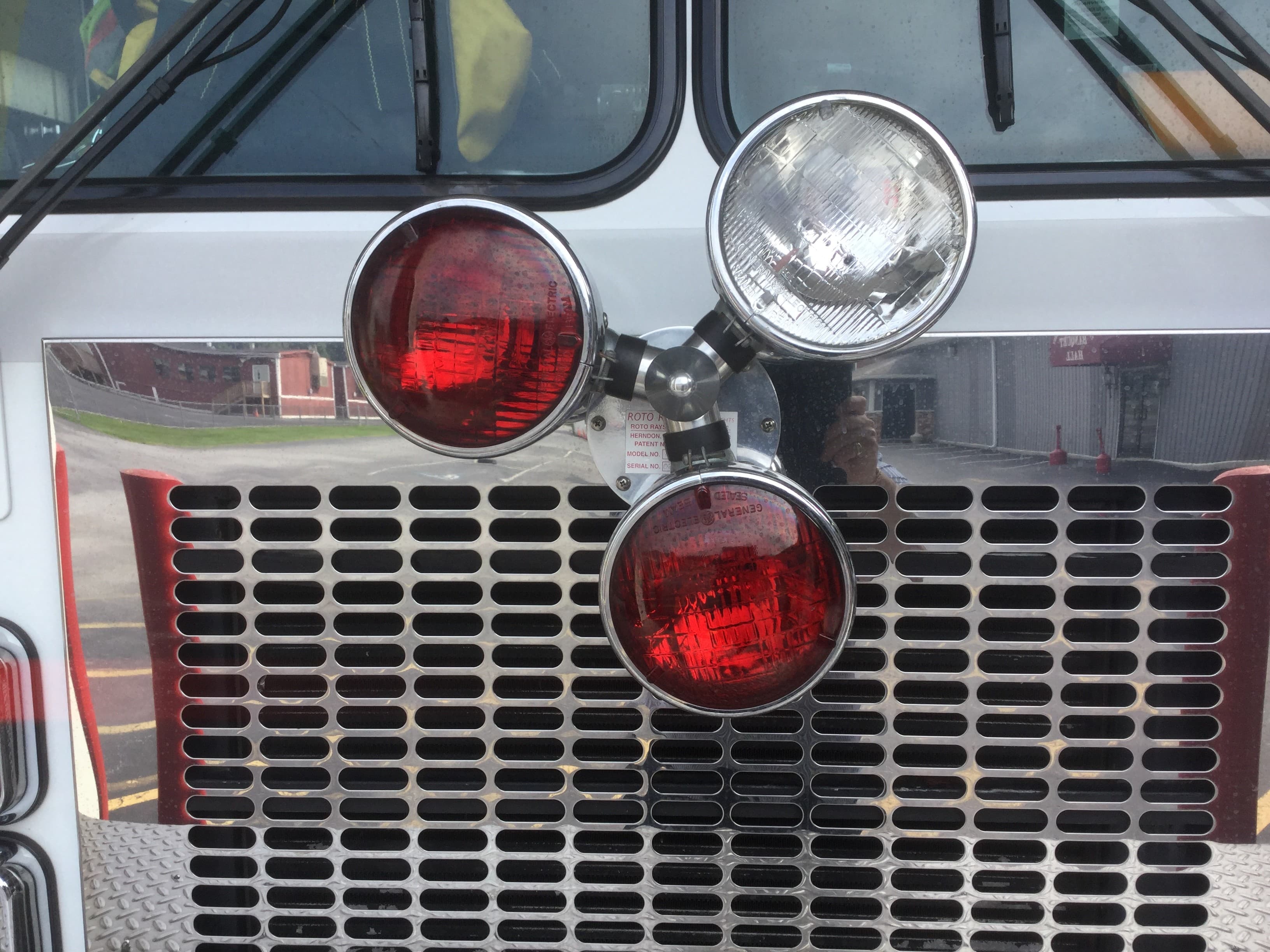
Two-light Roto-Ray
A 2-light head for rigs where a compact warning package fits the front profile. If you've asked whether there's a Roto-Ray with only 2 lights, this is it.
Built & serviced in Lemoyne, PA — by firefighters, since 2009
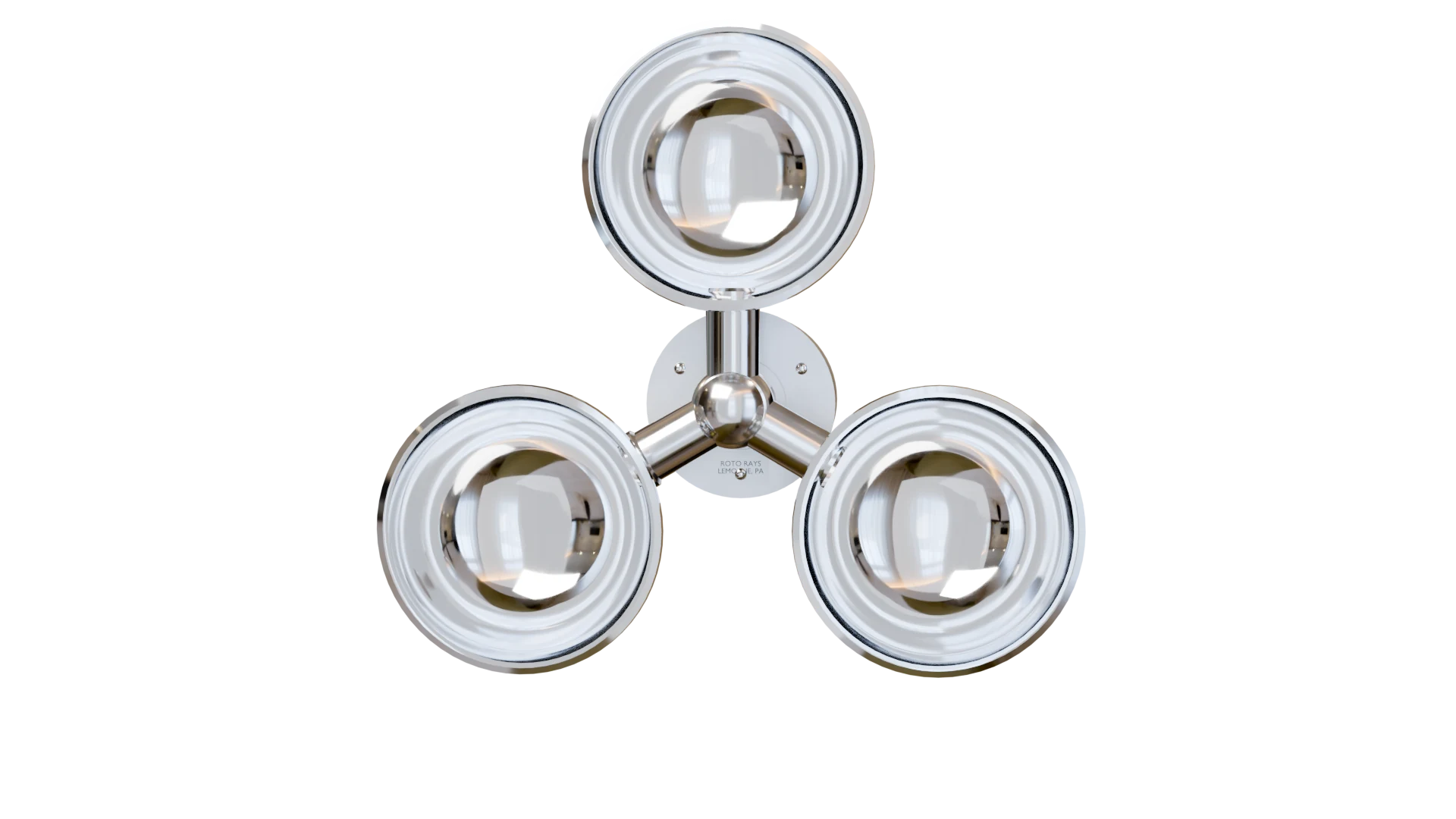
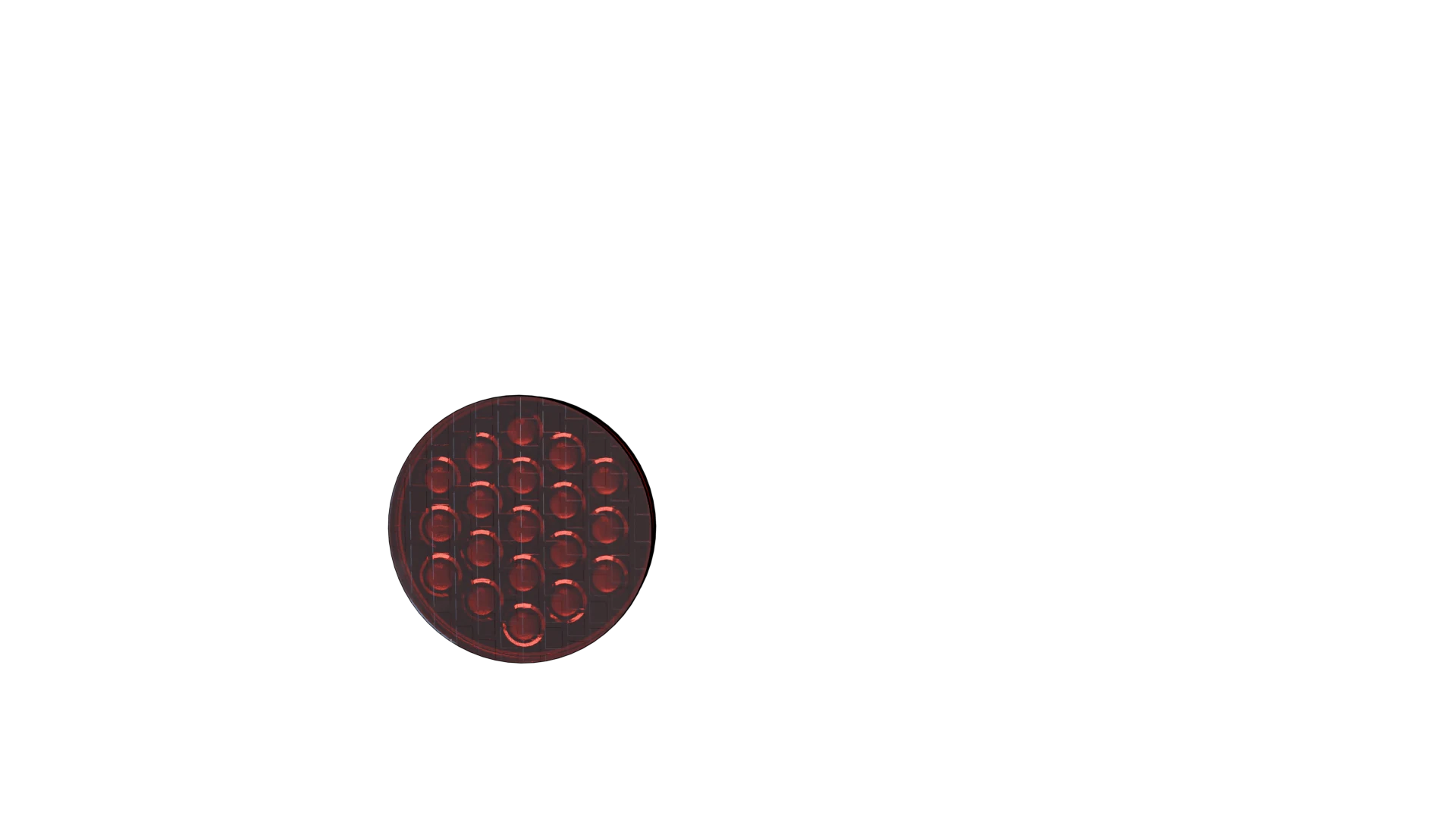

Roto-Rays Warning Lights
Configure the model, mount, finish, three lamp colors, and hot post circuit in one view.
Product overview
A serviceable Roto-Rays warning-light package for departments that want a distinct, trusted visual signal on active apparatus. Estimated pricing includes the light assembly and standard EFES support coordination.
The Original Roto-Rays warning light
If you've spent any time around the fire service, you already know the shape of a Roto-Ray.
Three spinning arms of light throwing red and clear beams down the road, mounted dead center on the front of a rig. It's the warning signal that told every driver ahead of you, decades before light bars covered the cab, that something serious was coming. That spinning light is back in production, and it's built by us at Eastern Fire Equipment Services in Lemoyne, PA.
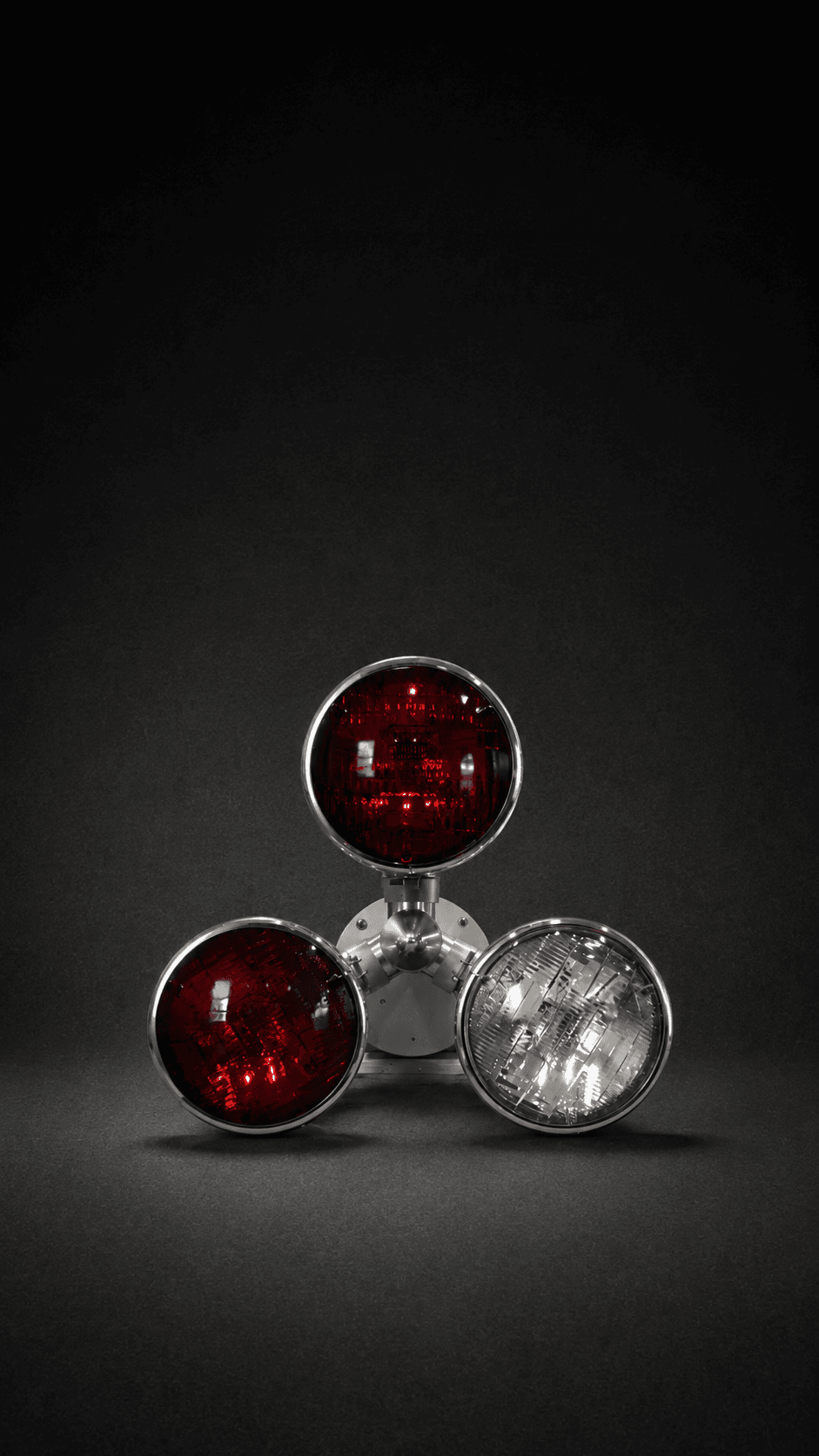
01What a Roto-Ray does
A Roto-Ray is a rotary warning light.
Instead of a fixed strobe or a static bulb, sealed-beam lamps ride on arms that physically spin, sweeping a moving beam across everything in front of the truck. That motion is what makes it register. The human eye locks onto movement faster than it locks onto a steady glow, so a spinning light cuts through daylight, fog, and a windshield full of glare in a way a flat panel struggles to match.
3
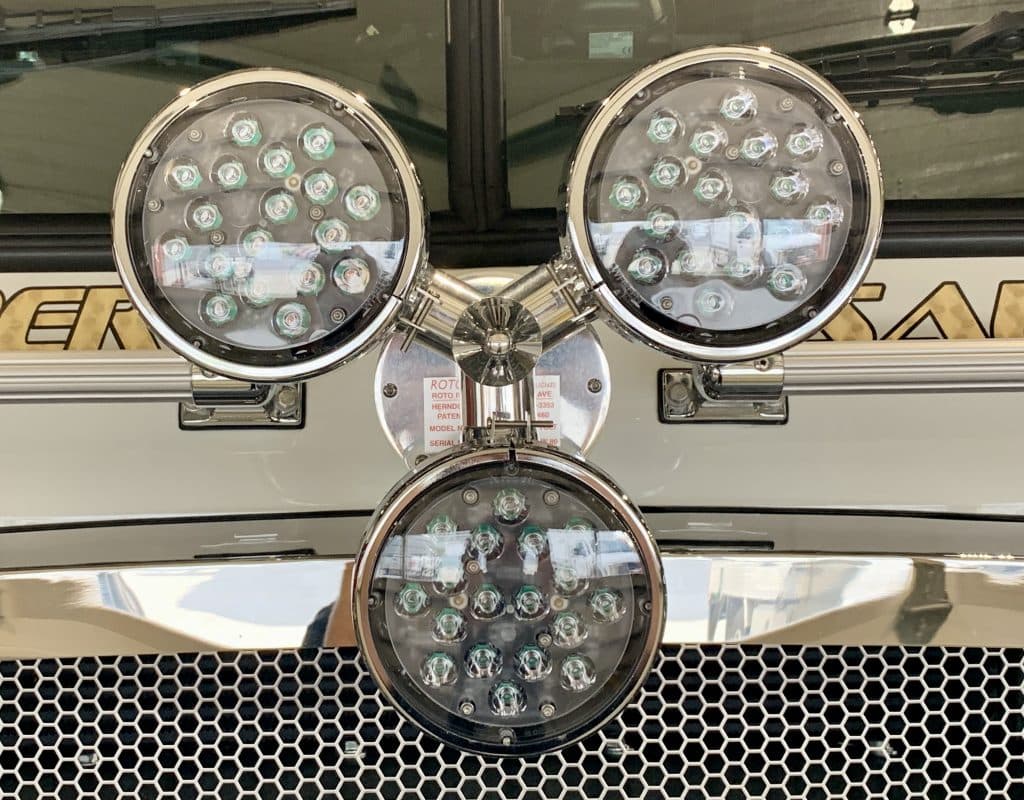
Spinning arms of light
02What it's called
People describe it before they can name it: the round, spinning light on the front of a fire truck, the one that throws beams in a circle as a rig approaches.
That light is a Roto-Ray. It is a spinning warning light with sealed-beam lights that physically turn rather than flash in place. Plenty of departments and restorers know the light by sight long before they know the brand name behind it.
03History
The year the light traces back
The Roto-Ray warning light traces back to 1970, and the history of the brand is the history of American fire apparatus in that era.
The original Roto Rays, Inc. operated out of Herndon, Virginia, and names tied to the brand's early paper trail include Richard Slepetz and Bill Darrow. For decades it was the light departments trusted before LED bars existed. Old-school rigs across the country ran a Roto-Ray up front, and plenty of firefighters can still point to the exact engine they rode as a kid and tell you the light was spinning on it.
For collectors and restorers
Collectors and restorers know the name well. A vintage Roto-Ray light is a prized find for anyone bringing an old fire truck back to life, and the earlier Buckeye Roto-Ray units still trade hands among people who want a period-correct restoration. Roto Rays Inc built a following that outlasted trends, which is exactly why the brand still matters. When EFES acquired the rights (read the announcement), we weren't buying a logo. We were taking responsibility for a piece of fire service history that people genuinely care about. The full story lives on our history of the Roto-Ray warning light page.
Models
Not every rig needs the same light, so the Roto-Ray comes in more than one configuration. The differences come down to how many light arms spin and how they're arranged.
01
A 2-light head for rigs where a compact warning package fits the front profile. If you've asked whether there's a Roto-Ray with only 2 lights, this is it.
02
The classic look. A triple head runs three spinning lights and is the version most people picture when they hear the name. A triple Roto-Ray on the front of an engine is the iconic silhouette.
03
A four-lamp firetruck light for departments that want maximum sweep and output up front.
04
A straight, inline arrangement for apparatus fronts where a horizontal mount works better than a stacked one.
The current production centers on the Model 4000 platform, with the Model 4000W available as well. Light colors cover the range departments run in the field: all-red, red-and-clear combinations, and amber for apparatus and support vehicles that call for it. Housing options include a black finish for rigs going for a blacked-out front. If you need a smaller footprint, a mini Roto-Ray covers tighter mounting spots without giving up the spinning action. For a side-by-side breakdown of every head and how to order, see the full Roto-Ray model lineup, specs, and ordering guide.
Model 4000 — built in Lemoyne, PA
04Specifications
The performance of a Roto-Ray comes down to two numbers: how fast the arms turn and how often each lamp faces the road.
Rotation speed is measured in rpm, and the effective warning output is often described in flashes per minute, or fpm, since each pass of a lamp reads as a flash to oncoming traffic. Together, the rpm and fpm figures are what give the light its signature urgent, spinning cadence: a beacon that reads as rapid flashing motion whether an oncoming driver catches it at noon or on a dark stretch of highway at night.
Spec sheets before you build
We publish the full specification and dimensions for each model so your apparatus committee can plan the mount before the light ships. If you need the exact dimensions to clear a bumper, a warranty plate, or a front-mounted hose tray, that specification is available on request. Knowing what a Roto-Ray does at a spec level, not only what it looks like, is how you avoid a fitment surprise on delivery day.
At a glance
Here's the quick-reference spec table for a Roto-Ray. Confirm final figures with EFES before you finalize a build, since some values change with the head configuration and lamp type you choose.
| Specification | Detail |
|---|---|
| Current models | Model 4000, Model 4000W |
| Head configurations | 2-light, triple, four-arm, straight inline |
| Lamp options | Sealed-beam incandescent, or LED upgrade |
| Lamp colors | All-red, red-and-clear, amber |
| Operating voltage | 12V DC standard; 24V DC |
| Current draw | Available on request |
| Rotation speed | Available on request |
| Warning output | Available on request |
| Specification | Detail |
|---|---|
| Overall dimensions | Available on request |
| Weight | Available on request |
| Housing finish | Powder-coated, with a black finish option |
| Mounting position | Front center: grille, bumper, or brow |
| Optical compliance | SAE J595 / J845 |
| Warranty | Available on request |
| Built in | Lemoyne, PA, USA |
Spec'ing a build?
05LED upgrade
The original Roto-Rays ran sealed-beam incandescent lamps, and plenty of them are still spinning fine.
For departments that want lower current draw and longer lamp life, an LED upgrade brings the classic housing into current-day electrical standards. You get the same spinning profile with LED lamps doing the work. It's the practical way to keep a legacy look on a rig with an updated charging system.
06Mounting and wiring
A Roto-Ray is a front-of-apparatus light by design.
The most common position is a center front mount, low on the cab face or across the grille where the sweep clears the widest angle. Some departments run a roof or brow position, and others integrate the unit into an existing warning light bar. The right spot depends on your apparatus profile and whatever else is already competing for real estate up front.
About the wiring
Wiring is straightforward for anyone who's worked on emergency vehicle lighting. The unit runs off the apparatus electrical system and switches from the cab like any other warning light on the dash. We provide a wiring diagram with every unit so your shop or your dealer's installer can land the connections without guesswork. If you're adjusting an older head, we can walk you through how to adjust the drive and balance the arms so the light spins true.
07Vehicles
Roto-Rays aren't only for the big rigs, either. The light shows up on plenty of vehicle types across a department fleet:
01
A pumper or fire engine running a triple up front
02
A ladder or aerial where a Roto-Ray anchors the front warning package
03
A heavy rescue that needs to be seen coming
04
A chief's SUV, a command car, or an ambulance where a compact head does the job
Factory heritage
Historic apparatus from builders like Pierce, Sutphen, and Kenworth-chassis rigs wore Roto-Rays from the factory or the dealer, which is part of why restorers keep coming back to the brand.
08Roto-Ray vs. Mars light
Old-timers will mention the Mars light in the same breath as the Roto-Ray, and fairly so.
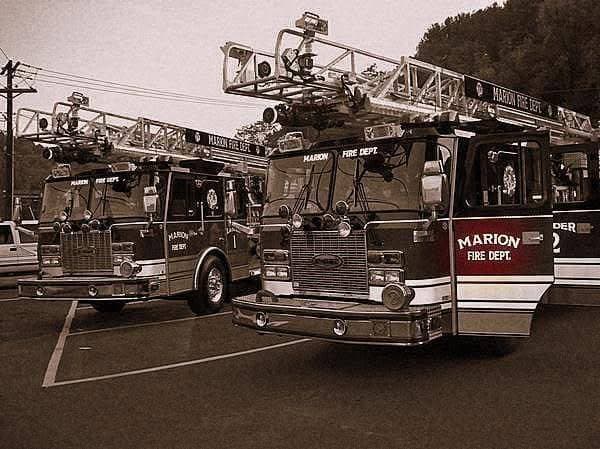
The Mars light was the oscillating warning light of the same era, sweeping a beam up and down rather than spinning it in a circle. Both defined the front of a fire truck for a generation. The difference is motion: a Mars light for a fire truck rocks a single sealed beam, while the Roto-Ray rotates multiple lamps around a hub. Ask a room of firefighters what a Mars light on a fire truck is versus a Roto-Ray and you'll get a spirited answer either way.
2
Icons of the fire truck front
09Colors and legal requirements
Zone A
Forward-facing coverage
Warning light colors on fire trucks aren't a free-for-all.
Every state sets its own rules on which colors emergency vehicles may show and where, and those rules change what you can legally run up front. Red is standard for fire apparatus almost everywhere. Amber is common for scene and directional warning. Blue and other colors carry state-specific restrictions.
Two sets of standards sit behind those rules, and your apparatus committee will point to both. On the vehicle side, NFPA 1901 (consolidated into NFPA 1900 in the 2024 edition) defines the warning-light zones a fire apparatus has to cover, and a front-mounted Roto-Ray contributes to the forward-facing, or Zone A, coverage. On the optical side, emergency warning lamps are measured against SAE standards J595 and J845, which set the intensity and flash characteristics a warning light has to meet. When you spec a Roto-Ray into a build, those are the references your dealer and your engineer will cite.
The most frequent question we get is whether Roto-Rays are legal in California, and the answer is that it depends on the vehicle class and how the light is used. California writes tighter emergency-lighting rules than many states under Title 13 of the California Code of Regulations and the state Vehicle Code. Before you spec colors, confirm your own state code or check with us. We'd rather help you build a compliant light than sell you one you can't run.
Compliance questions?
Parts and service
We handle Roto-Ray as a complete program, not a closeout. That means new units, replacement parts, and service for the lights already in the field.
01
Order a current-production Roto-Ray light directly from the manufacturer. Because we build them, the price and lead time come straight from us, not a reseller marking up old stock.
02
Lamps, motors, drive components, and the small pieces that wear out over years of service. Keeping a rig's original light spinning is usually a parts question, and we stock the answer.
03
If you're restoring an old rig and hunting a used Roto-Ray light for sale, talk to us before you buy something questionable online. We can often point you toward the right model or get you a new head that matches the period.
04
Convert an existing housing to LED without losing the look.
For years the only way to find a Roto-Ray was word of mouth and the occasional listing. Now the manufacturer website is the direct source. You'll find product images and video of the lights in action, model details, and current pricing as we continue building out the catalog.
About Roto-Rays
A Roto-Ray is a rotary emergency warning light for fire apparatus. Its sealed-beam lamps ride on arms that spin, sweeping a moving beam across traffic ahead of the truck instead of flashing in place. It mounts low and center on the front of a rig and has been a fixture on American fire engines since 1970.
The lamps rotate around a central hub, and each pass of a lamp reads as a flash to oncoming drivers. Because the eye catches motion faster than a steady glow, a spinning Roto-Ray cuts through daylight, fog, and glare that a flat panel struggles with. Rotation speed is measured in rpm, and warning output is described in flashes per minute, or fpm.
Eastern Fire Equipment Services (EFES) makes Roto-Rays. EFES holds the exclusive manufacturing and licensing rights to the brand and builds every unit in Lemoyne, PA. If you've been trying to learn who makes Roto-Ray lights today, the answer is EFES, not a reseller.
Yes. Roto-Rays are in active production at EFES in Lemoyne, PA. After years with no manufacturer behind the name, EFES brought the American-made light back into production, including new units, replacement parts, and LED upgrades.
Roto-Ray price depends on the model, lamp configuration, and whether you choose incandescent or LED lamps. Because EFES builds the lights, pricing comes straight from the manufacturer rather than a marked-up reseller. Call 1-800-504-2044 or request a quote through efesinc.com for current numbers.
The current lineup centers on the Model 4000 and the Model 4000W. Head configurations include a 2-light version, the classic triple, a four-arm head, and a straight inline arrangement. A mini Roto-Ray covers tighter mounting spots without losing the spinning action.
Yes. A 2-light Roto-Ray is available for rigs where a compact front-warning package fits the profile better than a triple or four-arm head.
A Roto-Ray's arms turn at a set rotation speed measured in rpm, producing a steady rhythm of flashes per minute as each lamp faces the road. Exact rpm and fpm figures appear on the specification sheet for each model.
Roto-Ray lamps are available in all-red, red-and-clear combinations, and amber. Housing finishes include a black option. Warning light colors are regulated by state, so confirm your local code before choosing.
Yes. An LED upgrade fits the classic Roto-Ray housing with LED lamps, lowering current draw and extending lamp life while keeping the same spinning profile. It's a common upgrade for older heads going onto rigs with updated electrical systems.
It depends on your state and how the light is used. Red is standard for fire apparatus almost everywhere, amber is common for directional and scene warning, and blue carries state-specific rules. California writes tighter emergency-lighting rules than many states, so confirm your vehicle class and local code before you spec colors. Whether Roto-Rays are legal in California comes down to that vehicle class and use, not the light itself.
Both defined the front of a fire truck for a generation, but they move differently. A Mars light oscillates a single sealed beam up and down, while a Roto-Ray rotates several lamps around a hub. The Roto-Ray's spinning, multi-lamp sweep is its signature.
Roto-Rays mount on pumpers, fire engines, ladder and aerial trucks, and heavy rescues, along with a chief's SUV, a command car, or an ambulance. Historic apparatus built on Pierce, Sutphen, and Kenworth chassis wore them from the factory or the dealer.
A Roto-Ray mounts front and center, low on the cab face or across the grille, and switches from the dash like any other warning light. It runs off the apparatus electrical system, and EFES provides a wiring diagram with every unit so your shop or installer can land the connections without guesswork.
Adjustment covers the drive and the balance of the spinning arms so the light turns true. If you're servicing an older head, EFES can walk you through how to adjust it and supply any replacement parts you need.
Order new Roto-Rays, parts, and LED upgrades directly from EFES, the manufacturer, at efesinc.com or 1-800-504-2044. For a used or vintage Roto-Ray light, talk to EFES first; they can match you to the right model or supply a new head in the correct period style.
Spec sheet, quote, or parts
However you need to work with us, there's a direct path:
01
Request a full specification sheet and we'll help your apparatus committee drop a Roto-Ray into the order.
02
Get a quote straight from the manufacturer, with no reseller markup.
03
Order replacement lamps, motors, and drive components, or send an older head in for service.
04
We're building out the Roto-Ray dealer network.
Fire departments on net-30 terms can run a Roto-Ray order through your normal purchase-order process, so an approval cycle never stands between you and the light. Every unit is built in Lemoyne, PA and backed by a warranty. You're buying from the manufacturer, not a middleman marking up old stock.
Order direct
EFES was founded in 2009 by two firefighters who started by servicing rescue saws and grew into building the equipment departments want on their rigs.
Taking on Roto-Rays fits that mission exactly. We know what a fire truck light has to survive because we come from the same firehouses you do.
When you want a Roto-Ray, you're getting a light designed for fire apparatus, built in Lemoyne, PA, and backed by a company that answers the phone. Call us at 1-800-504-2044 or reach out through our contact page for pricing, a specification sheet, or help choosing the right model for your rig. The iconic spinning light is still made in America, and it's still ready to earn its place on the front of your truck.