Blue Mountain wildland skid unit with twin hose reels installed on a red brush truck in the EFES shop

Type 6 Brush Trucks · Department Buying Guide

Type 6 Brush Trucks & Wildland Skid UnitsA Department Buying Guide

A Type 6 is an initial-attack wildland engine built around a specific capability: water, pump performance, hose, pump-and-roll, staffing, and weight all working together on one apparatus. A skid unit can put much of that package into a pickup, utility body, or flatbed, but the skid alone does not make the finished truck a Type 6.

This guide helps your committee start in the right order: define the mission, understand the current typing minimums, calculate loaded weight, and then spec the tank, pump, plumbing, hose, storage, and controls as one system. EFES builds Blue Mountain skid units in Lemoyne, Pennsylvania, and works through custom projects from the first configuration conversation to the approval drawing.

01Start With the Finished Resource

A Type 6 Is a Capability, Not a Pickup With a Tank

A Type 6 designation is not something a skid unit grants automatically, and it is not a label that comes with a particular chassis.

Resource typing describes what the complete, in-service apparatus can deliver. The tank, pump, hose load, pump-and-roll function, staffing, and loaded vehicle weight all count.

That distinction matters before the committee spends money. A tank and pump may each meet a number on the typing table while the completed apparatus still misses another requirement or exceeds its weight limit. Treat Type 6 as a whole-apparatus target to verify against current agency requirements, not as a component package to assume.

02Mission Fit

Where a Type 6 Fits

Type 6 apparatus are built for initial attack where access and maneuverability matter.

They give a department more water and pumping capability than a Type 7 while remaining lighter than a Type 5. The current federal table places a Type 5 at a 400-gallon minimum tank and a 26,000-pound maximum GVWR. A Type 7 has a 50-gallon minimum tank, a smaller pump and hose requirement, and a 14,000-pound maximum GVWR. Type 6 sits between them with its own complete set of minimums.

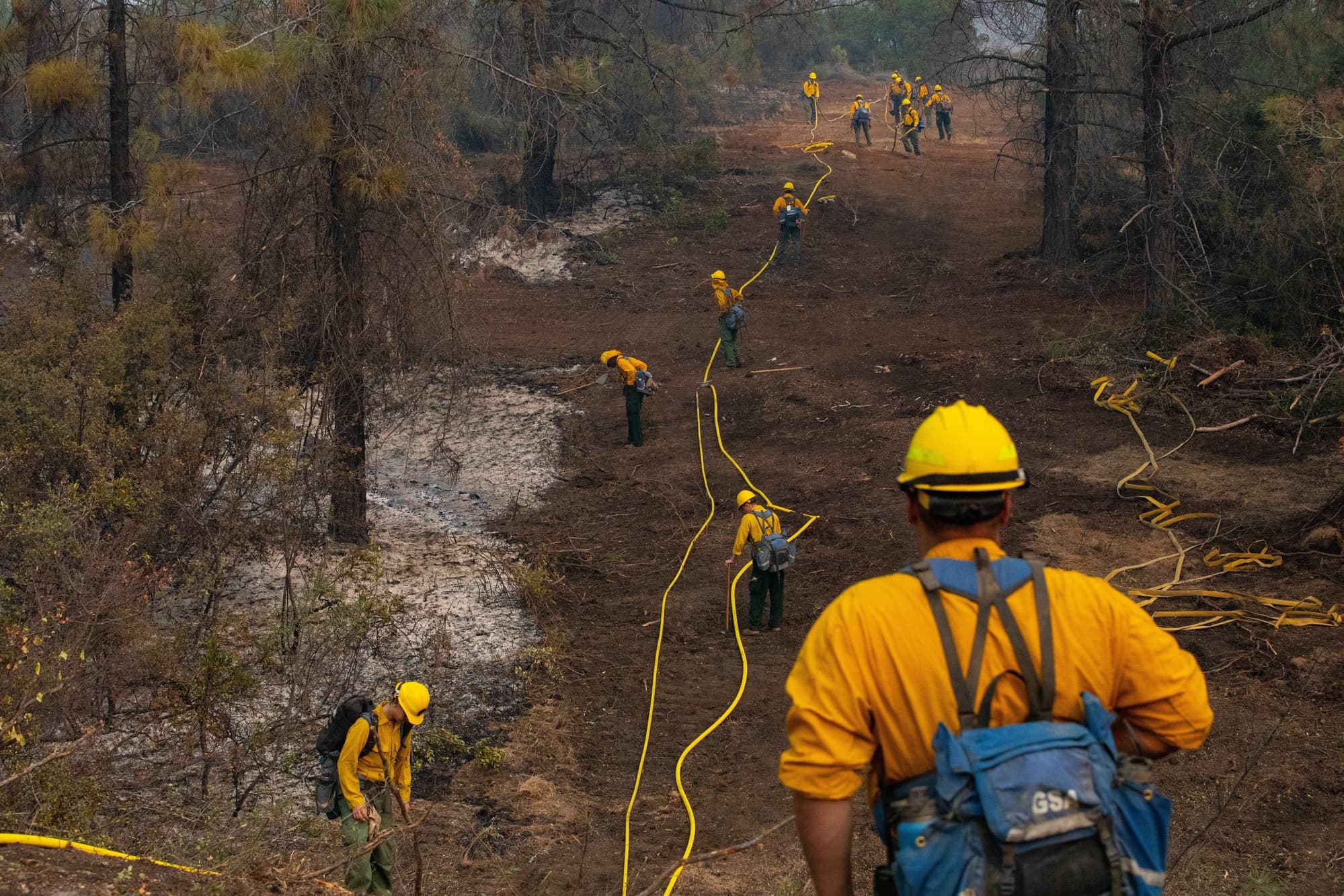
Wildland firefighters advancing hose along a cleared fire line
02

2026 NWCG / NIFC Baseline

The 2026 Type 6 Minimums

The 2026 Interagency Standards for Fire and Fire Aviation Operations publishes the current NWCG engine-typing table. These are minimum criteria for the complete resource. Matching one tank, pump, or skid figure does not by itself classify the finished vehicle; verify the entire apparatus, carried equipment, staffing, and any additional agency or local requirements.

Swipe to compare

Minimum criterionType 5Type 6Type 7
Tank capacity400 gal150 gal50 gal
Pump flow50 GPM50 GPM10 GPM
Rated pressure100 PSI100 PSI100 PSI
1.5-inch hose300 ft300 ftNot specified
1-inch hose300 ft300 ft200 ft
Pump-and-rollRequiredRequiredRequired
Maximum GVWR26,000 lb19,500 lb14,000 lb
Minimum personnel222

03Weight Before Water

Start With Payload, Then Choose Water

Water drives the weight calculation.

At about 8.34 pounds per U.S. gallon, 150 gallons weighs roughly 1,251 pounds. Three hundred gallons weighs roughly 2,502 pounds. Those figures are water only.

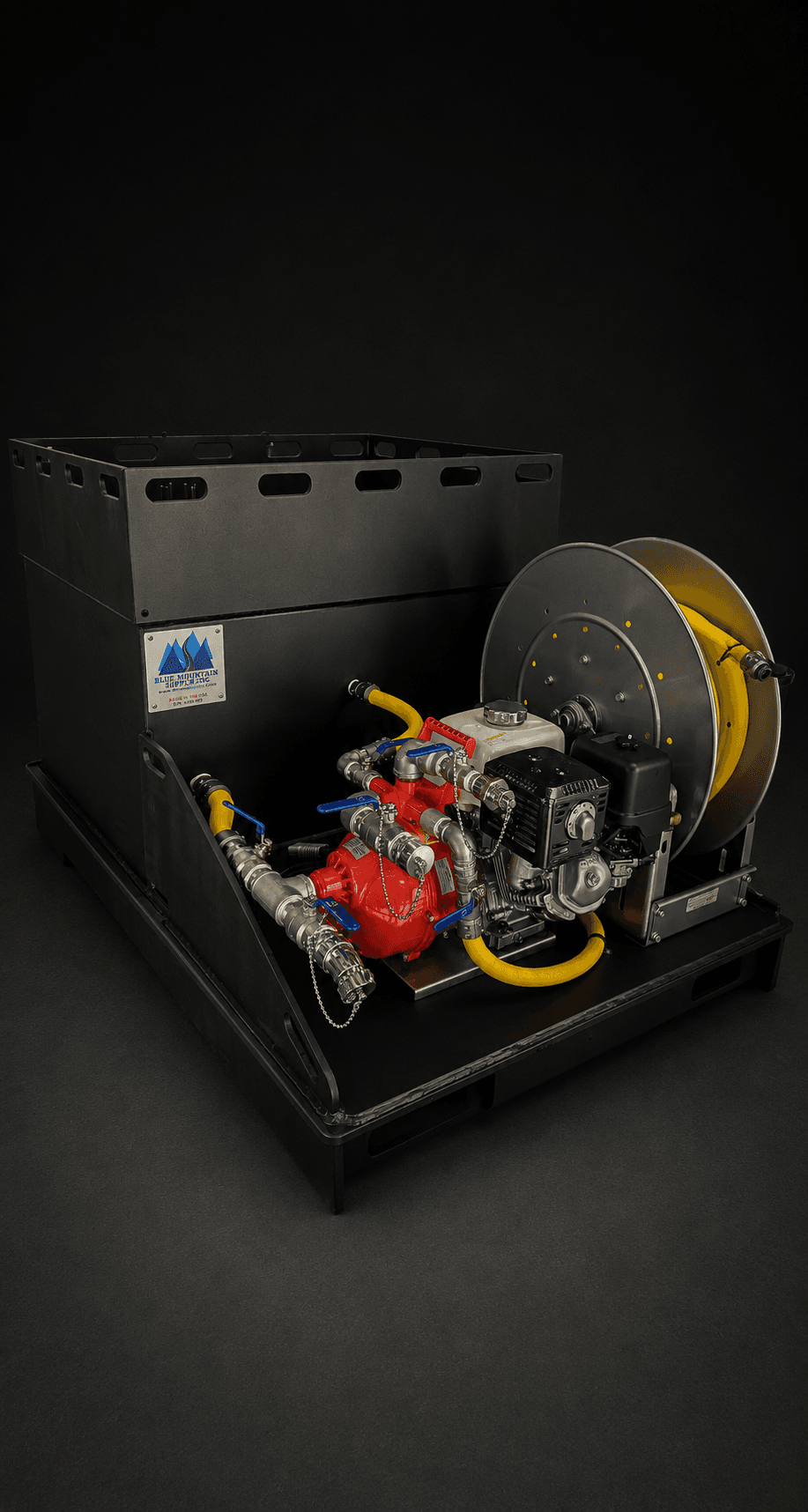
Blue Mountain skid unit with polypropylene tank, pump, plumbing, and hose reel
03

1,251 lb

approximate weight of 150 gallons of water alone

The loaded calculation also needs the skid frame, tank, pump and engine, plumbing, reels, hose, tools, foam if carried, loose equipment, crew, and the body or storage system installed on the chassis. Compare the complete estimate with the exact vehicle's GVWR, front and rear GAWR, payload documentation, and the weight distribution the chassis and body manufacturers allow. Do not choose a tank from a generic statement about what a class of pickup can carry.

More water can extend work between refills, but every added gallon takes capacity away from equipment, storage, or payload reserve.

The Type 6 minimum is a baseline, while 300-gallon configurations are common in the broader market. The right number is the one that supports the department's mission and fits the verified, fully loaded apparatus.

Four Connected Decisions

Spec the Skid as One Working System

A useful specification connects the water, pump, plumbing, hose, storage, controls, and chassis instead of choosing each part in isolation.

01

Tank and Pump

Choose tank capacity and pump performance together. Start with the water supply, refill plan, expected hose stretches, terrain, and the work the department expects the apparatus to support. A larger pump may offer capability above the typing minimum, but it also changes weight, space, plumbing, power, and cost. EFES fabricates polypropylene tanks in-house and works through the configuration as a complete package. The final selection still needs to match the chassis and the department's requirements.

02

Plumbing and Hose Deployment

Lay out intake, discharge, reel, hose storage, fill, drain, and drafting needs around how the crew will deploy them. The current Type 6 table includes pump-and-roll capability, but that function has to be designed, installed, and verified on the finished apparatus. It is not an automatic feature of every pump or skid. Controls and connections should be reachable in the conditions where the department expects to operate, with hose carried and secured as the applicable requirements direct.

03

Storage and Access

Water and pump specifications are only part of the working truck. Decide what wildland tools, adapters, fittings, hand tools, PPE, medical or rescue gear, and loose equipment must travel with the crew. Then give each item a secure, reachable location without blocking pump service, hose deployment, visibility, or safe access. Storage consumes both volume and payload. Put the actual equipment list into the weight calculation instead of leaving a general allowance that disappears late in the build.

04

Controls and Serviceability

The operator should be able to identify and reach the controls, valves, gauges, drains, and service points needed for the finished system. Ask how the pump, plumbing, tank, reel, and engine can be inspected and maintained once the skid is mounted and storage is full. A clean drawing should show more than where components fit on delivery day. It should show that routine access remains practical after the truck enters service.

Start With the Mission

Bring the mission before the shopping list.

Tell EFES what the truck must do, where it must go, and what chassis and equipment it must carry. That gives the build conversation a useful starting point before components are quoted.

04From Requirements to Drawing

How an EFES Type 6 Conversation Works

The configuration develops through questions, examples, committee review, and a drawing. That is where a custom build replaces assumptions with documented choices.

01

Start With the Mission and Apparatus

Bring the response profile and the exact vehicle information you have. EFES starts with what your department believes it needs, then asks about the fires you expect, the apparatus, and the hose demands that shape the system.

02

Compare Configurations

Prior-build photos make options concrete. Your committee can identify a layout it likes, combine useful details from different builds, and work through the tank, pump, hose, plumbing, and storage arrangement with the builder.

03

Review the Quote With the Committee

EFES sends the proposed configuration, quote, photos, and relevant product information back for review. Apparatus committees often find a new preference or missing detail after that discussion. The quote can be revised as the configuration is refined.

04

Approve the Drawing Before Production

After purchase, the department receives a work order and approval drawing. Review the fit, dimensions, component placement, and requested features. Approve it or return revisions before production moves forward. The drawing is the point where assumptions need to become documented decisions.

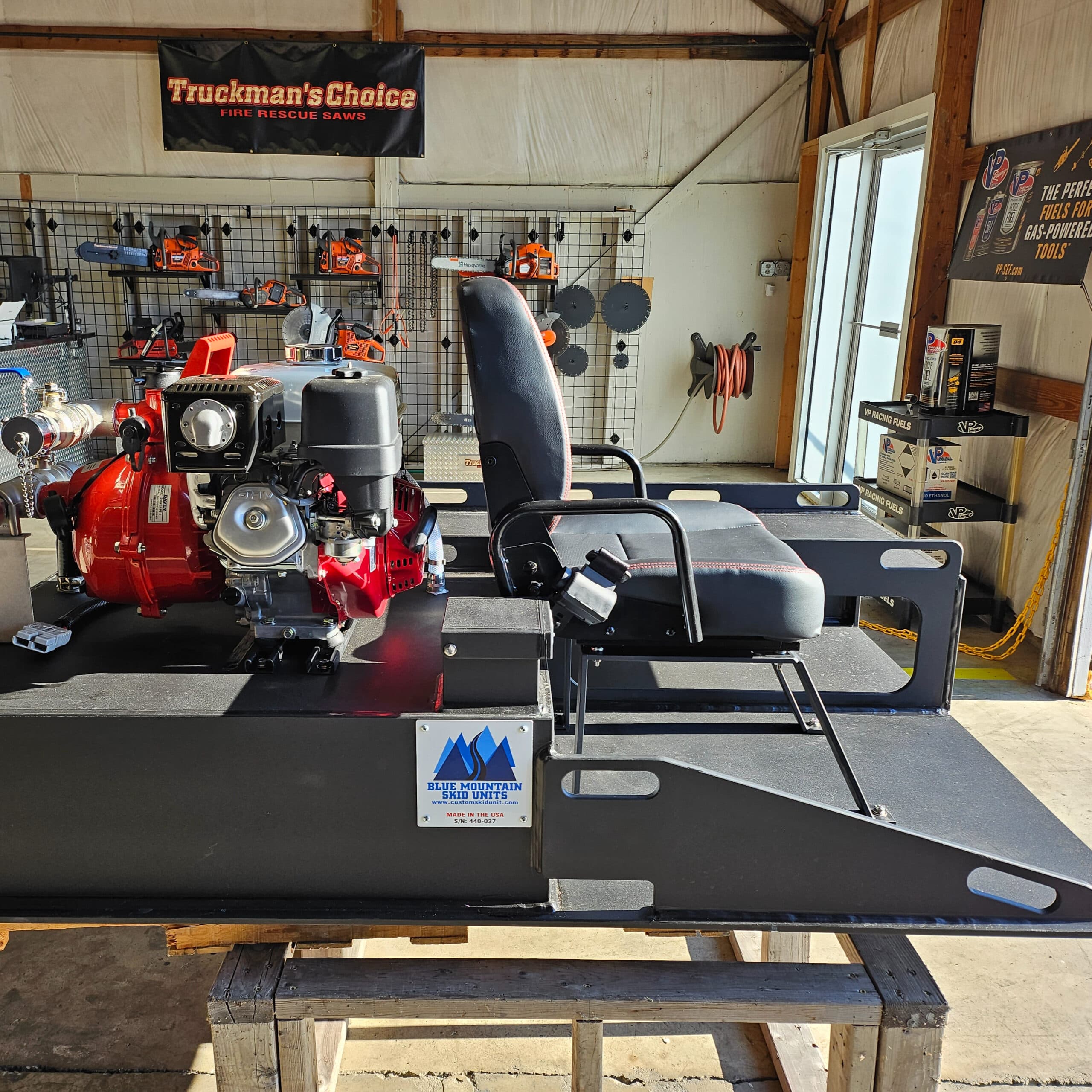
EFES service shop and equipment workspace in Lemoyne, Pennsylvania
04

05Committee Worksheet

What to Bring to the Build Meeting

3

inputs: chassis, mission, requirements

Start with the exact chassis.

Bring the VIN for an existing truck or the complete order specification for a new one, plus bed or body dimensions, cab and door configuration, wheelbase or cab-to-axle details, and current manufacturer documentation for GVWR, front and rear GAWR, and payload. If the truck already has a body or equipment installed, bring its measured weight and axle weights when available.

Bring the mission and equipment list next. Document intended staffing, hose, reels, hand tools, fittings, PPE, medical or rescue gear, and anything else that must remain on the apparatus. Describe the response area, access limits, terrain, water sources, refill plan, drafting expectations, hose stretches, storage priorities, and whether pump-and-roll is required.

Verify, do not guess

Finally, bring the requirements that sit outside the skid. Include mutual-aid or resource-typing expectations, local standards, department SOPs, procurement language, and the people who must approve the purchase. If a number or requirement is unclear, flag it for verification. The meeting should replace assumptions with questions the department, chassis source, builder, and applicable authority can answer.

FrequentlyAsked Questions

Type 6 Buying Questions

The complete apparatus must meet the current Type 6 resource-typing criteria, including minimum tank, pump, hose, pump-and-roll, staffing, and maximum GVWR requirements. A department also needs to account for applicable agency, local, procurement, and operating requirements. No single component creates the classification by itself.

One hundred fifty gallons is the current Type 6 minimum, not a universal recommendation. Whether it supports your mission depends on fire load, travel and refill distance, water supply, staffing, hose use, terrain, and the payload available after every other part of the apparatus is counted. Some market configurations carry more, but capacity must follow verified weight and mission needs.

A skid can supply the tank, pump, plumbing, reel, and related equipment needed for a Type 6 project, but it cannot classify the truck by itself. The department must verify the entire installed apparatus, including hose, pump-and-roll, staffing, loaded weight, axle ratings, and any other applicable requirements. Start with exact vehicle documentation and a complete carried-equipment list.

Pump-and-roll means the apparatus can deliver water while moving. It appears in the current Type 6 typing table, so a department targeting that classification needs to plan and verify the capability on the completed vehicle. How the system is controlled and used belongs in the build specification, training, manufacturer guidance, and department procedures, not in an assumption about the pump alone.

A removable skid may preserve flexibility for a vehicle that serves more than one purpose. A permanent body can integrate storage, plumbing, controls, and access around a dedicated mission. Neither format is automatically better. Compare intended service life, vehicle use, payload, mounting, maintenance access, equipment storage, and how often the department realistically expects to remove the unit.

The quote follows the configuration. Tank construction and capacity, pump system, plumbing, reels and hose storage, controls, mounting, tool storage, fabrication, and installation all affect the project. Chassis or body work and department-specific requirements can change it further. EFES works from the mission and proposed layout, then provides a quote that the committee can review and revise rather than publishing a number that ignores the build.

Blue Mountain Skid Units

Build the Type 6 around the callsyou run.

Bring EFES the mission, chassis information, equipment list, and requirements your committee has gathered.

The Blue Mountain build conversation will turn those inputs into a configuration your department can review, question, and approve before production.

Blue Mountain wildland skid unit with twin hose reels installed on a red brush truck in the EFES shop
Type 6 Brush Trucks & Wildland Skid Units: A Department Buying Guide | Eastern Fire Equipment Services