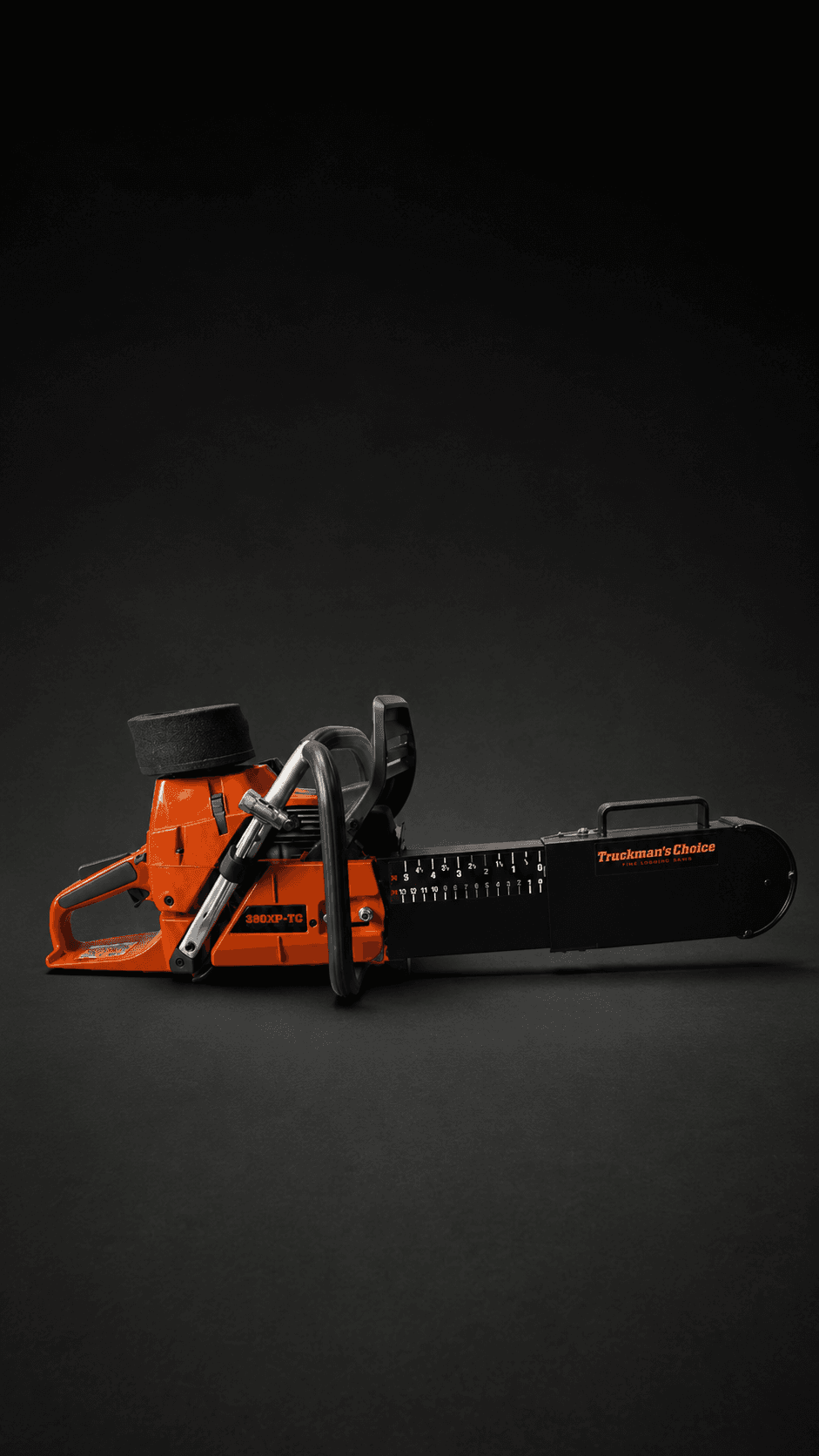
Carbide-tipped ventilation chainsaw cutting package on a dark work surface

Fire Rescue Saw Maintenance

Fire Rescue Saw MaintenanceKeeping Your Department's Saws Field-Ready

A field-ready saw is more than a saw that starts. It is identified, inspected by a trained member against the right documentation, recorded, and either returned to service or held out for qualified evaluation.

Use this guide to build the department routine.

Use the exact saw, conversion, cutting-system, and chain manuals — together with your department SOP — for the work itself.

01Readiness Standard

A successful start is one data point.

A saw can start and still have a damaged safety device, a lubrication problem, a loose component, a leaking fuel system, or cutting equipment that does not belong back in service.

A readiness check looks at the complete system, not only the engine.

The useful question is not “Did it run?” It is “Did the trained checker complete the authorized inspection, record the result, and know where station-level care ends?”

02Department Framework

Build the cadence around the saw.

Start with the exact documentation for every saw and cutting system in your fleet. Then assign the recurring work through your SOP. These groups organize the program; they do not replace model-specific procedures or intervals.

Trained operator · authorized checks only

Before the readiness check

Confirm that the assigned saw is complete, documented, and ready for the checks required by its manuals and your department.

Identity and documents

Match the saw, model, conversion, bar, and chain to the correct manuals and department record.

Safety and controls

Inspect the chain brake, throttle and lockout, stop control, chain catcher, guards, and anti-vibration components as the exact manual directs.

Condition and fluids

Look for damage, missing or loose parts, oil-contaminated handles, or signs of a fuel leak.

Cutting system

Check chain condition and tension, guide-bar condition, and lubrication only through the procedures and limits specified for that system.

Escalation

If a safety device is damaged or fails its prescribed check, the saw is incomplete, a leak is present, or a required result is unclear, stop and follow the department's out-of-service procedure.
Trained operator · department SOP

After use

Account for what changed during the assignment before the saw returns to its compartment.

Cool and secure

Follow the exact shutdown, cool-down, handling, and fueling instructions before any post-use care begins.

External condition

Remove accessible surface debris and keep handles clean only as the manufacturer authorizes.

Damage review

Inspect the saw and cutting system for visible damage, looseness, unusual wear, or a change noted during the cut.

Status record

Record use, findings, replenishment, any part change, and the saw's current in-service or out-of-service status.

Escalation

Do not clean around hot components, refuel near an ignition source, or return a saw to service while a new symptom or damage remains unresolved.

Equipment officer · assigned qualified members

Scheduled department review

Translate each manual's time- and use-based schedule into a department calendar, then document completion by saw.

Scheduled care

Assign air and cooling system, starter, guide-bar, spark-arrester, and other periodic items according to the exact manual and member qualification.

Chain service

Route steel or carbide chain work by chain type, condition, manufacturer instruction, and the tooling and training required.

Controlled readiness check

Perform authorized functional checks only in the department's designated area and exactly as the manual and SOP direct.

Record review

Look for repeat starting, idle, lubrication, vibration, control, or cutting complaints instead of treating each entry as an isolated event.

Escalation

If the department has not explicitly assigned and trained a periodic task, move it to a qualified technician rather than improvising a procedure.

Qualified technician · service provider

Qualified service

Use qualified service for internal inspection, adjustment, repair, or any problem that crosses the department's authorized maintenance boundary.

Safety systems

Evaluate failed or damaged chain-brake, throttle, guard, catcher, stop-control, or anti-vibration components.

Engine and drive system

Diagnose chain movement at idle, recurring start or run problems, abnormal vibration or noise, and clutch or drive-system concerns.

Fuel and internal systems

Inspect or repair the carburetor, fuel system, internal connections, and other work assigned to qualified service by the manual.

Cutting-system evaluation

Determine whether damaged or incorrectly performing bar and chain components should be serviced or replaced.

Escalation

Give the technician the model, serial number if available, configuration, service record, and a plain description of what changed; do not mask the symptom with an unauthorized adjustment.

03The Decision Gate

Know when the check is over.

The point of an inspection is not to make every saw pass.

It is to identify a saw that should not be operated until the right person evaluates it.

01

A safety device, guard, catcher, or control that is damaged, missing, loose, or does not pass its prescribed check.

02

A chain that moves while the engine is at idle.

03

A fuel leak, oil-contaminated handle, or other fuel-system concern.

04

A cracked, deformed, loose, or missing component.

05

Abnormal vibration, noise, starting, stopping, idle, lubrication, or cutting behavior.

06

A chain, bar, sprocket, or other cutting-system condition outside the applicable documentation.

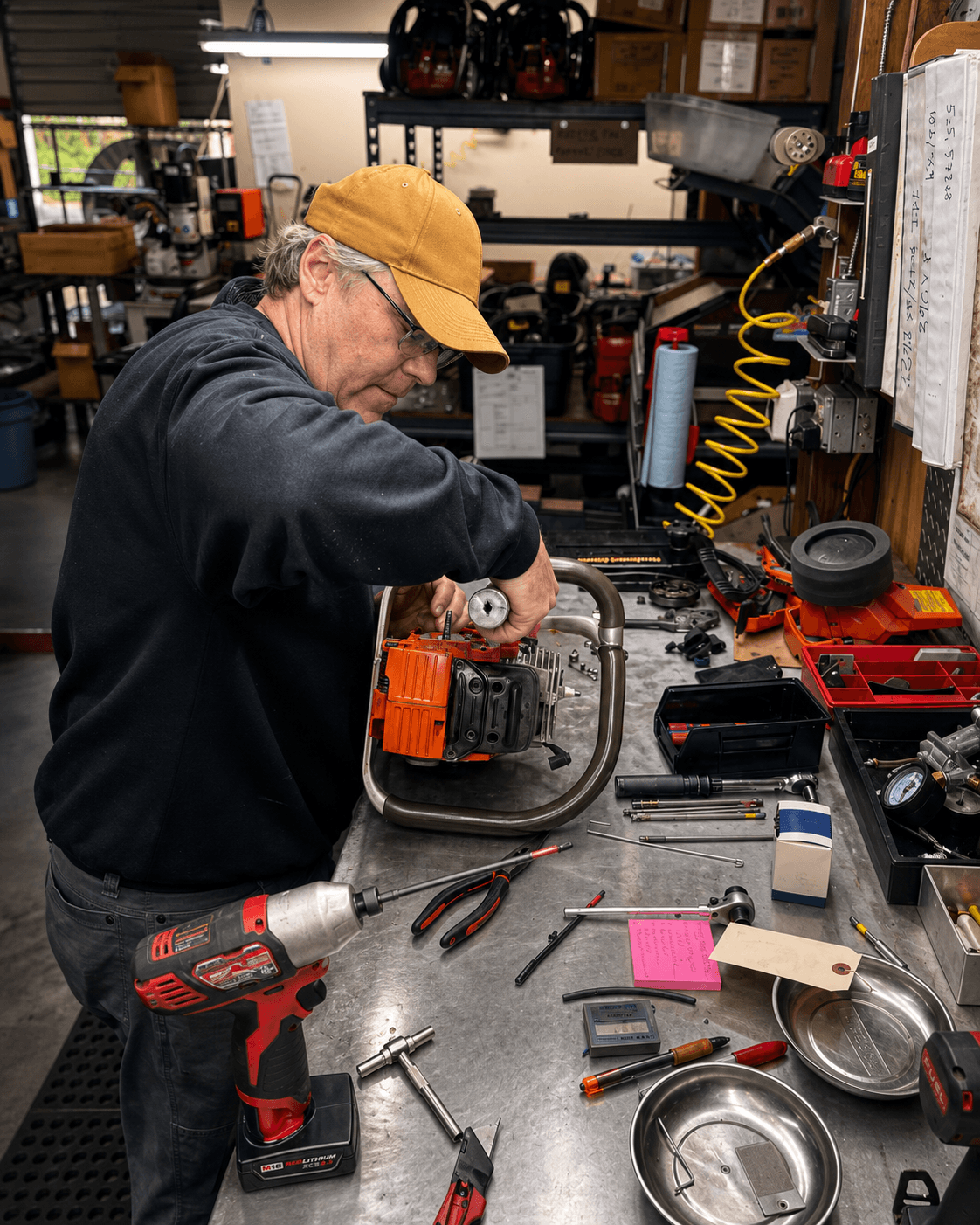
EFES technician inspecting a fire rescue saw at a service bench
03

04Make It Repeatable

Turn good checks into a department system.

A clear program survives shift changes, apparatus moves, and personnel turnover. Build it around the equipment you actually carry.

01

Inventory every saw and cutting system

Record the model, serial number if available, conversion or rescue-saw configuration, bar, chain, assigned apparatus, and the current documents that govern each one.

02

Assign responsibility and cadence

Name who completes each operator check, who reviews the log, which work needs additional qualification, and when the equipment moves to a technician.

03

Record the result, not just a check mark

Capture date, saw, member, use or check performed, findings, corrective action, and clear in-service or out-of-service status.

04

Review trends and schedule service

Repeated entries about starting, idle, lubrication, vibration, controls, or cutting performance are a pattern. Route the history with the saw so the technician sees the same story your crews did.

More Than a Stock Powerhead

Keep the whole rescue-saw system together.

A fire-rescue chainsaw may pair a professional powerhead with conversion parts, a specialized guide bar, and carbide-tipped chain. One manual may not cover the whole assembly.

01

Powerhead and conversion

The powerhead manual governs its engine and safety systems. The rescue-saw builder's documentation governs the modified configuration. Keep both attached to the department record.

02

Bar and chain system

Use only the applicable chain and bar instructions for fit, inspection, tension, lubrication, and service limits. Do not transfer filing angles, depth-gauge settings, or replacement rules from an ordinary chain.

03

After structural work

Document debris exposure, contact with unexpected material, visible damage, and any change in the cut. A changed behavior is information for the next checker or technician, not something to dismiss once the incident is over.

04

Controlled functional checks

Follow the manufacturer procedure and department SOP in the designated training or test area. Gasoline engines create exhaust hazards, and a running saw needs the same controls during a check as it does during training.

If carbide-tipped chain is damaged, dull, or cutting differently, use the chain manufacturer's guidance and a qualified service provider.

FrequentlyAsked Questions

Fire rescue saw maintenance questions

Use the exact saw, conversion, bar, and chain documentation to establish the intervals. Your department may combine before-use or readiness checks with time-based and use-based scheduled work, but it should not replace the manufacturer's schedule with one universal calendar for every saw.

Only inspection and basic care that the member is trained, equipped, and authorized to perform under the exact manuals and department SOP. Internal work, adjustment, failed safety devices, or an unclear result belongs with the qualified person your department designates.

Do not treat carbide-tipped rescue chain like ordinary steel chain. Follow the chain manufacturer's instructions for inspection and service. Carbide cutter work requires chain-specific tooling and judgment; EFES can evaluate carbide-tipped chain and discuss sharpening, repair, or replacement.

Use the designated training or test area required by your department and follow the exact manual and SOP. Do not run a gasoline saw in a confined or poorly ventilated space, and do not improvise an engine-running test from a general checklist.

Follow the exact manufacturer instructions and your department's fuel policy for fuel type, mixture, container, cool-down, storage, and disposal. Those requirements can change by model, fuel product, and local policy, so this guide does not publish one shelf life or mixture for every saw.

Use qualified service when a safety device is damaged or fails, the chain moves at idle, a leak or structural defect is present, behavior changes and remains unresolved, internal inspection or adjustment is needed, or the applicable manual assigns the work to a trained specialist.

Saw Out of Service?

Send the symptom and the saw history.

Tell EFES the model, configuration, what changed, and what your department recorded. The shop can help coordinate the next step before anything ships.

Lemoyne Saw Service

Get the saw back in service.With the right work.

Start with the model, serial number if available, configuration, service record, and a clear description of what changed.

Contact EFES before shipping or dropping off equipment so the shop can confirm the next step.

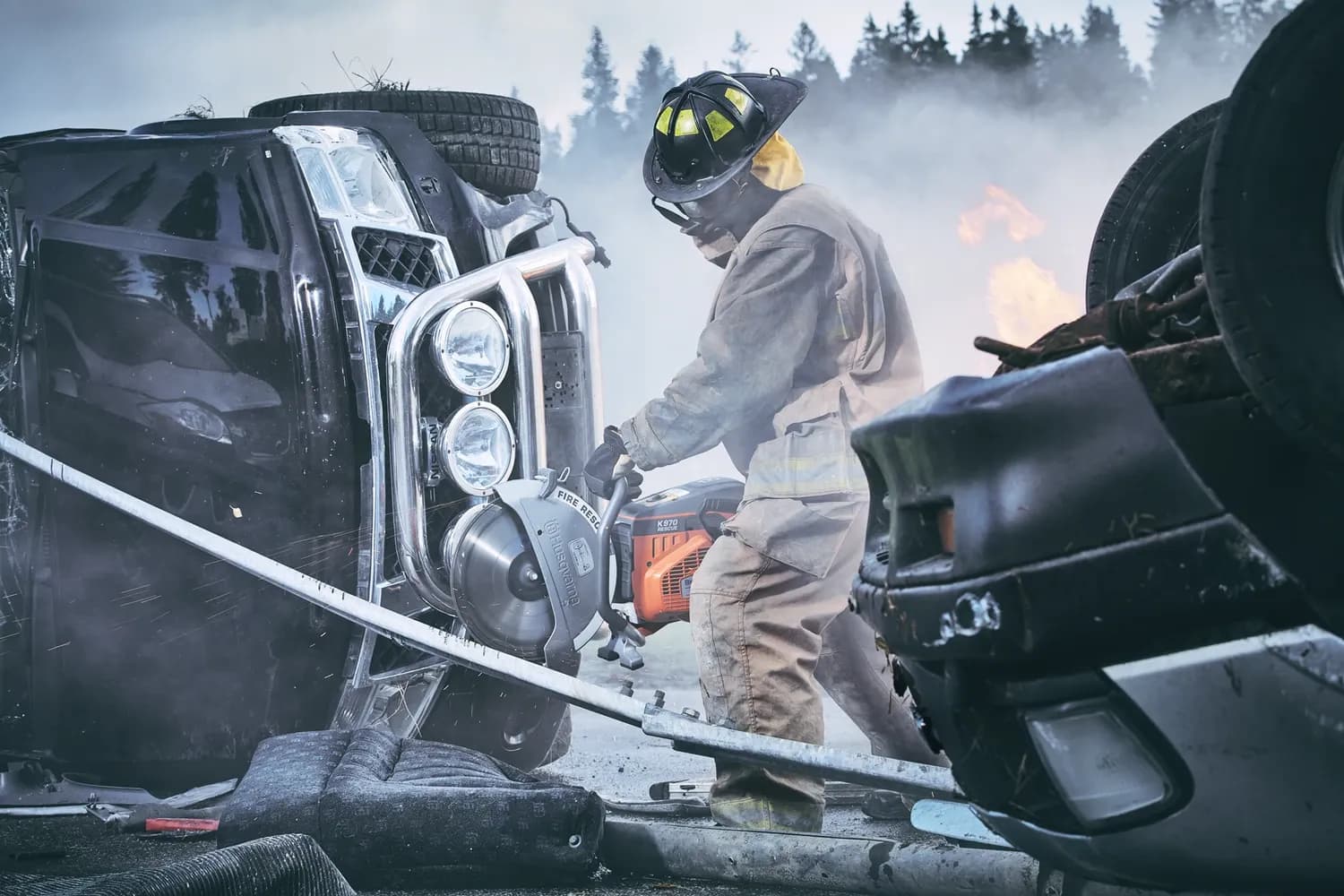
Firefighter operating a Truckman's Choice rescue saw during training