01
Record the complete model
Copy the full designation and series exactly. Include the bar length, depth-guard designation, H1 or H2 generation, or other suffix when it is shown.
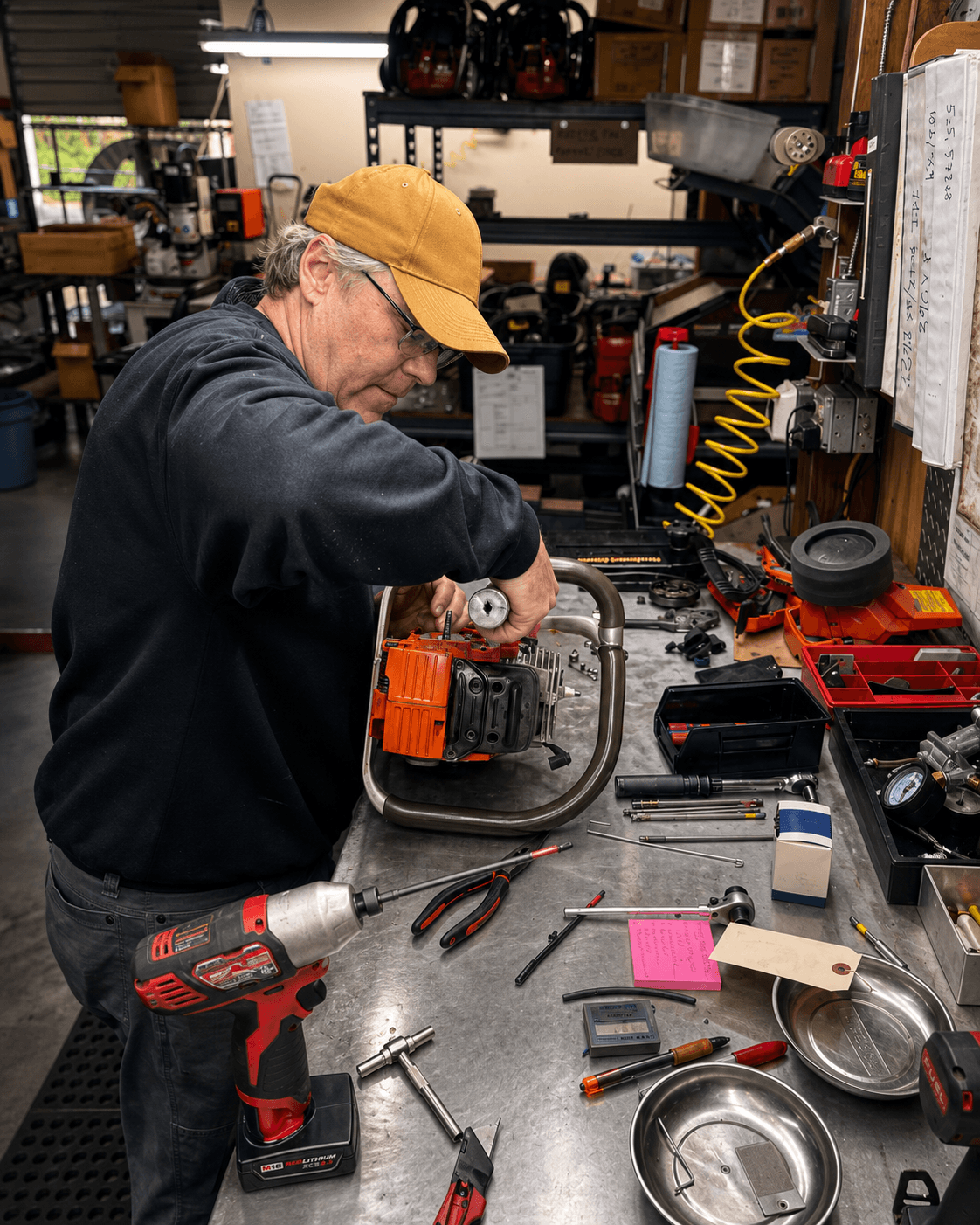
Built & serviced in Lemoyne, PA — by firefighters, since 2009
Parts Reference Guide
Turn a legacy Cutters Edge parts question into a model-specific answer. This is not a universal interchange chart, and it does not claim one-to-one Cutters Edge and Truckman's Choice equivalents.
Start with the complete saw identity, installed component, and department need.
EFES can then confirm whether the next step is a part, service, cutting-system configuration, or current saw.
01The rule that prevents wrong orders
Two saws can serve a similar fireground role and still use different parts, mounts, controls, or cutting systems.
A familiar shape or shared component description can begin a conversation; neither confirms fit.
A defensible cross-reference connects the complete equipment identity to current records and the installed assembly. Until those details agree, treat a suggested part as a candidate—not a match.
Evidence before fitment
This is an identification matrix, not an interchange table. Each detail narrows the question; EFES should confirm the final match before ordering or shipping.
Swipe to compare
| Evidence | What it helps establish | What it does not prove |
|---|---|---|
| Complete model designation | The saw family, base model, and documented suffix or configuration. | That every unit in the family uses the same part. |
| Serial or type plate | Available identity and production information for the individual saw. | That later repairs or installed options still match the original build. |
| Existing part number | A number to check against records, supersessions, and the affected assembly. | That the visible number is current, complete, or correct for the whole saw. |
| Configuration and photos | The bar, guard, filter, mounting arrangement, and other visible installed details. | Internal dimensions, condition, or fit that cannot be seen in a photograph. |
| Symptom and department mission | Whether the request points toward a part, diagnosis, or replacement decision. | Compatibility with a specific component or a direct equivalent current saw. |
02Supported legacy families
EFES lists parts, repair, and maintenance support for the families below.
The family starts the search; the complete designation and installed configuration determine what happens next.
01
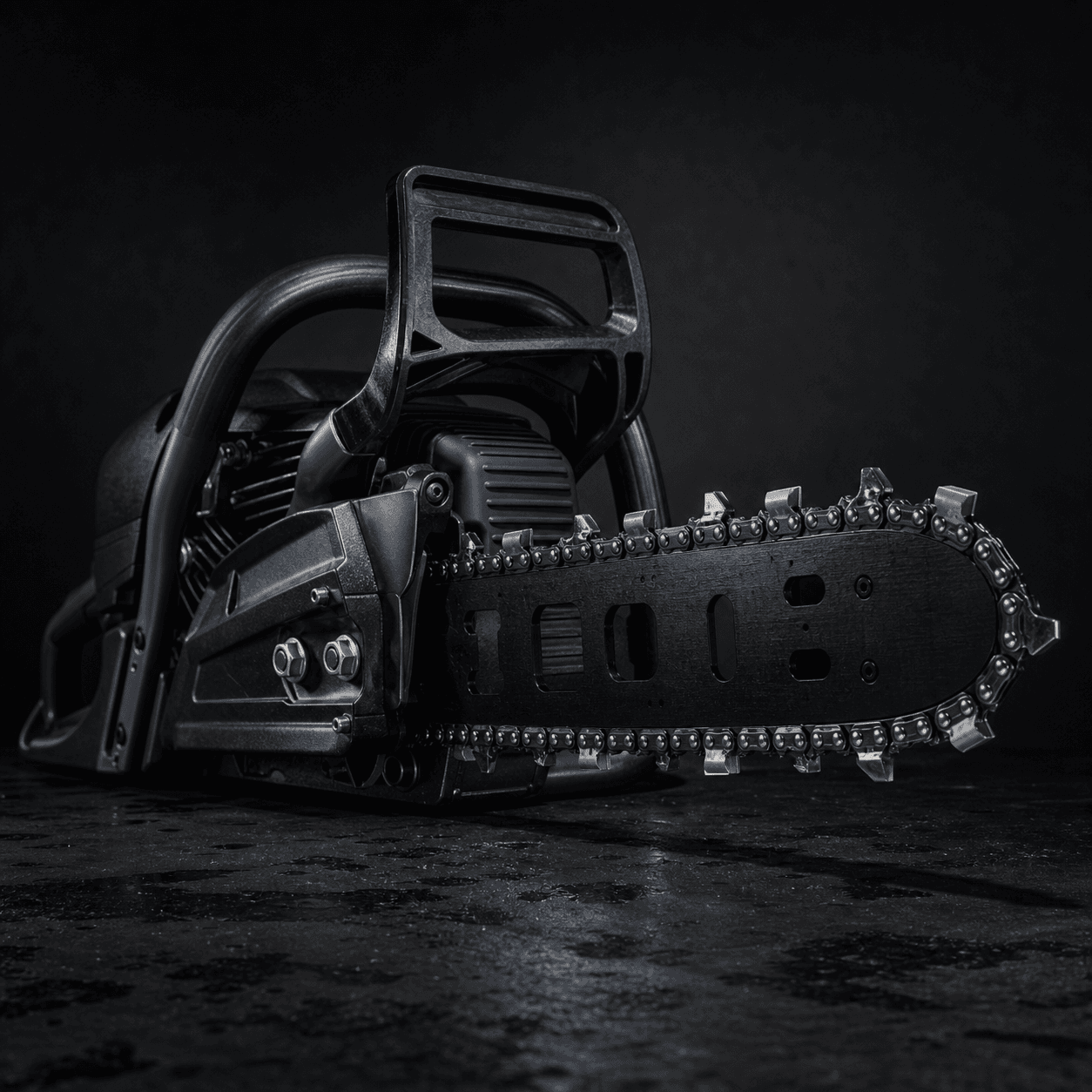
2000 Series Fire Rescue Chainsaw
02
2100 Series Fire Rescue Chainsaw
03
760R H1 Series Rotary Saw
04
760R H2 Series Rotary Saw
05
970R H1 Series Rotary Saw
06
970R H2 Series Rotary Saw
03The cross-reference workflow
A reliable answer comes from matching records to the saw in front of you. Gather the evidence first, then confirm the order or intake path with EFES.
01
Copy the full designation and series exactly. Include the bar length, depth-guard designation, H1 or H2 generation, or other suffix when it is shown.
02
Photograph the serial or type plate, affected-component number, and installed position. For a loose part, include several angles and a scale reference.
03
Name the cutting system, guard, filter, or assembly. Explain what changed and any recent work that could have altered the saw.
04
The shop compares the submitted information with its records and support options. It may need another photo, measurement, or the complete saw.
05
Confirm the exact part, service intake, or replacement discussion before a box leaves the station, along with availability, price, timing, and packing instructions.
03Four possible outcomes
The evidence may point to a direct order, but it can also show that the complete saw or cutting system needs attention. Keep these outcomes separate when planning downtime and budget.
01
EFES identifies a model- and configuration-specific component and confirms whether it is orderable. The answer applies to the submitted saw, not every unit in the family.
02
The symptom needs diagnosis, the assembly cannot be confirmed remotely, or a loose part would not address the complete condition. Contact EFES before shipping.
03
The bar, chain, guard, blade, or related setup must be matched as a system. Pitch, gauge, drive-link count, dimensions, mounts, and saw configuration can matter.
04
Age, condition, repair history, downtime, or limited support can make another repair a poor investment. Replacement is a fleet decision, not a part-number substitution.
The correct outcome may be “send the saw,” “confirm one more detail,” or “plan replacement”—not a fast answer built on the wrong identity.
04Repair or replace
Once the legacy saw is identified, decide whether to keep it in service or move to a current platform.
Consider the whole tool, not only the failed part.
01
Age and repair history: Is this an isolated repair or another entry in a recurring pattern?
02
Safety and overall condition: Are the engine, controls, guard, cutting system, and structure serviceable as a whole?
03
Supportability and downtime: Can the department plan around future parts and service with acceptable confidence?
04
Mission: Does the current saw still fit the materials, staffing, training, and apparatus role crews expect?
Before you contact the shop
Gather the full model, serial or type plate, clear photos, existing part number if visible, and a plain description of the symptom. Those details move the request from resemblance to verification.
Cross-reference questions
What departments ask before ordering.
No. EFES has not published a universal part-for-part or model-for-model interchange table. This page explains the information needed to verify a model-specific parts, service, or replacement path. Comparable function is not proof of fitment.
Send the complete model, visible plate information, photos of the saw and affected assembly, any existing part number, installed configuration, symptom, and relevant recent repair history.
Sometimes, but a photo may not establish the source saw, internal dimensions, or an unseen production change. Include visible numbers, several angles, a scale reference, and the source-saw model. EFES may need a measurement or the complete saw.
EFES currently lists the 2000 and 2100 Series Fire Rescue Chainsaws and the 760R H1, 760R H2, 970R H1, and 970R H2 Series Rotary Saws. Contact the shop with the complete designation to confirm the exact unit and current support path.
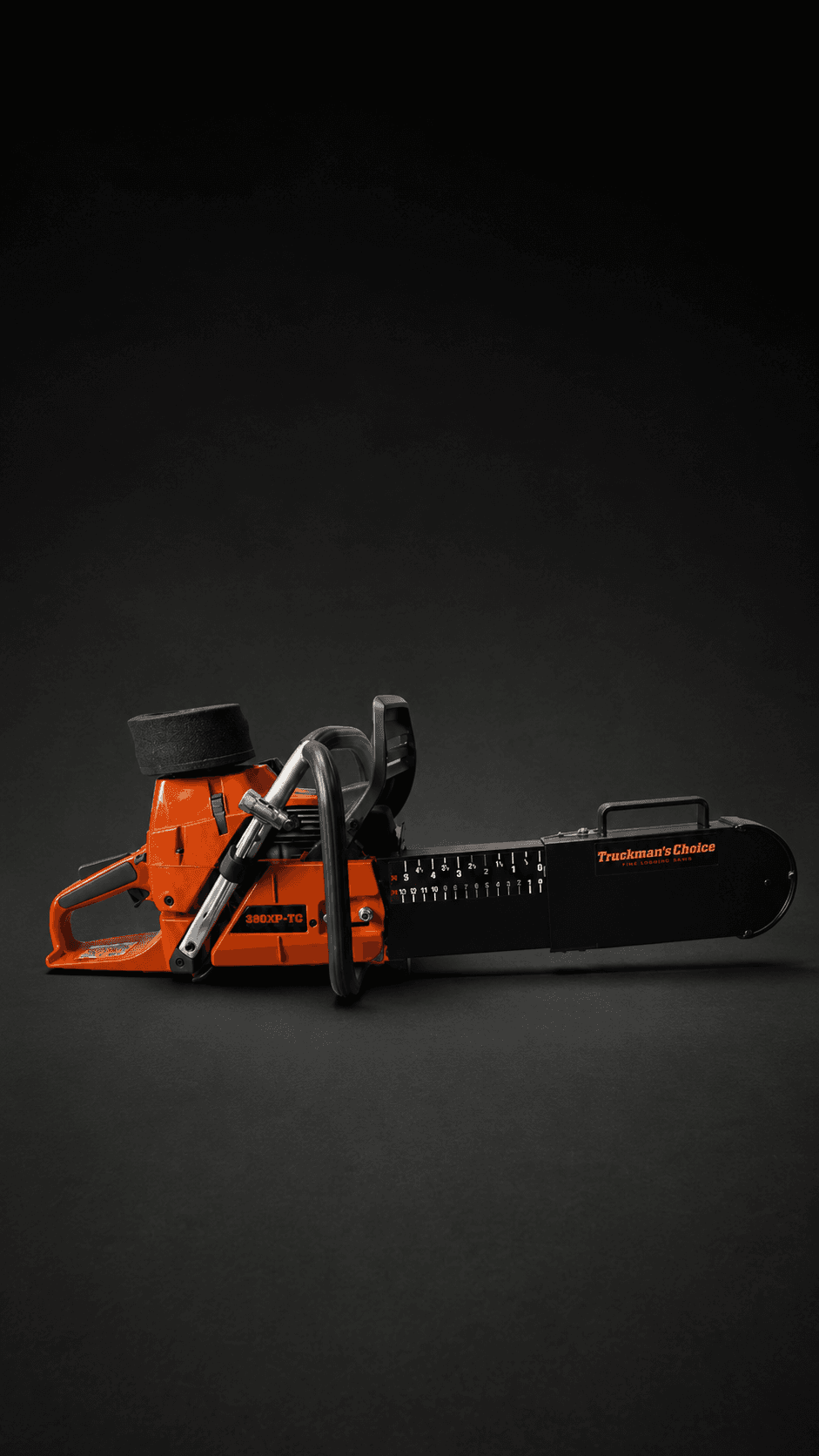
This guide does not assign one. The current Truckman's Choice 372XP-TC and 572XP-TC are separate EFES chainsaws. If replacement is responsible, EFES can configure a saw around the department's mission instead of treating the old model as an equivalence rule.
Do not assume every legacy component is continuously available. Availability depends on the exact model, configuration, and component. EFES can confirm what is currently supportable after reviewing the saw identity and request details.
Lemoyne service shop
Start a request online or call the shop with the model, plate details, photos, and symptom ready.
EFES will confirm the next step before you order or ship. Cutters Edge is a registered trademark of Edge Industries. Truckman's Choice and Eastern Fire Equipment Services are not associated with Cutters Edge or Edge Industries.