01
Primary assignment
A roof-team ventilation saw and a saw used mainly on predictable wood-training props do not start from the same requirement. Define the assignment first.
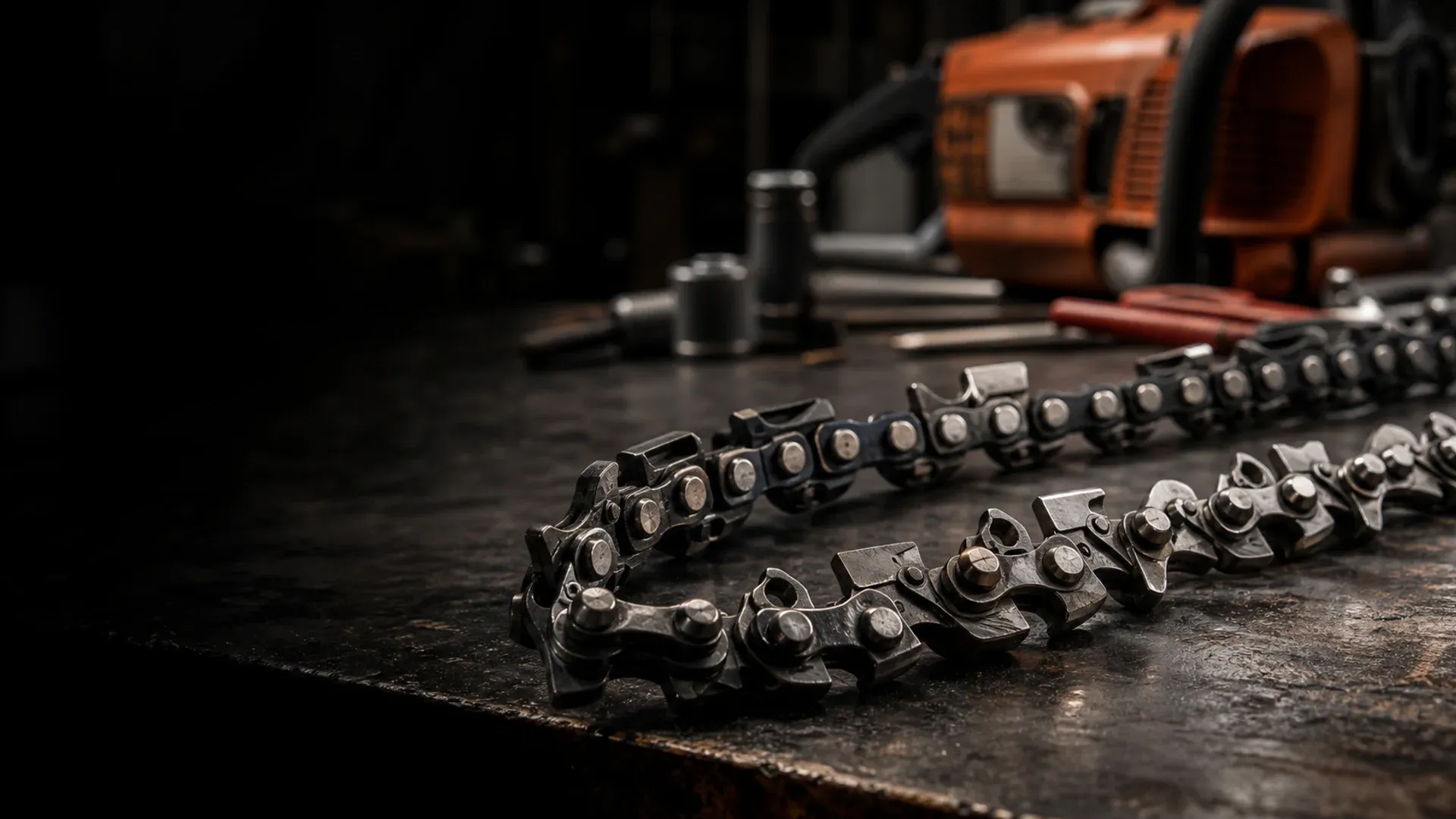
Built & serviced in Lemoyne, PA — by firefighters, since 2009
Carbide rescue-saw chain guide
All three are carbide-tipped rescue-saw chains. They are not interchangeable answers to the same question. Raker geometry changes how the cutter engages the work and how the carbide is supported; the right choice depends on the assignments and material assemblies your crew expects to encounter.
Start with the mission.
Then confirm the complete cutting-system fit with EFES before you order.
01The useful answer
A raker—also called a depth gauge—limits how deeply the cutter engages the material.
On these rescue chains, the raker arrangement also helps define the protection and clearance around the carbide cutter. Bullet, Dual, and Single Raker chains use different geometry to place a different emphasis on that relationship.
EFES documentation positions Bullet Raker toward ventilation and demolition work on layered roof assemblies and light sheet metal; Dual Raker as a balanced mixed-material option; and Single Raker toward wood and lightweight building materials. Those are useful starting points, not promises about every cut.
The right chain still has to match the saw, guide bar, drive system, department training, and actual material mix. If the answer is being chosen from the chain name alone, the decision is not finished.
Compare the geometry
Use this as a conversation guide. Current fit, part number, and availability need to be confirmed for the exact saw and cutting system.
Swipe to compare
| Decision factor | Bullet Raker | Dual Raker | Single Raker |
|---|---|---|---|
| Raker geometry | Bullet-shaped raker with a narrow gullet around a specially designed carbide cutter | Two raker gauges around a solid-carbide cutter | Single-raker arrangement around the carbide cutter |
| Intended emphasis | Layered roof decks, light sheet metal, ventilation, and demolition in the EFES-documented lineup | A balanced profile across wood, layered roof decks, and light sheet metal | Wood, lightweight building materials, and single-layer roof decks |
| Useful tradeoff | A protection-focused geometry for departments centered on roof and mixed-material work | A middle path when one profile needs to cover a varied assignment set | A wood-focused choice when layered and mixed-material assemblies are not the main assignment |
| Confirm before ordering | Exact configuration, supported saw/bar system, and material fit | Exact configuration and whether the balanced emphasis matches the workload | Exact configuration and whether the workload is primarily wood and lightweight material |
02Before you choose a profile
A 20-inch chain is not automatically the right chain for every 20-inch bar.
Chain pitch must match the drive system, gauge must match the guide-bar groove, and the drive-link count must match the bar configuration. Rescue-saw conversions can add another layer: the guide bar, rim sprocket, and depth-guard setup may have changed from the base powerhead configuration.
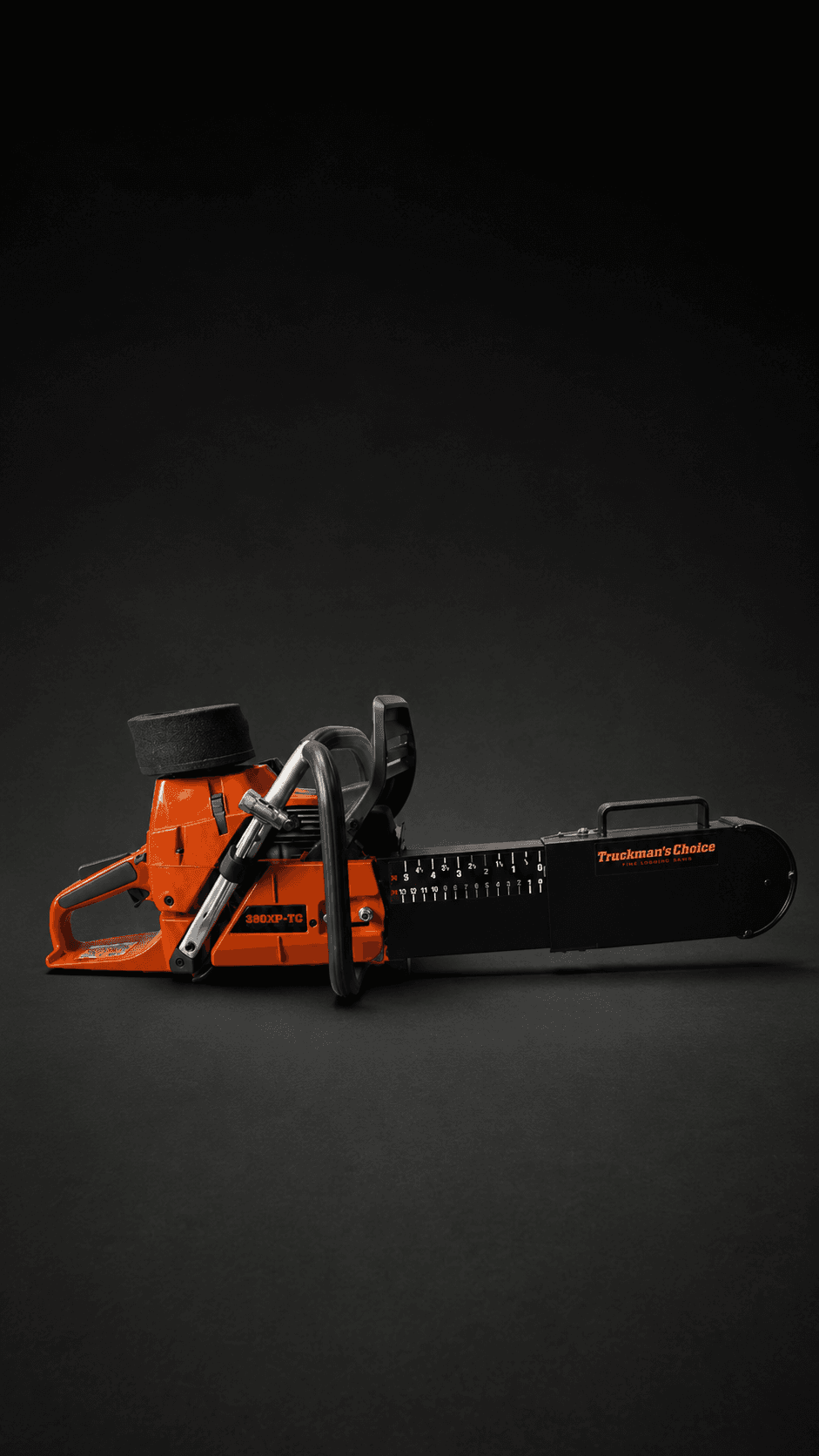
That is why EFES asks for the exact saw model and what is currently installed—not only the bar length.
Photos of the bar markings, chain drive links, sprocket area, and conversion components can help the shop identify the system.
If the department is changing raker profile or converting a commercial saw for rescue work, ask EFES to evaluate the complete setup.
Do not assume that a loop that appears to mount is an approved or appropriate match.
Put the assignment first
Five questions make the comparison more useful than picking the profile with the strongest name.
01
A roof-team ventilation saw and a saw used mainly on predictable wood-training props do not start from the same requirement. Define the assignment first.
02
Roofing can mean single-layer wood, a layered commercial assembly, or a mix with fasteners and light sheet metal. Describe the assembly, not just the category.
03
Decide whether the department needs a clear wood emphasis, a balanced mixed-material profile, or a ventilation-and-demolition emphasis.
04
Record the saw model, bar markings, pitch, gauge, drive-link count, sprocket setup, chain profile, and any conversion or depth-guard components.
05
Assign inspections, follow the exact manufacturer documentation, and know who will evaluate damaged or dull carbide cutters before return to service.
03After the chain goes on the saw
The purchase decision should include the readiness and service plan. Exact procedures remain with the applicable saw and chain documentation.
01
Record the chain identification and bar-and-sprocket setup for each saw. A clear equipment record makes replacement and service conversations more reliable than memory.
02
Follow department SOPs and the exact manufacturer's guidance. If cutter condition, tension, lubrication, or another component is damaged or uncertain, follow the department's out-of-service process and get an evaluation.
03
Do not carry a depth-gauge setting, sharpening method, or damage limit from one chain to another. Carbide rescue chains can require specialized tooling and procedures.
04
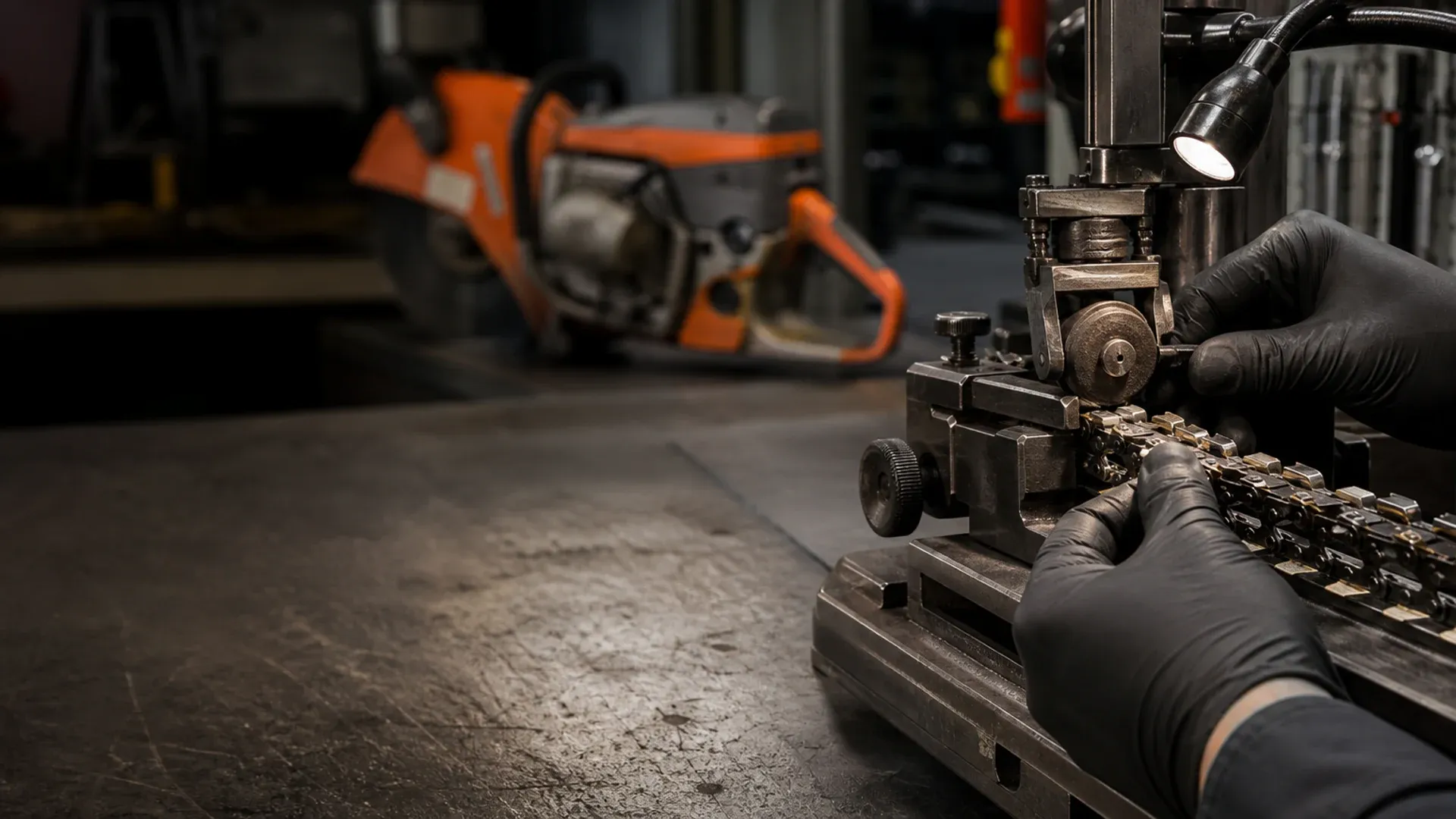
EFES evaluates, repairs when appropriate, and sharpens Bullet® Chain and other carbide-tipped chains in Lemoyne, Pennsylvania. Contact the shop with the chain type, saw model, condition, and cutting symptoms.
 03
03Chain match
Send EFES the saw and chain details. The shop can help confirm which raker profile and cutting-system configuration fit the department's assignment.
From the apparatus bay
Raker-chain questions
The raker, often called the depth gauge, limits how deeply the cutter engages the material. On Bullet, Dual, and Single Raker rescue chains, the arrangement around the carbide cutter is also a defining part of the profile. Exact settings and service procedures are chain-specific.
No chain is the automatic answer for every department or assembly. EFES documentation positions Bullet Raker toward layered roof decks, light sheet metal, ventilation, and demolition. The department still needs to compare that emphasis with its assignment, training, saw configuration, and expected materials.
Dual Raker is positioned as a balanced mixed-material profile across wood, layered roof decks, and light sheet metal. It can be a useful starting point when the workload does not point strongly to one end of the comparison. EFES should still confirm the exact fit and current option.
Single Raker is positioned toward wood, lightweight building materials, and single-layer roof decks. That emphasis may fit departments whose expected work is primarily in those materials. Confirm the complete cutting-system configuration before ordering.
Not reliably. EFES may also need pitch, gauge, drive-link count, bar and sprocket details, current chain information, and any conversion-kit or depth-guard components. Different configurations can exist on the same base saw model.
EFES repairs and sharpens Bullet® Chain and other carbide-tipped chains. Contact the shop with the chain type, saw model, condition, and cutting symptoms. EFES will confirm whether evaluation, service, or replacement is the appropriate next step.
Chains, parts, and carbide service
Shop chains and rescue-saw parts, or ask EFES to match the profile and configuration to your department's saw and primary assignment.