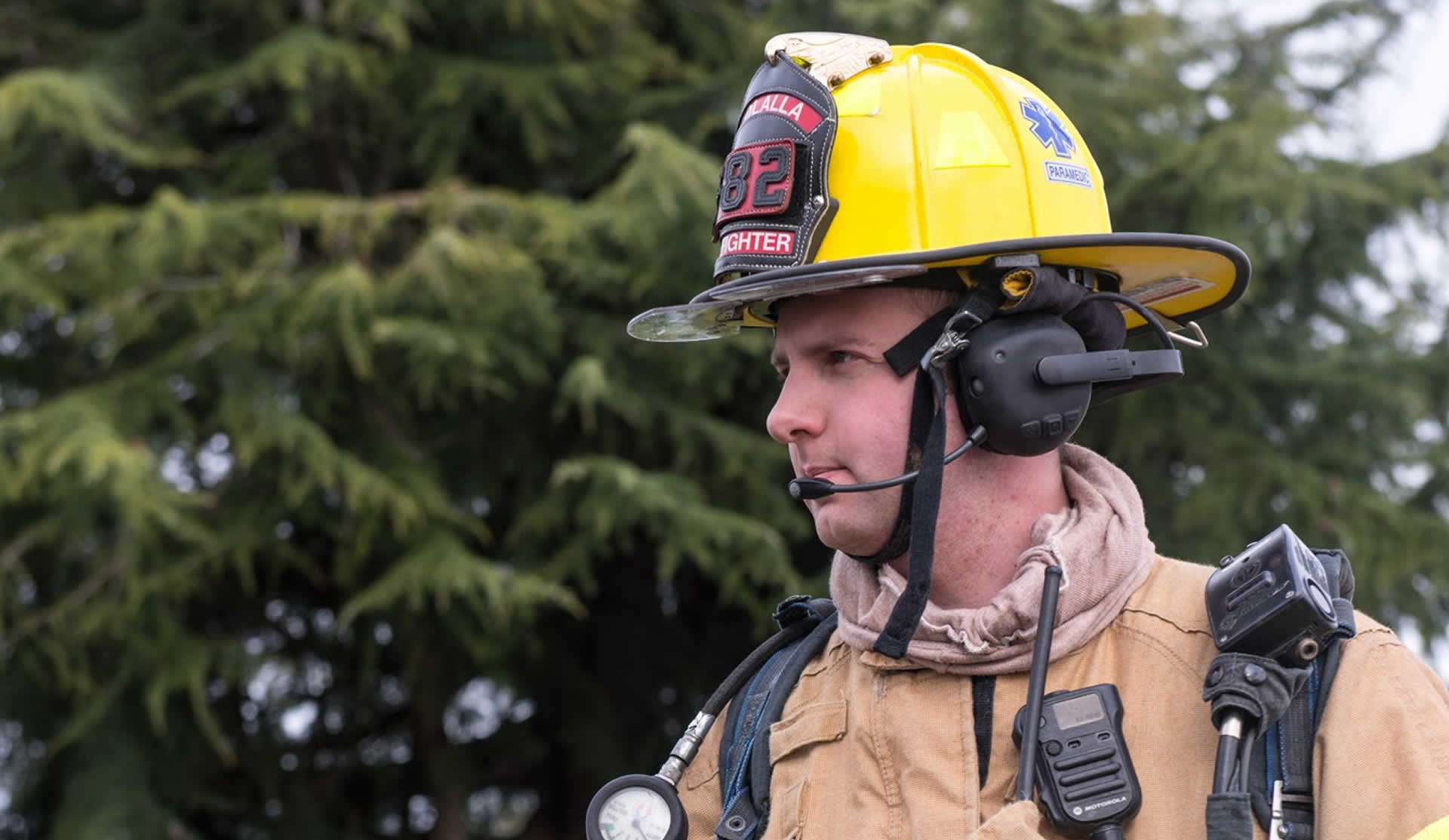
Firefighter wearing a FIRECOM communication headset on scene

Firecom Wired & Wireless · Fire and EMS apparatus comms

Fire Department Communication Headsets and Apparatus IntercomsFirecom Wired and Wireless Systems From EFES

An apparatus cab is one of the loudest places a firefighter works. Diesel under the doghouse, the siren, the air horn, the road, and a radio you can barely hear over all of it.

A fire department communication headset paired with an in-cab intercom fixes that.

It gives your crew hands-free, full-duplex talk, real hearing protection, and radio audio piped straight to each ear so nobody misses a size-up on the way in.

At Eastern Fire Equipment Services in Lemoyne, PA, we sell, install, and service Firecom wired and wireless headsets and intercoms for fire and EMS apparatus, and we bring mobile service to your fire station across PA, MD, and NJ.

This page covers the full Firecom lineup, how wired and wireless systems compare, how the intercom scales to your crew size, how the headsets tie into your radios, and how we service the systems already on your rigs.

It also answers the question a lot of chiefs ask us first: is Firecom the same as Sonetics? Short answer, Firecom is a division of Sonetics.

The longer answer is below.

01The cab, connected

Fire Department Communication Headsets and Apparatus Intercoms

A headset on its own is only half the system.

The other half is the intercom that ties every seat in the cab together. Here is what that combination solves.

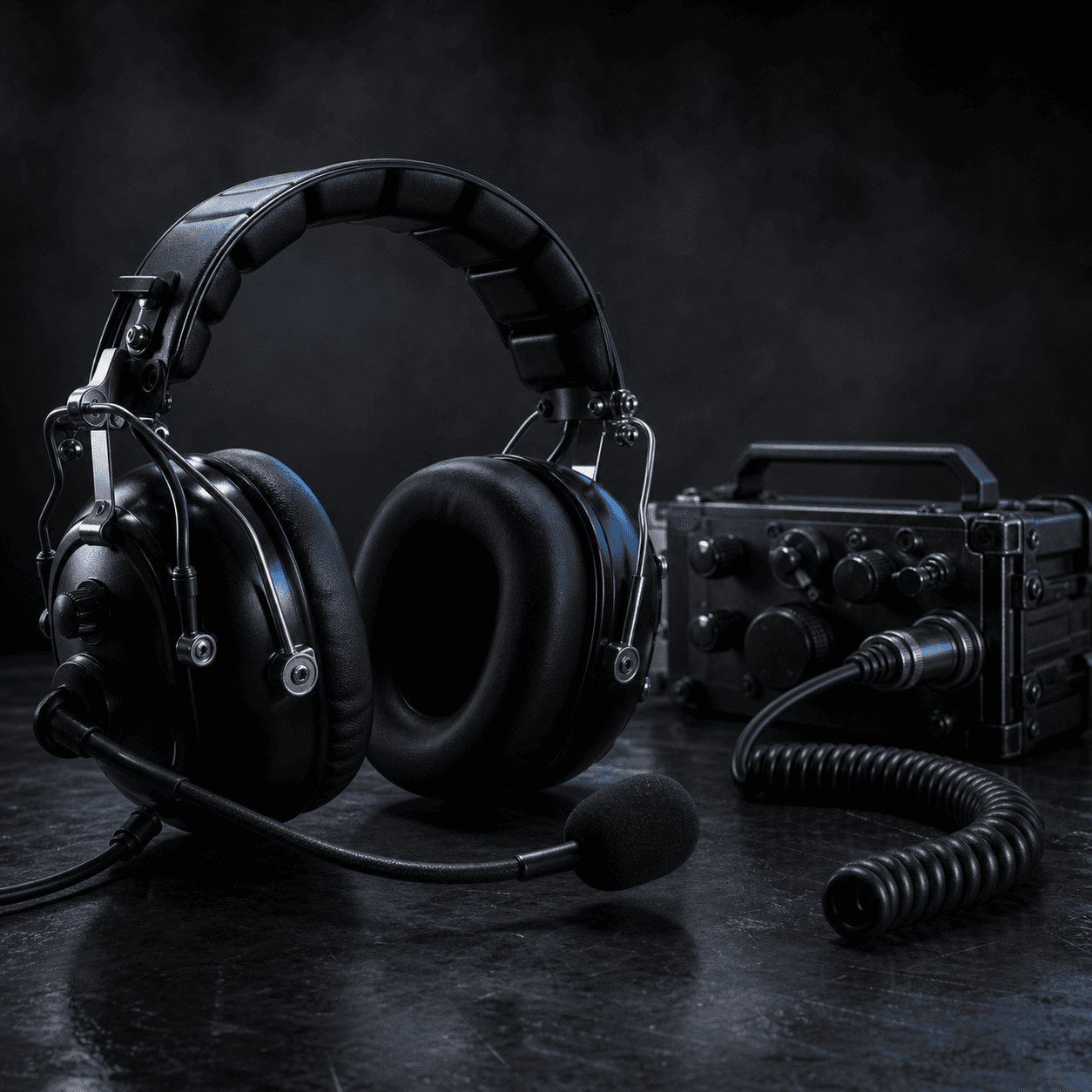
Firecom crew headsets and intercom equipment arranged as a complete apparatus communication system
01

Ride in with no intercom and the crew shouts.

Members lean across the cab, repeat themselves, and still walk into the scene a step behind because half the radio traffic got swallowed by engine noise.

Put a Firecom headset on every seat and wire them to an intercom base, and the cab goes quiet in the way that matters.

Crew members talk to each other hands-free at a normal voice, the driver and officer coordinate without turning around, and the dispatch radio comes through clearly over the top of everything.

Full-duplex is the part that changes how a crew works.

It means everyone can talk and listen at the same time, like a normal conversation, instead of taking turns and keying a button. Nobody waits for a channel to clear inside the cab. That matters most on the response, when the officer is reading a preplan aloud, the driver is calling out an intersection, and dispatch is updating the assignment all at once.

Firecom builds these systems for the way fire and EMS apparatus run, and the American fire service has trusted the name for years.

EFES fits them to engines, aerials and ladders, heavy rescue and hazmat units, EMS and ambulance rigs, wildland apparatus, and incident command vehicles.

Same core idea on every truck: clear communication inside or outside the apparatus, hearing protection against the noise, and situational awareness so the crew stays aware of the fireground. Good fireground communications start in the cab.

02Wireless — DECT7

Firecom Wireless Headsets: DECT7 Full-Duplex Crew Comms

Wireless is where most new builds land, and for good reason.

A Firecom wireless system drops the cables between the headset and the cab, so a crew member can dismount, walk a hose line, work a panel, or size up a side of the building and keep talking to the cab and the rest of the crew.

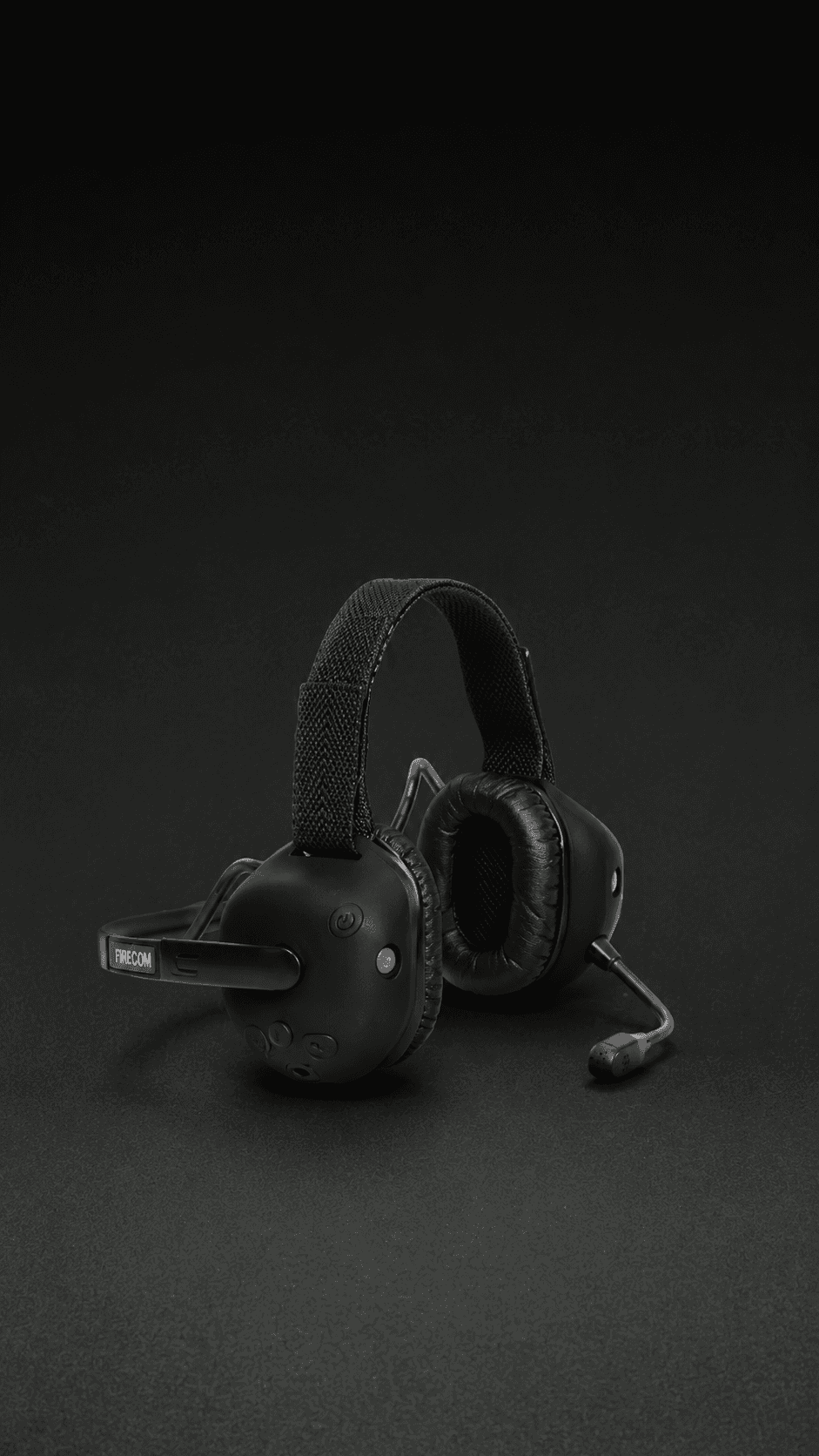
Firecom headset with ear domes and boom microphone ready for apparatus use
02

The current wireless lineup runs on DECT7, a digital wireless standard built for clear, secure, interference-resistant audio in loud settings.

The headset families you will see most are the FHW505 and the FHW507, both DECT7 wireless. The FHW507 adds Bluetooth, so a member can pair a cell phone or a compatible device to the headset alongside the intercom and radio audio.

On the UHW side, the UHW503 (the 503, and the updated UHW503.V2) covers wireless crew comms, and the UHW505 rounds out the range.

Ask us which model fits your apparatus; the right one depends on how your crew rides and what you need each seat to do.

A wireless system has a base in the cab and a battery in every headset.

The base is the hub the headsets pair to, and pairing a new headset takes a short setup rather than a service call.

Each headset runs on a rechargeable battery you can change in the field, and a charger keeps spares topped off at the station so a dead battery never pulls a headset out of service.

Most systems give an audible low-battery alert before a headset quits, so the wearer gets a warning with time to swap in a fresh pack.

03Wired — plug and go

Firecom Wired Headsets and Vehicle Intercom Systems

Plenty of departments still spec wired, and it is a sound choice.

A wired Firecom headset plugs into a jack at the seat and never needs a battery, a charger, or a pairing step. For fixed seating positions where a member stays belted for the whole response, wired is simple and dependable.

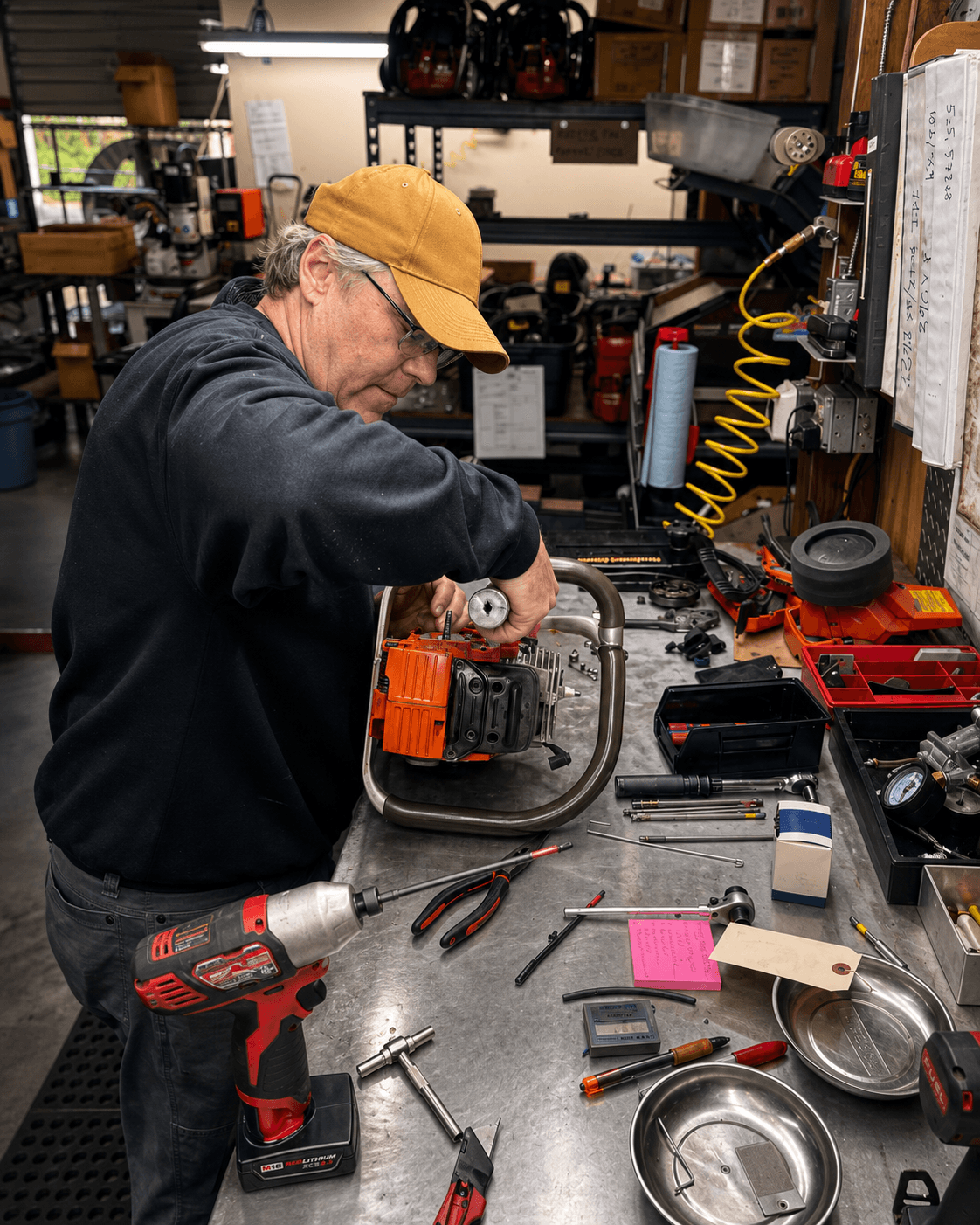
EFES technician inspecting a fire rescue saw at a service bench
03

The wired headset families include the FH-51 and FH-52, along with the UH-51S.

They connect into a Firecom vehicle intercom that scales by crew size.

A single-position 110-style system covers a small setup, a 210 handles a two-crew cab, and the 3000-series intercom supports the larger crews you find on a full engine or a busy rescue. Match the intercom to the number of seats you need on comms and you have a system sized for the rig instead of a one-size box.

Installation is straightforward for a shop that has wired emergency equipment before.

Each seat gets a mount and a headset hanger so the headset has a home when it is not on a head, the intercom base lands in a reachable spot, and the wiring runs back through the cab on a clean layout.

We supply a wiring diagram and the mounting bracket and kit hardware so your installer can land the connections without guesswork.

If you would rather not touch it, that is what our mobile service is for.

04The question chiefs ask first

Is Firecom the Same as Sonetics? Firecom Is a Division of Sonetics

This one comes up constantly, so here is the direct answer.

Firecom is a division of Sonetics Corporation. They are related companies under one roof, not two unrelated brands and not competitors.

The practical difference is the audience each line is built for. Firecom is the fire and EMS side: headsets and intercoms engineered for apparatus cabs, fireground noise, and radio integration. Sonetics is the industrial and construction side: wireless team headset systems for job sites, plants, and heavy equipment.

Same engineering heritage, two product lines aimed at different work. If you run fire or EMS apparatus, Firecom is the line built for you, and EFES is an authorized Firecom dealer that sells and services it.

05Situational awareness

Listen-Through Technology and Situational Awareness

The worst thing a headset can do on a fireground is seal a firefighter off from the scene.

Good hearing protection blocks the harmful noise, but a crew still needs to hear a partner shout, a PASS alarm, a horn, or the sound of a building talking before it fails.

Firefighter wearing a FIRECOM communication headset on scene
05

That is what listen-through technology handles.

The headset uses outward-facing microphones to pass ambient sound through to the wearer at a safe level, so a member keeps situational awareness while the harmful noise stays knocked down.

The crew hears the fireground and each other, not a muffled version filtered out along with the engine roar.

It is the difference between a headset that protects hearing and one that protects hearing without cutting the wearer off from the job.

Wireless vs wired

Wireless vs Wired Fire Apparatus Intercoms

Both do the core job: quiet the cab, connect the crew, and pipe in the radio. The choice comes down to how your members move and how you want to maintain the system.

Swipe to compare

FactorWired FirecomWireless Firecom (DECT7)
Freedom of movementTethered to the seat jackMove off the truck and keep talking
Battery and chargerNone neededRechargeable battery per headset, station charger
SetupPlug in at the seatPair to the base once
MaintenanceFewer wear partsBatteries and pairing to manage
Best fitFixed, belted seating positionsCrews who dismount and keep comms
Example familiesFH-51, FH-52, UH-51SFHW505, FHW507, UHW503, UHW505

Wireless or wired

See it in your own cab.

Many departments run a mix: wired at the driver and officer positions that never leave the cab, wireless for the crew that dismounts and works. There is no wrong answer, only the setup that matches how your rig runs. You won't judge a cab intercom from a TV clip or online reviews; the way to know is to put the headsets on in your own cab, which is what a demo is for.

06Repair & mobile service

Firecom Headset Repair and Mobile Service (PA, MD, NJ)

This is where EFES stands apart from a catalog reseller.

We do not only sell Firecom, we repair it, and we come to you. If a headset cuts out, an intercom drops a position, a boom microphone goes quiet, or a battery stops holding a charge, we fix it.

EFES technician inspecting a fire rescue saw at a service bench
06

For departments in Pennsylvania, Maryland, and New Jersey, we bring mobile service to your fire station.

We roll to the apparatus, run troubleshooting on the Firecom system in place, and get the rig back in service without you hauling a truck to a shop.

That on-site work is the fastest way to solve an intermittent fault, because a system that misbehaves on the road often behaves perfectly on a bench.

07What the coverage includes

Our repair and service covers the range of common issues:

01

Diagnosing and repairing wired and wireless Firecom headsets and intercom systems

02

Replacing worn parts: ear seals, boom microphones, cables, batteries, and mounting hardware

03

Troubleshooting radio integration, pairing faults, and dropped intercom positions

04

Servicing older systems still in the field, including legacy units such as the 460, whether your rig rolled off the line in 2012 or last year

Firecom crew headsets and intercom equipment arranged as a complete apparatus communication system
07

For Firecom repair near your department in PA, MD, or NJ, EFES is the authorized dealer that will come to your station.

Call 1-800-504-2044 for a truck-down and we will get you scheduled.

Truck down?

We come to your station.

08The sister line

Sonetics Wireless Headset Systems

The section above is for fire and EMS apparatus.

This one is different, and it is worth keeping separate.

Firecom crew headsets and intercom equipment arranged as a complete apparatus communication system
08

For industrial and construction crews, EFES also offers Sonetics advanced wireless headset systems.

Sonetics is built for job sites, plants, and heavy equipment rather than fire apparatus, and it is the sister line to Firecom under Sonetics Corporation. You can design a system to accommodate 2 to 15 team members on a shared wireless channel, or spec personal headsets with connectivity and integrated hearing protection for individual workers.

Sonetics publishes specs you can plan around: a Noise Reduction Rating of NRR 24 dB, listen-through so workers keep ambient awareness, DECT7 wireless, and watertight construction for rough environments.

If your work is industrial or construction rather than fire and EMS, this is the line to ask about.

Schedule a Sonetics demo and we will help you design the system.

09Sizing the system

How Many Headsets and Which Intercom for Your Apparatus

Sizing a system starts with two questions: how many seats need to be on comms, and how do those members move during a call.

Work through your apparatus type and the answer gets clear fast.

01

Engine or pumper: Driver, officer, and the crew in back. A wired setup covers fixed seats; add wireless for the members who dismount to pull lines.

02

Aerial or ladder: Same cab crew plus the operator working the turntable, who benefits from a wireless headset that reaches the pedestal.

03

Heavy rescue or hazmat: Larger crews and long operations, where a 3000-series intercom and wireless mobility earn their keep.

04

EMS or ambulance: A two-position cab where a 210-style intercom keeps the driver and attendant connected over road and siren noise.

05

Wildland: Rough, dusty, long-duration work where durable headsets and clear crew comms matter.

06

Incident command: A command vehicle running multiple radios where the officer needs clean audio and radio integration to run the scene.

Firefighter wearing a FIRECOM communication headset on scene
09

10The plain version

Battery Life, Range and Full-Duplex Explained

Three questions come up on every wireless system, so here is the plain version.

01

Battery

Each wireless headset runs on a rechargeable battery.

Runtime depends on the model and how hard the headset works during a shift, and a station charger keeps spare batteries ready so a headset is never down for long.

Exact runtime hours vary by model.

02

Range

DECT7 gives a working range that lets a crew member step off the apparatus and keep talking to the cab.

The usable distance depends on the environment and line of sight, and a fireground with steel and concrete reads differently than an open lot.

Ask us for the current range figure on the specific system you are considering.

03

Full-duplex

This is the natural-conversation part.

Full-duplex means everyone on the system can talk and listen at the same time, hands-free, with no button to key and no waiting for a channel.

Firecom headset with ear domes and boom microphone ready for apparatus use
10

11Radio integration

Radio Integration and Push-to-Talk

A cab intercom that cannot reach your radios only solves half the problem.

Firecom systems integrate with your mobile and portable radios so the crew hears radio traffic through the same headset that carries the intercom.

Firecom crew headsets and intercom equipment arranged as a complete apparatus communication system
11

Members can use the headset to talk over the radio without pulling a portable off their coat.

A push-to-talk button, wired to the system or mounted where the wearer can reach it, keys the radio while the intercom stays live for the crew. The system handles your radio channels so switching a channel does not mean fumbling for the radio itself.

Setup includes matching the interface to your specific radio models and confirming the crew can key up and monitor the channels they need.

If you run a portable on one band and a mobile on another, we will make sure the headset works with both and program the interface right the first time.

Radios + headsets

Get your radios talking through the headset.

Cross-shopping the brands

Firecom vs Setcom vs David Clark

Buyers cross-shop a few brands, and it is a fair question. David Clark, Setcom, and Sigtronics all build vehicle and aviation-style headsets, and each has a following. Here is a straight frame for the comparison. Confirm current specs with each manufacturer before you finalize a spec, since features change by model.

Swipe to compare

ConsiderationFirecom (via EFES)David ClarkSetcomSigtronics
Fire/EMS apparatus focusPurpose-built for fire and EMSBroad aviation and vehicle lineVehicle intercom lineAviation and vehicle line
Wired and wirelessBoth, DECT7 wirelessBothBothBoth
Local mobile repair (PA/MD/NJ)Yes, EFES comes to your stationAvailable on requestAvailable on requestAvailable on request
Firefighter-founded dealerYes, EFES since 2009n/an/an/a
Hearing protection (NRR)Available on requestAvailable on requestAvailable on requestAvailable on request

Why EFES

The headset is only half the value.

The reason departments across our area choose Firecom through EFES is not only the headset. It is that the same firefighter-founded company that sells you the system also comes to your station to service it. A headset you can buy anywhere is worth less than one backed by a shop that answers the phone and shows up.

FAQ

FrequentlyAsked Questions

Straight answers on Firecom systems, wired and wireless, and how EFES sells and services them.

Firecom is a division of Sonetics Corporation. They are related lines under one company, with Firecom focused on fire and EMS apparatus and Sonetics focused on industrial and construction work. EFES is an authorized Firecom dealer.

Neither is better across the board. Wired headsets need no battery or pairing and suit fixed seating positions. Wireless DECT7 headsets let a crew member dismount and keep talking. Many departments run both on the same rig. We will help you match the setup to how your crew works.

Yes. Firecom systems integrate with your mobile and portable radios so the crew hears radio traffic and can key up over the radio through the headset, with a push-to-talk button and access to your radio channels. Setup matches the interface to your specific radio models.

The FHW507 is the DECT7 wireless model that adds Bluetooth, so a member can pair a compatible device to the headset alongside the intercom and radio audio.

Firecom headsets provide hearing protection against apparatus and fireground noise while listen-through technology keeps the wearer aware of the scene. The exact Noise Reduction Rating depends on the model. On the Sonetics industrial line, the published rating is NRR 24 dB.

Yes. EFES repairs wired and wireless Firecom headsets and intercom systems, replaces worn parts, and troubleshoots radio and pairing faults. For departments in PA, MD, and NJ, we bring mobile service to your fire station, so Firecom repair near you means we come to the apparatus.

For Pennsylvania, Maryland, and New Jersey, yes. We provide mobile service to your station to troubleshoot and repair Firecom systems on your apparatus in place. Product information and sales ship nationwide; the on-site repair service area is PA, MD, and NJ.

Firecom intercoms scale by crew size, from a single-position setup to a 210 two-crew cab to a 3000-series system for larger crews. Tell us your seat count and we will size the intercom to the rig.

David Clark is a broad aviation and vehicle headset maker; Sonetics is Firecom's sister line for industrial and construction crews. Firecom is purpose-built for fire and EMS apparatus, and through EFES it comes with local mobile repair that a catalog brand cannot match. Confirm current specs with each maker before finalizing a spec.

DECT7 gives enough range for a crew member to step off the apparatus and keep talking to the cab. Usable distance depends on the environment and line of sight. Ask us for the current figure on the system you are considering.

Yes. Listen-through technology passes ambient sound to the wearer at a safe level, so the crew keeps situational awareness and hears alarms, horns, and each other while the harmful noise stays knocked down.

Call 1-800-504-2044 or request a quote. Give us the apparatus type and seat count and we will spec the headsets and intercom, then schedule a demo so your crew can try the system before you buy. Cost depends on the apparatus, the number of headsets, and wired versus wireless, so a quote is the accurate way to price a build.

The whole point, in one place

Get Clear Comms on Your Rig, and Service When You Need It

Here is the whole point in one place. Firecom headsets and intercoms give your crew clear, full-duplex communication inside or outside the apparatus, hearing protection against the noise, and radio audio every member can hear. EFES sells the systems, installs them, and services them, and for PA, MD, and NJ we come to your station when something goes down.

01

Want to hear it in your own cab?

Schedule a demo and we will bring the headsets to you.

02

Building or outfitting new apparatus?

Request a quote with your seat count and apparatus type.

03

Truck down and need it fixed now?

Call 1-800-504-2044 for mobile Firecom repair and troubleshooting.

04

Running an industrial or construction crew?

Ask about Sonetics wireless systems for 2 to 15 team members.

Real answers, not a call center

Talk to the People Who KnowThese Systems

You can talk to the people who install and service these systems about your rig, not a call center.

EFES was founded in 2009 by two firefighters and works with fire and EMS departments every day.

Ask us for the user manual, a spec sheet PDF, and a price list, and we will help you purchase the right Firecom products for your apparatus.

Reach us at 1-800-504-2044, through our contact page, or at efesinc.com for product details and current pricing.

Firefighter wearing a FIRECOM communication headset on scene