DECT7 wireless technology
Sonetics' best-in-class innovation delivers full-duplex communication that is crisp and understandable — the whole team talking at once rather than taking turns on a channel.
All Apex 3-Series
Built & serviced in Lemoyne, PA — by firefighters, since 2009
Apex 3-Series
The Apex 3-Series team headset without Bluetooth — the model most crew positions should actually get, in three wear styles.
Bluetooth is the whole difference. The 377 runs the same DECT7 radio, the same 24dB protection, the same stereo listen-through, the same personal sound dosimeter, and the same 1,600 feet of range. If nobody at that position needs a phone or a tablet in their ears, this is the model to buy.
Behind-head fits under a hard hat or a face shield and is what most crews in head protection end up on. Hard-hat mounts to the shell itself. Overhead is the default where head protection is not worn, and is usually the most comfortable of the three.
Displayed prices reproduce the supplied Sonetics 2022 USA & Canada price list, effective July 7, 2022, and are not presented as current quotes. EFES confirms current pricing and availability once the configuration and radio compatibility have been reviewed. Call (800) 504-2044.
Product overview
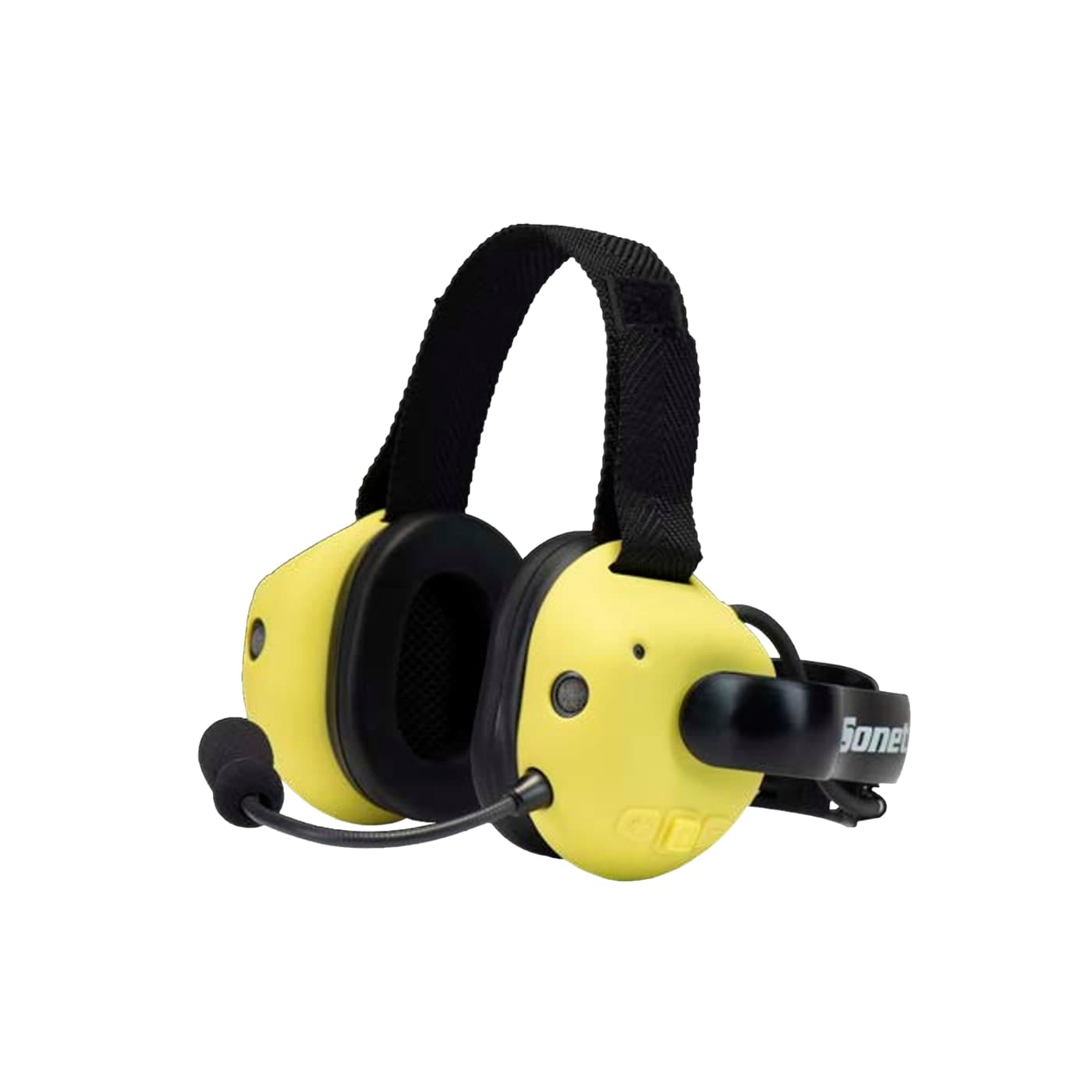
The APX377 is the Apex 3-Series headset most positions on a site should get. It is the same platform as the APX379 in every respect except Bluetooth, and across a crew of ten that difference adds up without changing what the headset does on the job.
Full-duplex DECT7 is what makes it work. People talk over each other the way they do in person, hands-free, with no buttons to push — which matters when both hands are on a load, a control, or a tool. 24dB NRR protects hearing while stereo listen-through feeds the surroundings back in, so a worker hears the machine, the spotter, and the person walking up behind them without lifting a cup.
Range is up to 1,600 feet line-of-sight. Battery life is up to 24 hours of talk time on a four-hour charge, so a system charged overnight covers a full shift and a mid-day top-up is realistic when a crew runs long. Ball pivot joints and reduced side force are the reason the headsets are still on at hour eight.
The personal sound dosimeter is standard here too: it monitors noise exposure and adjusts speaker volume in the headset to reduce potential hearing damage.
Headsets connect through a SON150 wireless base station for installed systems or a wireless ComHub for systems that travel. The APX379 covers the positions that do need Bluetooth, and Apex Connect covers the ones that are not in the noise at all.
What this model does
The APX377 carries the whole Apex 3-Series feature set except Bluetooth. For most crew positions that is the right trade.
Sonetics' best-in-class innovation delivers full-duplex communication that is crisp and understandable — the whole team talking at once rather than taking turns on a channel.
All Apex 3-Series
Keep your hands on your work while you talk. No buttons to push, which matters when both hands are on a load, a control, or a tool.
24dB NRR protects hearing while stereo listen-through lets you hear your surroundings and your coworkers without removing the headset. Situational awareness and hearing protection stop being a trade-off.
All Apex 3-Series
Mobility up to 1,600 feet line-of-sight, so the team stays connected across a site rather than within shouting distance of a base station.
Up to 1,600 ft
Monitors noise exposure and adjusts speaker volume in the headset to reduce potential hearing damage. Hearing conservation built into the headset rather than bolted on as policy.
Talk up to 24 hours on a four-hour charge, so headsets that came off shift on the charger are ready when the team needs them. Ball pivot joints and reduced side force keep them wearable for that whole time.
All Apex 3-Series
No Bluetooth is the only thing on the APX379 feature list that the APX377 does not do. Everything else on this page is identical between the two.
Model lineup
Capabilities and pricing as published in the supplied Sonetics 2022 USA & Canada price list, effective July 7, 2022. Prices reproduce that list and are not current quotes; EFES confirms pricing and availability on your quote.
Swipe to compare
| Model | Wear style | Bluetooth | Listen-through | Price |
|---|---|---|---|---|
| APX377-OH | Overhead | No | Stereo | $995 |
| APX377-BH | Behind-head | No | Stereo | $995 |
| APX377-HH | Hard-hat | No | Stereo | $1,045 |
| Shared across the line | DECT7 wireless | 24dB NRR | Up to 1,600 ft line-of-sight | 24 hr talk time |
Before you request a quote
Bluetooth, and nothing else. DECT7, 24dB NRR, stereo listen-through, the personal sound dosimeter, 1,600 feet of range, and 24 hours of talk time are all identical between the two models.
If the crew wears hard hats, behind-head fits under them and hard-hat mounts to the shell. If head protection is not part of the job, overhead is the default and usually the most comfortable. Most sites end up ordering more than one style, because the answer differs by role.
Up to 1,600 feet line-of-sight from the base station. Line-of-sight is doing real work in that sentence — steel, concrete, and equipment between two people will reduce it, which is one of the things we work through when we configure the system.
It monitors noise exposure and adjusts speaker volume in the headset to reduce potential hearing damage. It is a hearing-conservation control built into the headset rather than a policy someone has to enforce.
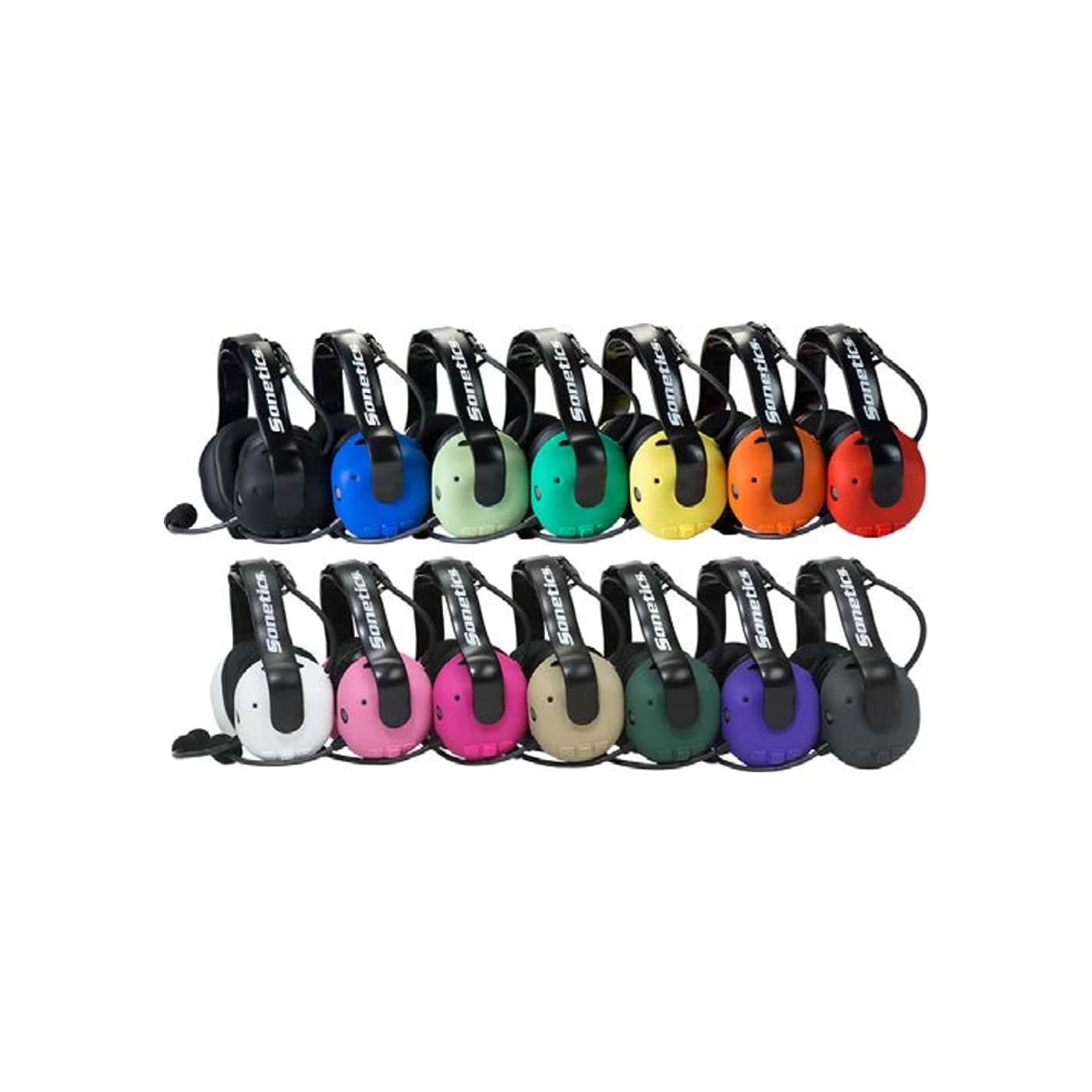
Yes. Fourteen standard ruggedizer colours — including safety yellow, safety orange, safety pink, and glow-in-the-dark — let you assign colours to roles or crews, and they add abrasion resistance at the same time. Custom colours are available; ask us for the minimum order and lead time.
Configured and supported by EFES
Send the team size, the head protection your crews wear, the distances they work across, and the radios you already own.
We will quote the headsets alongside the base station or ComHub and the radio interfaces as one system.
Call (800) 504-2044 or request a quote. EFES is at 440 Oak Street, Lemoyne, Pennsylvania.